About Sorex vagrans Baird, 1857
Species Name & Common Coloration
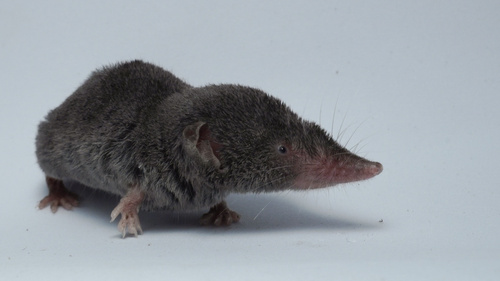
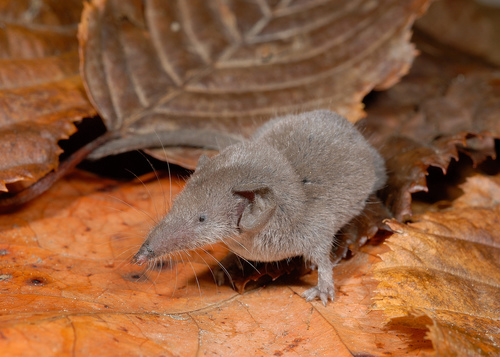
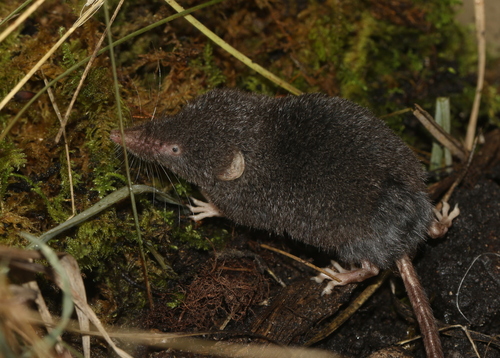
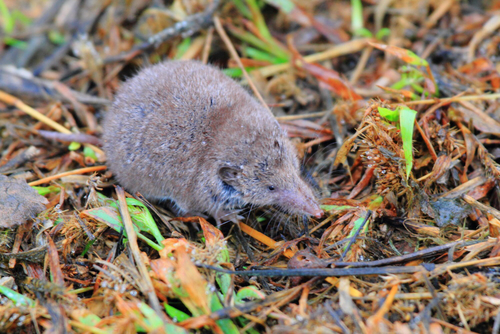
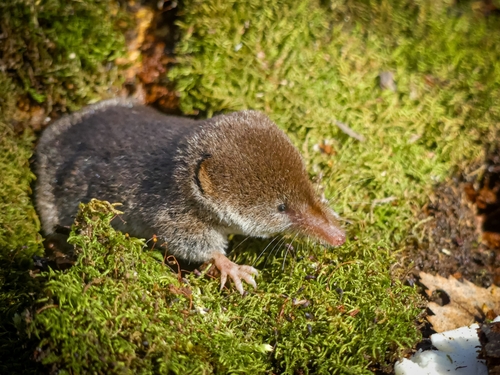
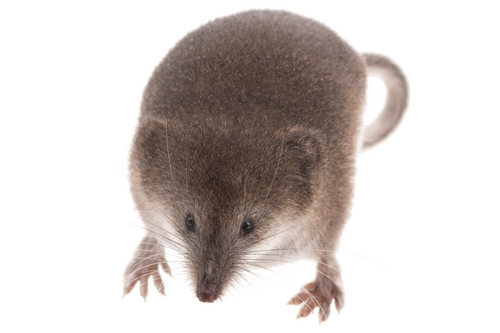
Vagrant shrews (also sometimes called wandering shrews), with the scientific name Sorex vagrans Baird, 1857, are generally red-brown in color with white or grey underparts. Coastal populations may be much darker, with almost black upper body parts.
Tail Characteristics
They have a long tail that is sometimes paler on the underside, a trait that is especially noticeable in juveniles.
Distinction from Montane Shrews
While they look similar to other shrews found in the same range, they can be told apart from montane shrews by their smaller overall size, shorter tail, and fewer friction pads on the hind feet.
Distinction from Trowbridge's Shrew
They are most reliably distinguished from Trowbridge's shrew by examining fine details of skull shape, though adult Trowbridge's shrews also tend to have a more distinctly pale underside to the tail.
Winter Fur Color
In winter, vagrant shrews have dark brown fur.
Fall Molt Pattern
Their fall molt occurs between September and October, starting first on the rump before progressing forward; a separate molt starting on the snout then progresses backward.
Spring Molt Variability
The timing of their spring molt is much more variable, even within the same population. This means individuals with summer coats and individuals with winter coats can be found together for several months in spring, and even into early summer.
Body Length Measurements
The total body length of a vagrant shrew is about 10 centimetres (3.9 in), which includes a 4 centimetres (1.6 in) long tail.
Body Weight Characteristics
Adult body weight ranges from 4 to 8 grams (0.14 to 0.28 oz), and males are slightly larger than females.
Metabolism and Winter Torpor
The basal metabolic rate of vagrant shrews is 5.4 ml O2/g/h, and there is no evidence that they enter torpor during winter.
General Distribution Range
This species inhabits open and wooded areas in western Canada and the United States west of the Continental Divide.
Canadian Distribution
In Canada, it is found in southern British Columbia, including Vancouver Island, and reaches as far east as extreme south-western Alberta.
United States Distribution
In the United States, it occurs throughout most of Washington, Oregon, and Idaho, extends as far south as central California, and is also found in northern and central Nevada, northern Utah, and western Montana and Wyoming.
Preferred Wet Habitats
Vagrant shrews prefer wet grassland and meadow habitats, ranging from alpine tundra to swampland, and they are often found near rivers or other water sources.
Forest Habitat Preference
They also occur in open coniferous forest, but are only rarely found in dense woodlands.
Microhabitat Features
Because they often use fallen logs for cover, they prefer areas with moderate amounts of woody debris, and they may also favor areas with more acidic soils compared to other local shrew species. One subspecies lives only in salt marshes.
Recognized Subspecies
Three subspecies of Sorex vagrans are currently recognized: Sorex vagrans halicoetes, found in salt marshes of central California; Sorex vagrans paludivagus, found on the central Californian coast; and Sorex vagrans vagrans, found throughout the rest of the species' range.
Pleistocene Fossil Records
Pleistocene fossils attributed to this species have been reported from Arkansas, New Mexico, and Texas. However, identifying such fossils to the species level is difficult, and these remains may instead represent close relatives such as montane shrews or Pacific shrews.
Breeding Period
Vagrant shrews primarily breed between April and June, though births can occur as early as February or as late as September.
Reproduction Traits
Gestation lasts twenty days, and each litter contains two to eight young. A single female may give birth to up to three litters per year.
Juvenile Development
The young are born hairless and blind, and each weighs less than 0.5 g (0.018 oz). They grow rapidly in their first few weeks of life: they begin developing fur by two weeks old, open their eyes by three weeks old, and are weaned between sixteen and twenty-five days after birth.
Life Expectancy
The average life expectancy of a vagrant shrew is estimated at a little over six months. However, they can live much longer. Few survive more than seventeen months, but a small number survive their second winter and reach two years of age.