About Sophora chrysophylla (Salisb.) Seem.
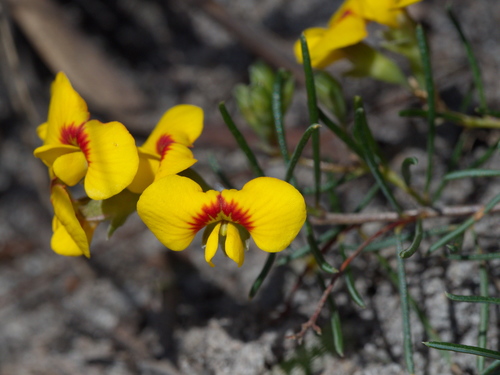
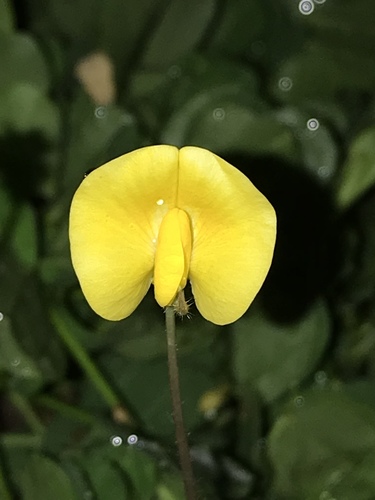
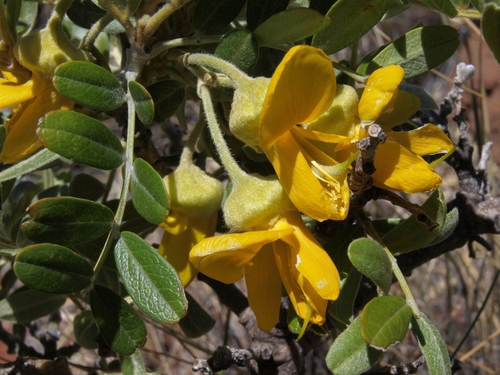
Sophora chrysophylla, called māmane in Hawaiian, is a flowering plant species in the Fabaceae (pea and bean) family that is endemic to Hawaii. It is highly polymorphic, growing as either a shrub or tree; tree forms can reach 15 meters (49 feet) in height. It produces yellow flowers during winter and spring. As a Hawaiian endemic, māmane can be found on all of Hawaii’s main islands except Niʻihau and Kahoʻolawe. It grows in low shrublands, high shrublands, dry forests, mixed mesic forests, and rarely in wet forests. Its growing elevation ranges from 30 to 2,900 meters (98 to 9,514 feet), and it is limited by the tree line. Māmane is most common and grows to its tallest in montane dry forests at elevations of 1,220 to 2,440 meters (4,000 to 8,010 feet). Māmane and naio (Myoporum sandwicense) form the defining dry woodland ecotone in subalpine areas of East Maui’s Haleakalā and the Island of Hawaiʻi. Māmane is a critical species for the endangered palila (Loxioides bailleui), which feeds almost exclusively on the plant’s immature seeds when they are in season, and nests in māmane branches. Cydia moth caterpillars also eat māmane seeds, and these caterpillars are in turn eaten by palila. Both the palila and the moth larvae only consume the seed embryo, leaving the seed coat intact. Māmane seeds are highly poisonous to other animals; house finches die within minutes of eating the seeds. Māmane has a two-layered biochemical defense system against seed predators. Its seed coats contain approximately 4% phenolic compounds, which give the seeds an unpleasant taste. Seed coats are also somewhat toxic and have a high fiber content. Seed predators that attempt to eat the seeds will usually not be killed, but will have an unpleasant experience. If a predator penetrates the seed coat, the embryo contains deadly quantities (over 4% of dry weight) of quinolizidine alkaloids. However, both palila and Cydia moths have evolved to tolerate these toxic compounds. For example, palila can tolerate a dose of cytisine dozens of times higher than the dose that would kill a laboratory mouse. Both of these specialist seed predators can recognize and avoid trees with the highest toxin levels. Cydia caterpillars can break down the toxic compounds. They do not sequester alkaloids for their own use, but they end up containing roughly the same amount of phenolic compounds as the māmane seed coat. This does not appear to be enough to deter predators, so the caterpillars also have cryptic coloration to avoid being seen. Palila are not affected by the phenolic aroma of caterpillars (which have the smell and taste of the māmane plant), and they discard the low-nutrition seed coats after eating. It is currently unknown how palila process the toxins (Banko et al. 2002). Feral goats and sheep actively eat māmane seedpods, which has a negative impact on māmane populations. The toxicity of māmane leaves has not been confirmed, though Uresiphita polygonalis virescens caterpillars that feed on these leaves have aposematic warning coloration, indicating the leaves likely contain toxins. This topic requires further research. Ranch cattle can kill māmane trees by stomping on their roots. Wildfire has also destroyed some māmane stands, though the species is generally fire resistant and can regrow quickly after a fire. A canker-causing ascomycete fungus, Botryosphaeria mamane, causes witch’s broom disease that kills heavily infected māmane trees (Gardner 1997). Māmane grows well in areas without sheep or goats, and with limited cattle populations. Reforestation projects are currently underway to increase both māmane and palila populations, and restore Hawaii’s native ecosystem. Native Hawaiians used māmane’s hard, durable wood for a wide range of items, including pou (house posts), kaola (beams) up to 5 cm (2.0 in) in diameter, ʻōʻō (digging sticks), spears, kope (spades), papa hōlua (sled) runners, papa olonā (Touchardia latifolia scrapers), ʻau koʻi (adze handles), and wahie (firewood). Cattle ranchers later used māmane wood for fence posts. In traditional Hawaiian herbal medicine, māmane flowers are used as an astringent. Māmane wood was also used in Hawaiian religious rituals to ward off evil. A kahuna nui (high priest) would wrap a piece of māmane wood in dark kapa cloth and hold it up to symbolize authority. Sophora chrysophylla contains the alkaloids mamanine and pohakuline.