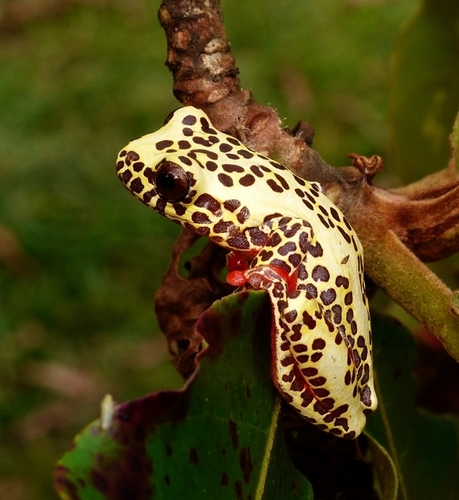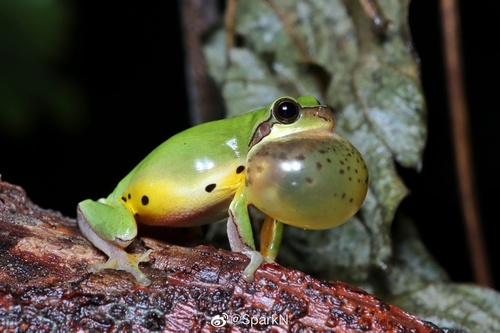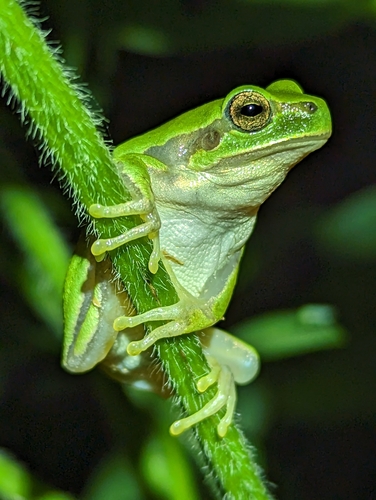
About Smilisca sila Duellman & Trueb, 1966
Adult Size
Adult Smilisca sila have a maximum snout–vent length of 45 mm (1.8 in) for males and 62 mm (2.4 in) for females.
Dorsal Skin Characteristics
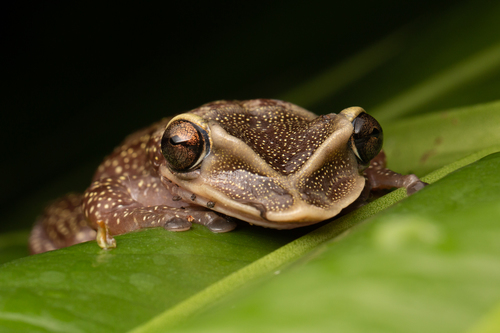
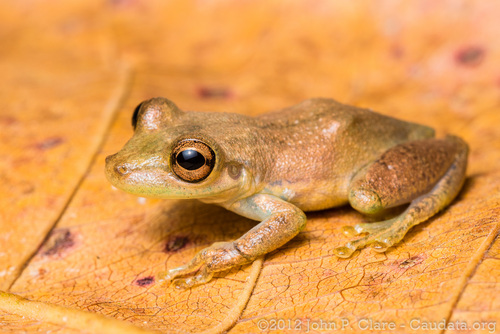
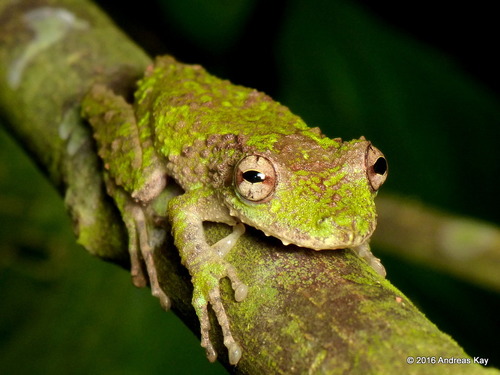
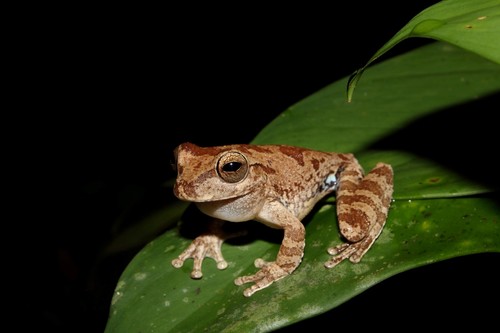
Their dorsal (upper) skin is tuberculate (bumpy) in texture, and has a gray, tan, or reddish-brown base color; individuals may also have white or green flecks, plus darker blotches and markings.
Ventral Surface Color
The ventral (belly) surface is creamy white.
Vocal Sac Differences
Males have a paired gray vocal sac, which they use to produce their characteristic choruses, while females have a single white vocal sac with brown flecks.
Limb Underside Markings
The underside of the thighs and groin is brown with blue spots, and the underside of the arm has yellow spots.
Iris Appearance
Their irises are brown with a black net-like pattern.
Toe Structure
Both front and back toes are webbed and end in large toe pads.
Sister Species Morphology Comparison
Adult Smilisca sila are very similar in morphology to its sister species, Smilisca sordida, but have a flatter snout and bumpier skin.
Tadpole Body Morphology
Tadpoles of this species have a relatively round body, weak muscles, and broad, short tails adapted for living in small ponds.
Tadpole Mouthparts
They have mouthparts specialized for scraping and chewing food.
Species Distribution
Smilisca sila occurs in the lowlands of southwestern Costa Rica, Panama, and northern Colombia.
Habitat Preferences
It prefers transitional zones between wet and dry lowland tropical forests near shallow rocky pools and stream banks, but can also be found in secondary forest, and sometimes in relatively open areas.
Elevation Range
This species is found at elevations ranging from 10 to 970 m.
Breeding Season Timing
Breeding happens during the dry season from January to April at low elevations; at high elevations, breeding may occur during the rainy season.
Female Egg Laying Sites
Females prefer to breed and lay eggs on gravel islands or banks alongside first-order streams.
Male Calling Positions
Males typically call from positions alongside streams that have ambient noise and overhanging vegetation, which can mask their calls from predators and provide hiding space if needed.
Tadpole Habitat
Tadpoles live in clear pools and slow-moving water, staying near the bottom.
Acoustic Communication Function
Acoustic communication is the most common form of communication among anurans, and for male Smilisca sila, it is the main way to attract and communicate with females through advertisement calls.
Call Exploitation By Predators
However, predators of this species – including the frog-eating bat Trachops cirrhosus and frog-biting midges of the genus Corethrella – also use these advertisement calls to locate Smilisca sila individuals to hunt or parasitize them.
Mating-Predation Trade-off
This creates a trade-off between individual mating success and higher predation risk, which has shaped how and when males choose to call.
Moonlit Night Calling Behavior
Males call more often, use more complex calls, and have a longer total calling period on moonlit nights than on moonless nights, because they can detect predators visually more easily when the night is bright.
Moonless Night Calling Behavior
On dark, moonless nights, males hide in overhanging vegetation and produce shorter, simpler calls at a lower frequency.