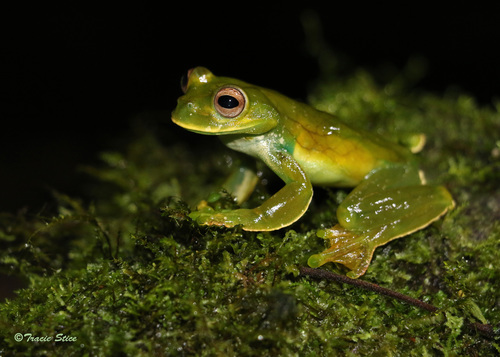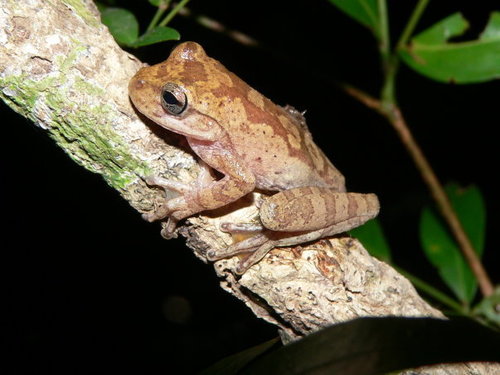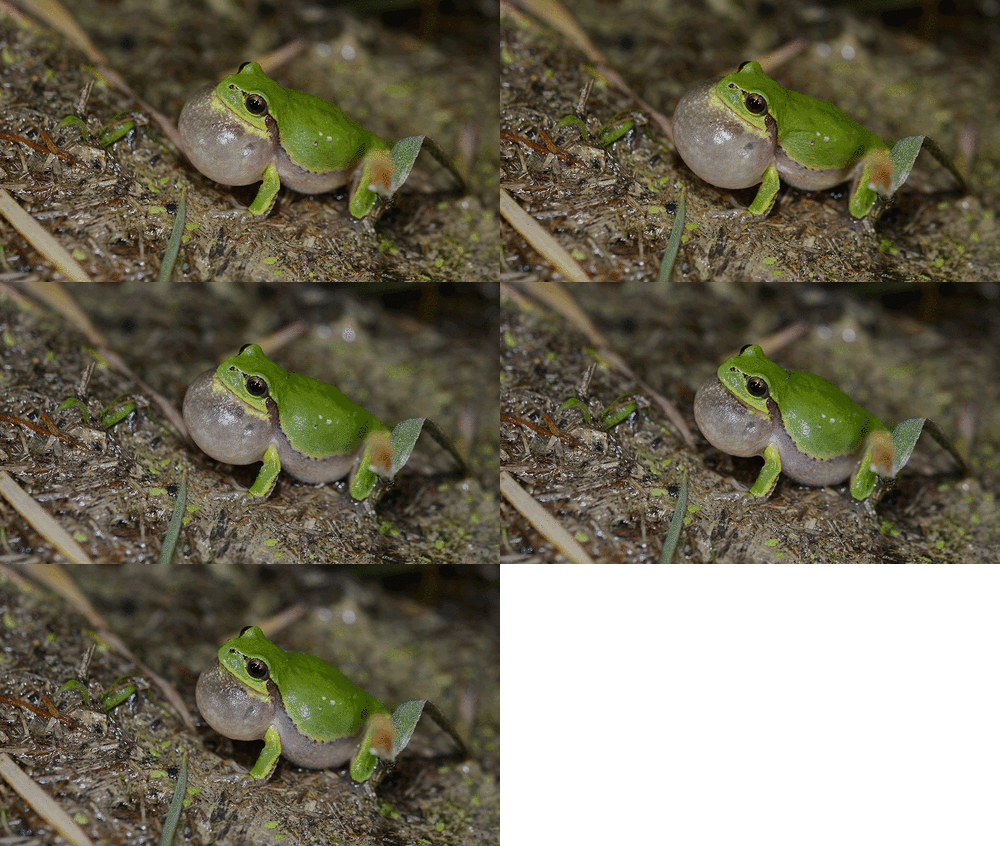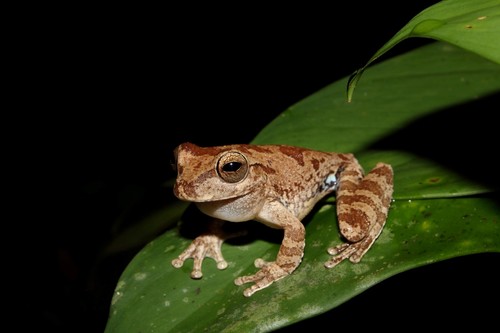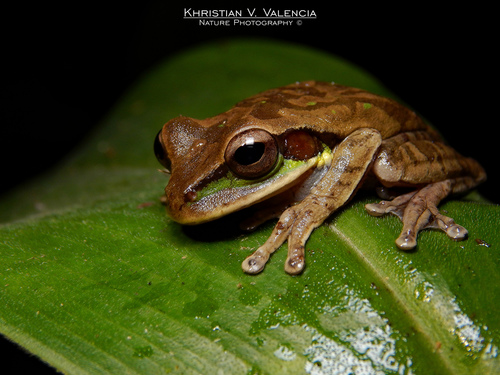
About Smilisca phaeota (Cope, 1862)
Nomenclature and Taxonomy
Smilisca phaeota, first formally described by Cope in 1862, is commonly called the New Granada cross-banded tree frog, and is also known as the masked tree frog. It is a species of frog in the Hylidae family.
Geographical Distribution
This species can be found in Colombia, Costa Rica, Ecuador, Honduras, Nicaragua, and Panama.
Natural Habitats
Its natural habitats include subtropical or tropical dry forest, subtropical or tropical moist lowland forest, rivers, freshwater marshes, intermittent freshwater marshes, plantations, rural gardens, urban areas, heavily degraded former forests, ponds, and canals and ditches.
Facial Marking Origin
The common nickname masked tree frog originates from the dark or black facial markings that start at the nose, travel back along the face toward the ear, and cover the eye.
Camouflage Function of Marking
This marking across the eye aids the frog in camouflage, because many predators locate prey by detecting open eyes.