About Sisyrinchium campestre E.P.Bicknell
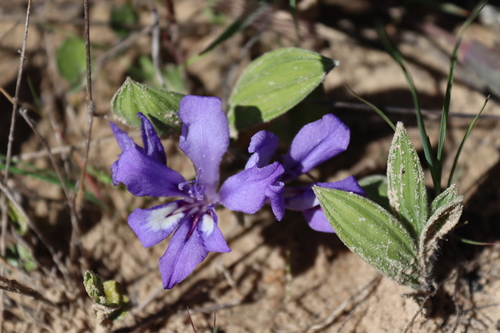
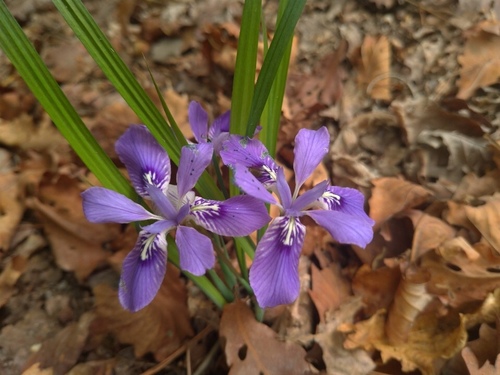
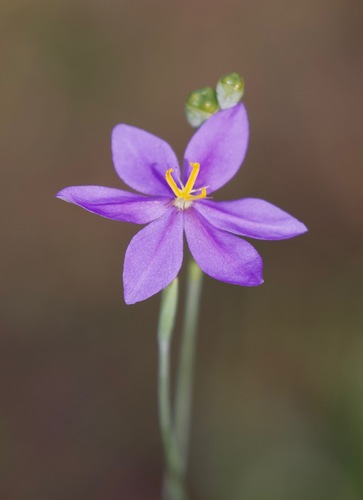
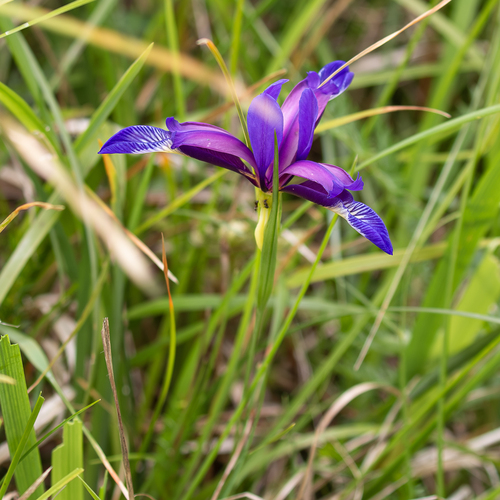
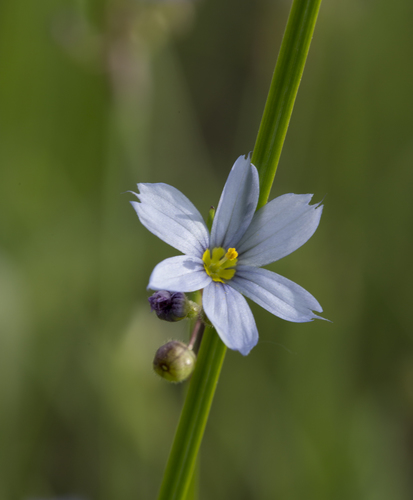
Sisyrinchium campestre, commonly known as prairie blue-eyed grass or white-eyed grass, is a small herbaceous perennial plant belonging to the iris family. It is native to prairies and meadows in the central United States and extreme southern Manitoba. Prairie blue-eyed grass is one of the more drought-tolerant species in its genus, Sisyrinchium. It blooms for approximately three weeks in late spring and early summer. Its flowers range from white to pale blue with yellow centers. The flowers have six tepals that measure 7 to 12.7 mm (0.28 to 0.50 in) long, each with a rounded end and a sharp point at the center. Flowers grow on slender pedicels (stalks) arranged in an umbel. This umbel is enclosed by two bracts, located at the top of an unbranched, flat stem. The leaves are grass-like, 3 to 10 inches (8 to 25 cm) long and 2 to 3 mm (0.08 to 0.12 in) across. The flower stem is roughly the same length as the leaves, or a little longer. The plant has a coarse, fibrous root system. Individual plants produce offsets and gradually form dense clumps over time.