About Sisymbrium erysimoides Desf.
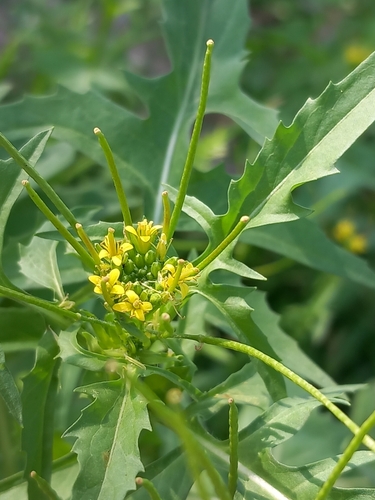
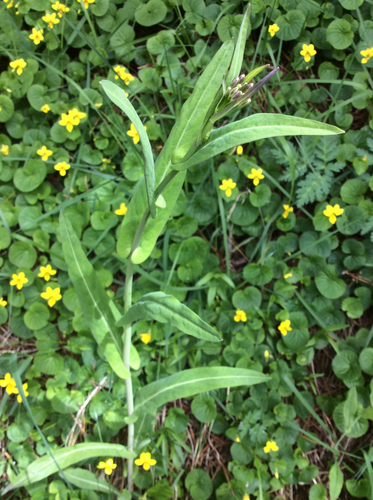
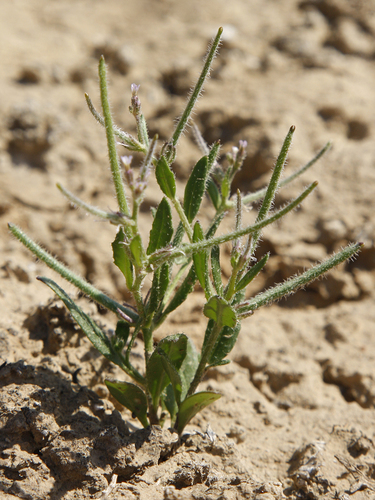
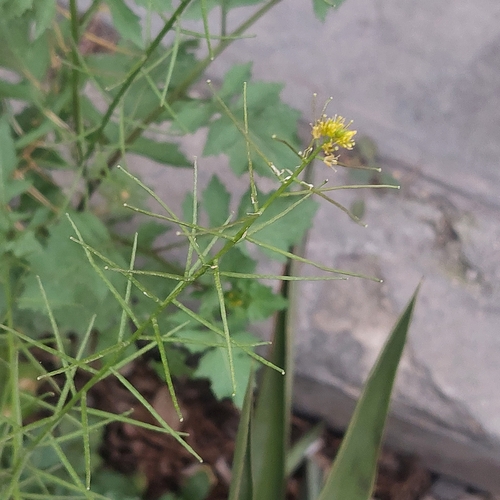
Sisymbrium erysimoides Desf. is a cool-season annual herb that grows erect, reaching 10 to 80 cm in height. It is either glabrous or covered in short pubescence. Its basal leaves grow up to 15 cm long, are lyrate-pinnatifid, toothed, and petiolate; upper leaves are reduced in size and shaped lanceolate, with most having toothed margins. Its flowerheads are arranged in a paniculate structure. The sepals are 1 to 2 mm long and glabrous. Petals measure 1 to 2.5 mm long, and range in color from yellow to pale yellow. The plant produces linear, straight siliqua that grow horizontally, 2.5 to 5 cm long, 1 mm wide, and taper into a style; the pedicels are thick and 2 to 5 mm long. Flowering occurs in late winter and spring. This species was introduced to Australia, where it is now widespread across dry regions west of the Tablelands. Its young leaves are eaten as salad. In ethnobotany, it is traditionally used as a medicinal plant to treat respiratory disorders. Several antioxidant molecules have been identified from this plant: apigenin, apigenin-7-O-galactoside, apigenin-7-O-β-rhamnoside, apigenin-7-O-glucuronide, kaempferol, apigenin-7-O-rhamnosyl galactoronide, kaempferol-3-xyloside-7-galactoside, quercetin-6,4′-dimethoxy-3-fructo-rhamnoside, and quercetin 4′-methoxy-3-fructo-rhamnoside. Extracts made from the whole plant have been reported to have anti-inflammatory and analgesic activities.