About Sison amomum L.
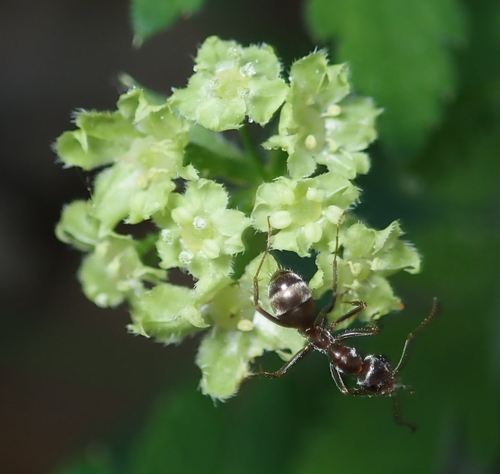
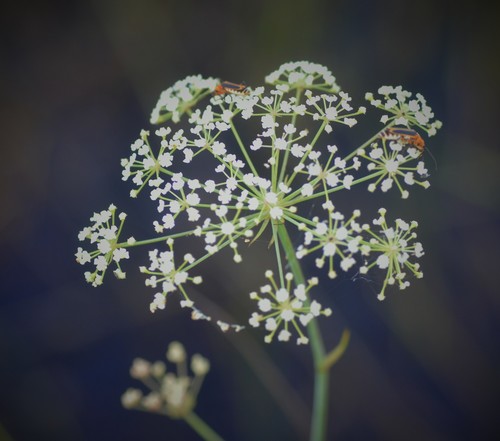
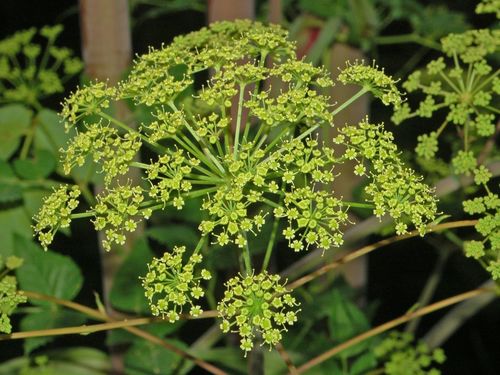
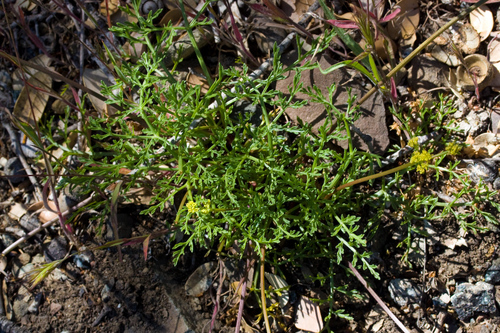
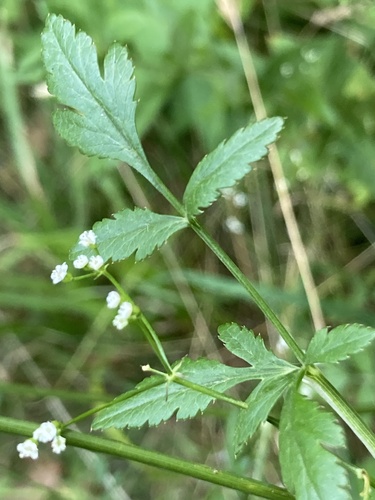
Sison amomum L., commonly known as stone parsley, is an erect, hairless biennial plant. Its solid, thin stems have fine ridges, are profusely branched, have a slight sheath at each junction, and produce a foul odor when crushed, described as similar to petrol or nutmeg. The species can reach a height of 1 m (3.3 ft), though heights of 30 to 70 cm (12 to 28 in) are more common. Its ripe fruits are globular, ridged, and about 3 mm (0.12 in) in diameter. In Britain, it usually flowers between July and August, and sometimes as late as September. Despite its foul odor, the roots, leaves, and seeds of Sison amomum are edible, and it has been used historically for food; it is classified as a herb, and its seeds can be used to make condiments. Stone parsley grows in rough grassland, grassy banks, road verges, beside railways, near hedgerows and hedge banks, on pathways, and on waste and disturbed ground, often on heavy soil, especially lime-rich soil. The species is mainly found in Southern and Western Europe near the Mediterranean Sea, where it prefers a temperate climate. On the European continent, it is present in Albania, Bulgaria, Romania, Greece and other Balkan countries, as well as France, Italy, Spain, and Switzerland, with very small populations in Belgium, Germany, and Norway. It also grows around the Black Sea coast, in Crimea, the Caucasus region, both European and Asian parts of Turkey, and in Algeria, North Africa. It grows on the island of Great Britain, and the Mediterranean islands of Sicily, Corsica, Sardinia, and the Balearic Islands. In Britain, it occurs mostly in South East England, with slightly lower numbers in South West England, the Midlands, and South Wales. It is also present but rarer in North Wales, West Wales, Northern England, and the Scottish Borders; it has not been reported in northern Scotland, and does not grow on the island of Ireland. Stone parsley is an introduced species in New Zealand, where it is concentrated mostly on the North Island. In the early 17th century, stone parsley was only recorded in a region of Southern France near the Mediterranean Sea and the Spanish border. By the early 18th century, it was recorded around the Paris area, and by the late 18th century, it appeared in central and southern France, Wales, and Northern England. By the mid 19th century, the plant was found in greater numbers across much of France and Britain, including Cornwall, and also had a small presence in Spain, Belgium, and Corsica. By the start of the 20th century, it had a substantial presence in Italy and a small foothold in Germany, Romania, and Sardinia. By 1950, a small population had appeared in Sicily, and the species was also recorded on the North Island of New Zealand, on the opposite side of the globe. By the early 21st century, the species was recorded as much more widespread across Britain, France, and New Zealand, had increased numbers in Spain, Italy, and Sardinia, and had spread to Switzerland, New Zealand's South Island, the Caucasus region near the Black Sea, and small populations in Norway.