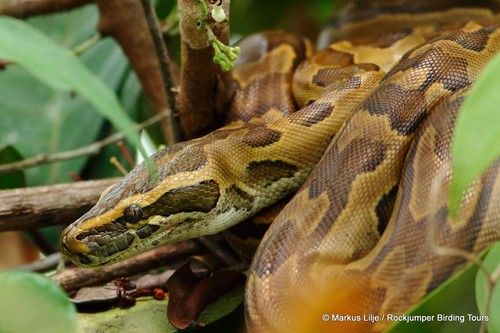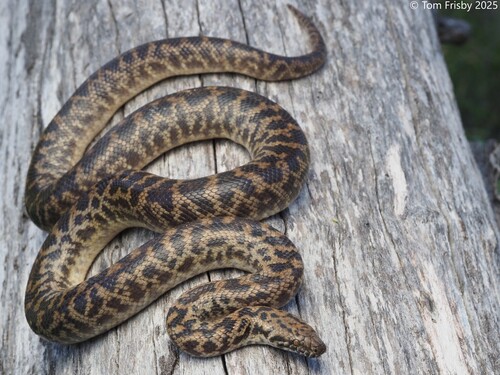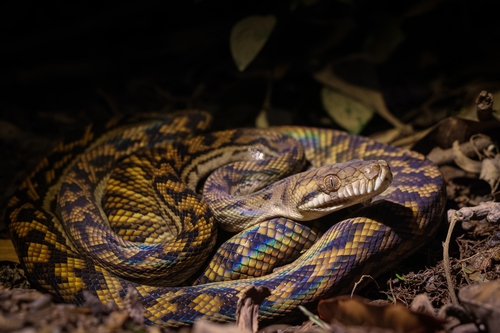
About Simalia kinghorni (Stull, 1933)
Common Name and Arboreal Status
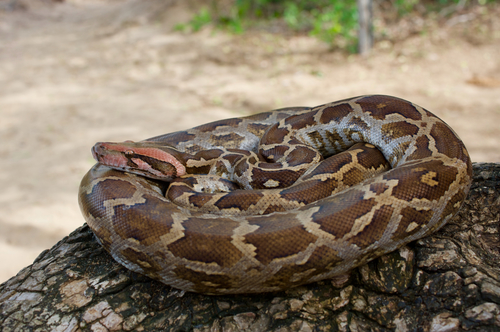
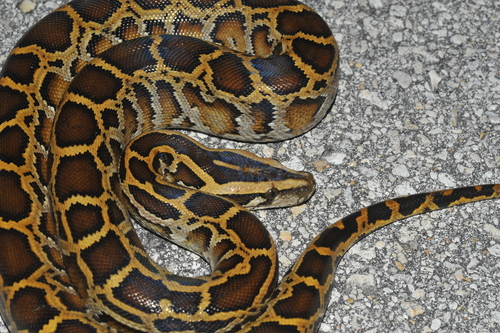
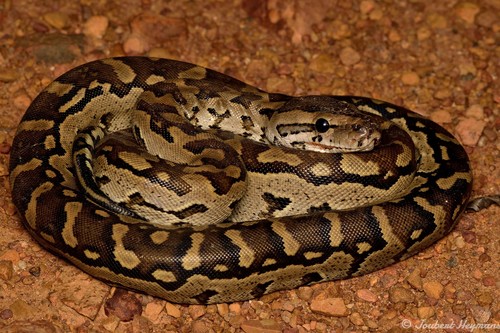
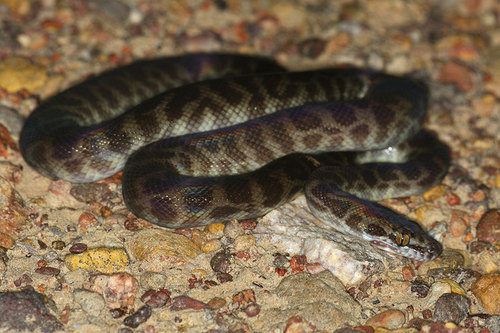
Simalia kinghorni, commonly known as the Australian scrub python, is generally considered arboreal (tree-dwelling), which makes it one of the world’s largest and longest arboreal snake species.
Dorsal Pattern and Sheen
This snake has an ornate dorsal pattern made up of shades of brown and tan, with many natural variations, and it has an iridescent sheen.
Ventral Coloration
Its belly is usually white, and sometimes displays yellowish tones.
Head Scales and Sensory Features
The top of its head is covered by large, symmetrical scales called shields, and heat-sensing pits are present on its rostral scale and some of its labial scales.
Mainland Australian Distribution
Simalia kinghorni is mostly found in northern Australia, specifically in Queensland and on Cape York Peninsula.
Torres Strait Island Distribution
The species also lives on several islands in the Torres Strait, including Hinchinbrook Island.
Coastal Range Extent
On the Australian mainland, its range runs from the tip of Cape York Peninsula south along coastal rainforest, through the Atherton Tableland, the forested eastern foothills of the Great Dividing Range, and along the coast past Mount Speck to the Burdekin River, south of Townsville.
Southerly Population Discovery
In 2004, an additional, more southerly population was documented in the Conway rainforest, south of Airlie Beach.
Southern Population Knowledge Gaps
No accurate information is currently available on the size of this southern population, or on possible connections between this population and more northern populations of the species.
Southern Population Origin Hypothesis
It is hypothesized that this southern population was established in 1990 when adult animals escaped from a local zoo, and the population has successfully spread since then, living in a variety of forests and more densely vegetated areas of the Australian bush.