About Sesuvium maritimum (Walter) Britton, Sterns & Poggenb.
Species Classification and Growth Form
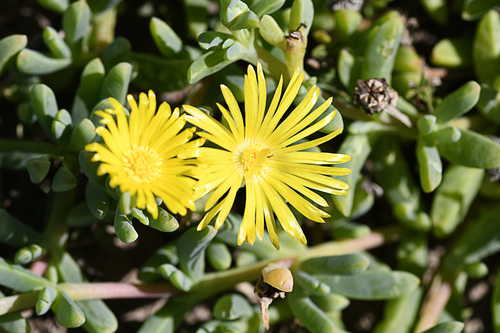
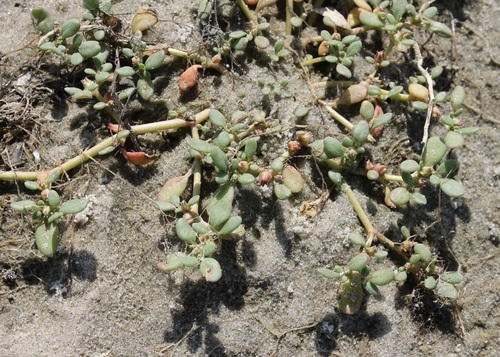
Sesuvium maritimum is a succulent herb that can grow up to 30 cm tall.
Leaf Arrangement and Dimensions
It has an opposite or sub-opposite leaf arrangement made up of simple, oblanceolate or linear fleshy leaves that measure around 1–2.5 cm long and 1–5 mm wide.
Leaf Surface Texture
Its leaves can be smooth and glabrous, or rarely minutely papillose, with dozens of fleshy projections called papillae.
Leaf Apex and Margin
Leaf apexes can be rounded, acute, or obtuse, and leaf margins are entire.
Flower Shape and Petal Structure
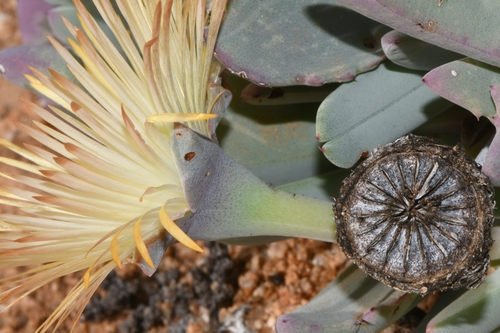
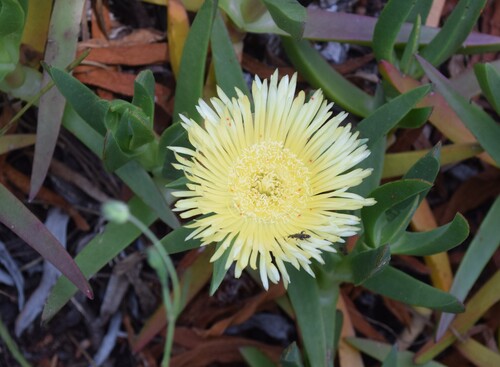
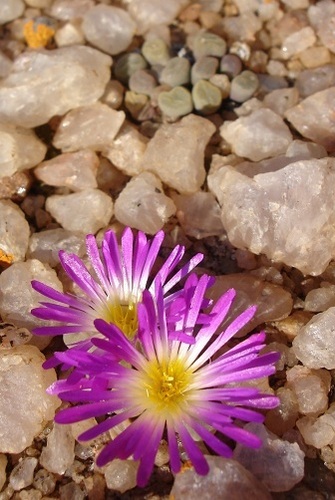
Flowers of this species are actinomorphic, with 4–5 fused petals that form a cup-like structure.
Sepal Characteristics
Sepals are 2–3 mm long and attached near the top of the calyx tube.
Reproductive Floral Parts
Each flower contains 5 usually pink stamens and a partially inferior ovary, and inflorescences are white or pink.
General Habitat Range
This plant is most commonly found in coastal regions.
North American Coastal Distribution
Its distribution runs along the southeastern coast of North America from as far north as Rhode Island, through coastal eastern US states including Alabama, Delaware, Florida, Georgia, Louisiana, Maryland, Mississippi, North Carolina, South Carolina, Virginia, New Jersey, Pennsylvania, and Texas.
Broader Global Distribution
It has also been recorded in Kansas and Oklahoma, and extends south to southern Mexico, Puerto Rico, Cuba, the Bahamas, and other surrounding islands.
Traditional Medicinal Uses
Historically, this sea purslane was used medicinally to treat scurvy and venomous wounds.
Coastal Ecosystem Role
It is also one of several plant species that helps prevent coastal erosion.