About Sesbania drummondii (Rydb.) Cory
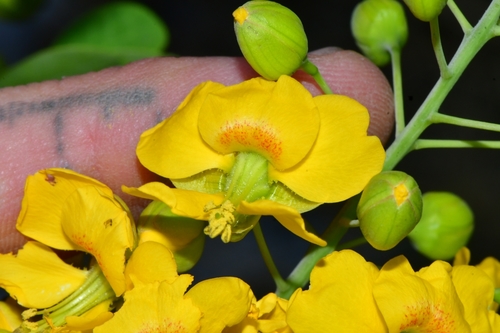
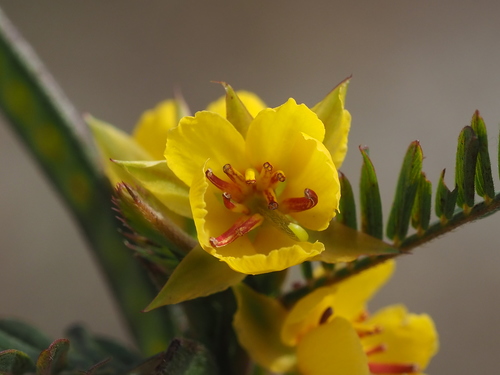
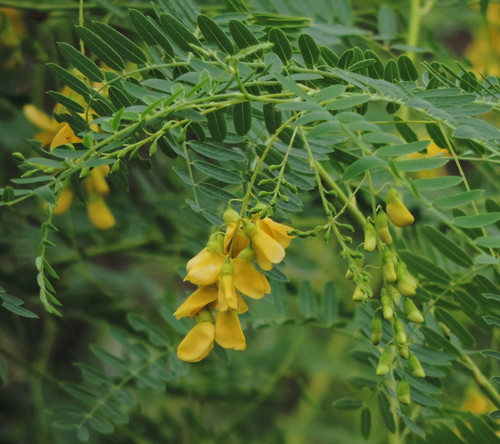
Sesbania drummondii (Rydb.) Cory, commonly called poisonbean, rattlebox, rattlebush, sennabean, and Drummond sesbania, is a medium-sized perennial shrub in the legume family Fabaceae. It is native to the southeastern United States, ranging from Texas east to Florida. These woody-based shrubs reach 1 to 3 metres (3.3 to 9.8 ft) in height, and are typically heavily branched in their upper portion. The branches are thin and spread widely. Its medium green leaves are alternate, deciduous, and pinnately compound. Leaves usually hold 12 to 24 leaflets, though they can occasionally grow as many as 60. Each individual leaflet is oblong shaped, measuring 2 to 3 centimetres (0.79 to 1.18 in) long. Its orange-yellow, pea-like flowers grow in drooping racemes on long stems, and often have red lining on the inside. Seed pods of this species are four-sided, four-winged, and around 10 centimetres (3.9 in) long. The seeds inside the pods rattle when the pod moves, which gives the plant its common name rattlebush. Seeds within the pods are separated by transverse partitions. This species flowers from May to October, and typically retains most of its seed pods. The pods remain attached to the plant until the plant dies back to ground level for winter. This plant prefers moist soils in ditches, frequently inundated meadows, depressions, and the open edges of lakes, ponds, and streams. The seeds are poisonous, containing the toxin sesbanimide. Animals that grow up around this plant learn to avoid it, due to the foul taste of its green and flowering growth. However, when naive cattle, goats, or sheep are put onto pastures that contain dried S. drummondii plants in late fall and winter, they are often poisoned. Affected animals often die within 24 hours. This species is named in honor of Scottish-born naturalist Thomas Drummond, who lived from 1793 to 1835.