About Senna spectabilis (DC.) H.S.Irwin & Barneby
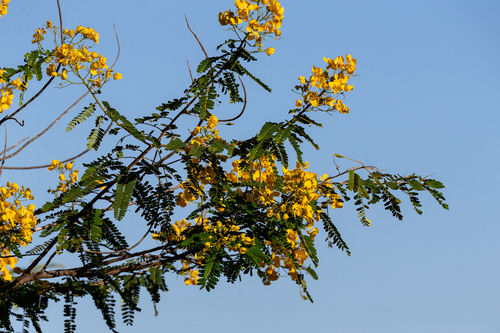
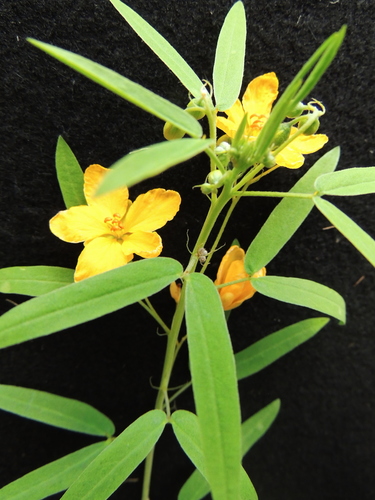
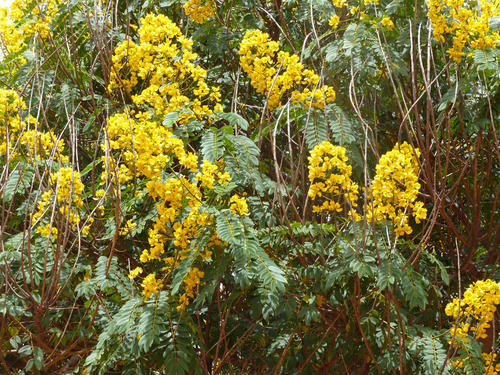
Senna spectabilis (DC.) H.S.Irwin & Barneby is a deciduous shrub or tree that grows 15 to 20 feet tall and 15 to 20 feet wide. It has a dense, symmetrical, rounded vase-shaped crown. It is pollinated by bees and has a very fast growth rate. This species is native to South America, originally occurring in eastern tropical Brazil and coastal Ecuador. It has since spread across Central America and the West Indies, growing in forests up to 2000 meters in altitude. Its habitats include rain forest, semi-deciduous forest, dry forest, montane forest, and dry valleys. The plant requires full sunlight and well-drained soil to grow. It can flourish in a wide range of soil types, including moist, clay, sand, loam, slightly alkaline, and acidic soils, and it even grows in poor black cotton soils. However, it struggles to adapt to soils with high aerosol salt concentrations. No diseases are known to affect this plant. Due to its invasive nature, it can now be found in tropical regions worldwide. Senna spectabilis has several medicinal properties. It can be used to treat ringworm and skin diseases. Alcohol extracts of its leaves show significant antifungal activity, indicating potential use for infections caused by Candida albicans. It is also effective against the foodborne pathogen B. It produces several substances considered important for human metabolism, which are used in medicine or pharmaceutical products. It yields piperidine alkaloids, pentacyclic terpenoids, and anthraquinones for pharmaceutical use. It is used in both Eastern and Western traditional medicine to treat a range of diseases and symptoms. Traditional healers in Cameroon use it to treat epilepsy, constipation, insomnia, and anxiety. A recent study observed the anticonvulsant effects of Senna spectabilis on mice with seizures induced by maximal electroshock (MES), pentylenetetrazole (PTZ) and pilocarpine (PC). The study found that the lowest dose of the plant protected 100% of mice with PTZ-induced seizures. Across different doses tested, the plant provided up to 75% protection against seizures induced by PC. The study concluded that Senna spectabilis has anticonvulsant activity, most likely acting on the GABA receptor complex. Beyond medical uses, Senna spectabilis is used in agroforestry as a shade tree. It is useful for fodder, mulch, firewood, and as a source of honey. Its heartwood is brown, and its sapwood is off-white. The wood is heavy, and varies from soft to hard. When kept dry, it is resistant to termites. For this reason, Senna spectabilis is commonly harvested for economic purposes. Its wood is used for tool handles, boxes, furniture, lumber, and other construction materials. It is also used as fuelwood and to make charcoal. It was introduced to Africa as an ornamental plant and boundary marker. While it is not highly valued overall, it produces good quality firewood. Senna spectabilis can invade disturbed forests, forest edges, and gaps, where it can establish and suppress the regeneration of native species. Recently, Tamil Nadu has begun producing press paper from this invasive tree that is spreading in Mudumalai Tiger Reserve, as a way to better utilize the species.