About Senna reticulata (Willd.) H.S.Irwin & Barneby
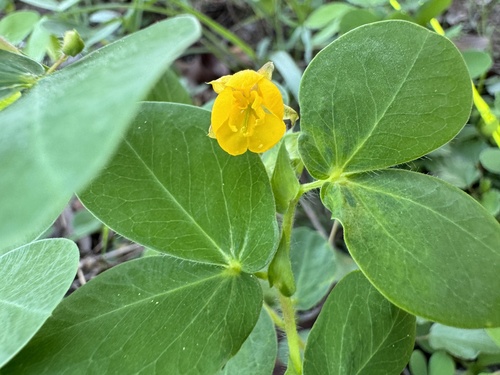
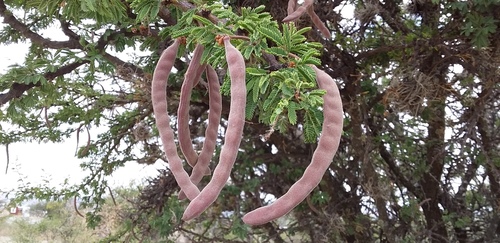
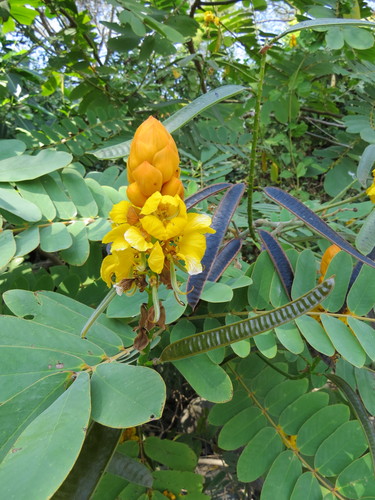
Senna reticulata, known as mangerioba grande or maria mole in Portuguese, is a pioneer tree species that grows on highly fertile floodplains in South America. This species has documented medicinal uses, but farmers consider it a noxious weed. It is called matapasto, which translates to meadow killer, because it grows quickly and outcompetes neighboring plants by shading them out. In local folk medicine, Senna reticulata is used to treat liver problems and rheumatism. Alcoholic extracts made from the wood of this plant contain 1,3,8-Trihydroxyanthraquinone, along with a number of other compounds: chrysophanol (1,8-dihydroxy-3-methylanthraquinone), physcion (1,8-dihydroxy-3-methyl-6-methoxyanthraquinone), aloe-emodin (3-carbinol-1,8-dihydroxyanthraquinone), lunatin (3-methoxy-1,6,8-trihydroxyanthraquinone), emodin (6-methyl-1,3,8-trihydroxyanthraquinone), and chrysophanol-10,10'-bianthrone. The xanthonoid cassiaxanthone and the anthraquinone rhein can also be found in Senna reticulata.