About Senna obtusifolia (L.) H.S.Irwin & Barneby
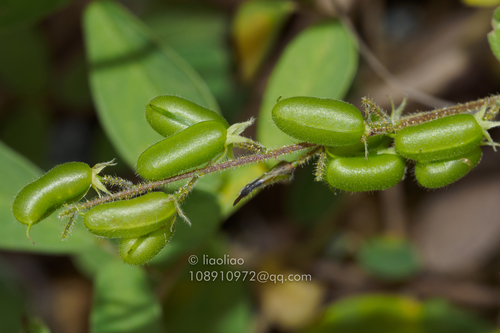
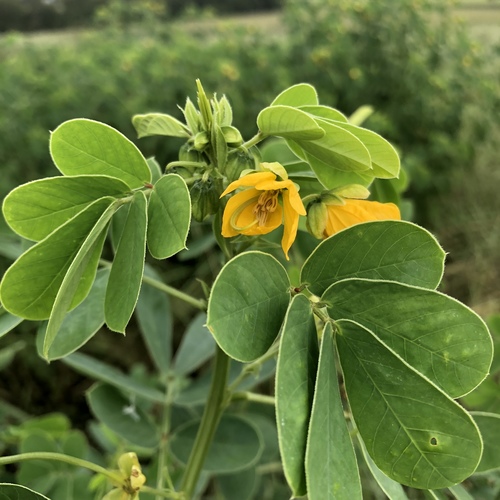
Senna obtusifolia (L.) H.S.Irwin & Barneby, commonly called Chinese senna, American sicklepod and sicklepod, is a species in the plant genus Senna; it is sometimes separated into the monotypic genus Diallobus. This plant grows wild across North, Central, and South America, Asia, Africa, and Oceania, and is considered a particularly problematic weed in many regions. It has a long history of taxonomic confusion with Senna tora, and many older sources refer to this species under the name S. tora. In traditional East Asian medicine, its seeds are known as jué míng zǐ in Chinese (simplified: 决明子; traditional: 決明子), gyeolmyeongja in Korean, and ketsumeishi in Japanese. In Sudan, the plant’s green leaves are fermented to make kawal, a high-protein food product eaten as a meat substitute by many local people. Its leaves, seeds, and root are also used in folk medicine, primarily across Asia. Folk beliefs hold that the plant has a laxative effect and is beneficial for eye health. As a folk remedy, seeds are often roasted and boiled in water to make sicklepod tea. The plant’s seeds are a commercial source of cassia gum, a food additive most commonly used as a thickener, which gets its name from Chinese senna’s former classification in the genus Cassia. Roasted and ground seeds have also been used as a coffee substitute. In vitro cultures of S. obtusifolia, such as hairy roots, may serve as a source of valuable secondary metabolites for medical use. Senna obtusifolia occurs naturally in tropical and subtropical regions of the Americas, but has been introduced to Africa, parts of Europe, the Middle East, the Indian subcontinent, parts of Southeast Asia, New Guinea and parts of Australia. Its status as a native species in North America is disputed: it is most commonly considered native to the Southeastern United States, while some sources also treat it as native to eastern and central U.S. as far north as New York. However, the earliest documented records of the species in North America date to the early to mid 1800s. In its natural habitat, it grows on the shores of lakes and rivers, and also occurs as a weed in pastures and along roadsides at altitudes up to 1,100 m (3,600 ft). Unlike most other members of the family Fabaceae, Senna obtusifolia is non-nodulating and does not form a symbiotic association with soil bacteria. The species is usually self-pollinating, as many flowers are fertilized before they open, though bees frequently visit its flowers. S. obtusifolia has one extrafloral nectary on the upper surface of its leaf rachis for Caribbean and North American forms, and two for South American forms. These nectaries usually attract ants, but occasionally attract wasps, flies and small bees. It acts as a host plant for several Lepidoptera and other insects, including Eurema lisa, Eurema nicippe, Phoebis sennae cubule and Calycomyza malvae. Northern bobwhite and greater prairie chickens are known to feed on its seeds. Mammals rarely browse this plant, because its foliage has a foul taste and is toxic, and it is known to poison livestock. In traditional East Asian medicine, the seeds of this species hold a place as a materia medica, with the matching Korean name gyeolmyeongja (결명자; 決明子) in traditional Korean medicine, and the Japanese name ketsumei-shi (ケツメイシ, 決明子) in Japanese kampō medicine. Jue ming zi is widely used across Asia, including Southeast Asian countries such as Thailand, and its herbal sicklepod tea is consumed in place of regular tea to prevent hypertension. It is also claimed to help improve eye clarity. In Korea, medicinal gyeolmyeongja is typically prepared as tea called gyeolmyeongja-cha, or sickle pod tea. Senna tora (formerly Cassia tora) is used in similar ways, and while the two are distinguished in Chinese markets as the "little/lesser" variety shao jue ming (小決明) for S. tora, the Japanese government pharmacopoeia (Nihon yakkyokuhō) officially recognizes both S. obtusifolia and S. tora as acceptable commercial sources of ketsumeishi. The Japanese beverage habu-cha was originally brewed from seeds of S. occidentalis, which is locally called habusō, but currently marketed habu-cha uses S. obtusifolia as a substitute, because it is a higher-yielding crop. In Western medical research, the antimicrobial activity of leaf extracts from Senna obtusifolia has been studied.