About Senecio scandens Buch.-Ham. ex D.Don
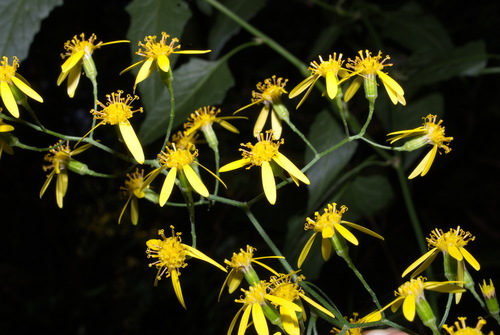
Scientific name: Senecio scandens Buch.-Ham. ex D.Don. This evergreen climber has a rhizomatous rootstock, and reaches 2 to 5 metres in length. It produces slender, scrambling, multibranched woody stems. It is frost-tender, and bears yellow daisy-like flowers in autumn. The species is native to China, southern Japan, the Indian subcontinent, Myanmar, Thailand, Laos, Vietnam, Cambodia, Malaysia, Indonesia (Sulawesi), and the Philippines. It grows in forests, brushwood, shrublands, on rocks, near buildings, and along watercourses, at elevations ranging from sea level up to 4,000 metres. Senecio scandens is used as a medicinal herb in China, and is a constituent of more than 100 different herbal medicines. It contains pyrrolizidine alkaloids, plus a range of other compounds including flavonoids, phenolic acids, terpenes, volatile oils, and carotenoids. The plant has documented anti-inflammatory, antimicrobial, anti-leptospirosis, hepatoprotective, antioxidant, antiviral, antitumoral, analgesic, mutagenic, and toxicological activities.