About Selene setapinnis (Mitchill, 1815)
Body Shape and Fin Structure
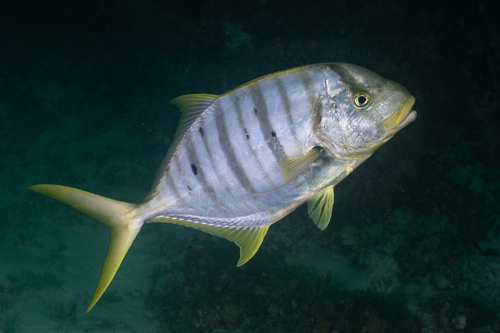
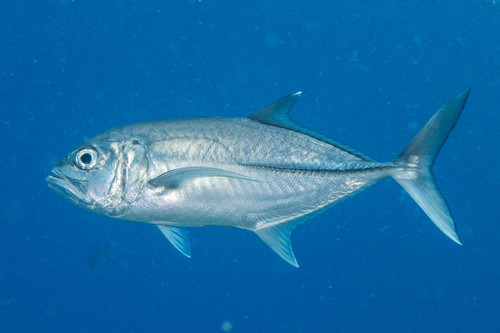
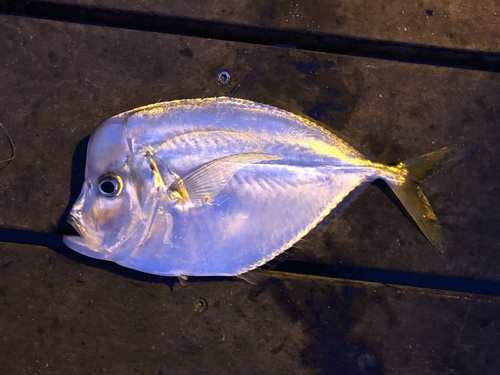
The Atlantic moonfish, scientific name Selene setapinnis (Mitchill, 1815), is a slender, deep-bodied fish with an extremely compressed body shape. It has 8 spines in its dorsal fin, and 2 spines in its anal fin. It also has 21 soft dorsal rays and 17 soft anal rays.
Head Features
Its upper jaw is short, while its lower jaw protrudes and extends longer than the upper jaw. This species has a sloped, bent forehead and rather large eyes.
Caudal Region Details
Its caudal fin is forked, and is attached to a large, hard caudal peduncle. Atlantic moonfish have a faint spot at the base of their pectoral fins.
Coloration
Their body color is silvery or metallic blue, with a yellowish caudal fin. The dorsal and caudal peduncle regions have dark edging along their edges.
Maximum Size
Atlantic moonfish reach a maximum total length of 39 centimeters.
Habitat Preferences
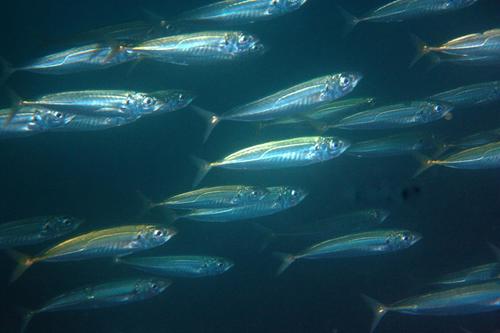
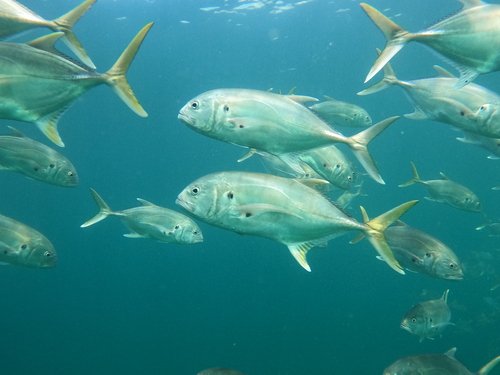
Atlantic moonfish live in schools at the bottom of inshore waters. Juveniles are found on muddy bottoms in brackish waters.
Depth and Climate Range
This species occurs across a depth range of 0 to 55 meters, and prefers subtropical regions.
Geographical Distribution
It is distributed in the Western Atlantic, from Nova Scotia, Canada, along the coasts of the Gulf of Mexico and South America, down to Argentina. In the eastern Atlantic, this species is replaced by Selene dorsalis.