About Scolymus hispanicus L.
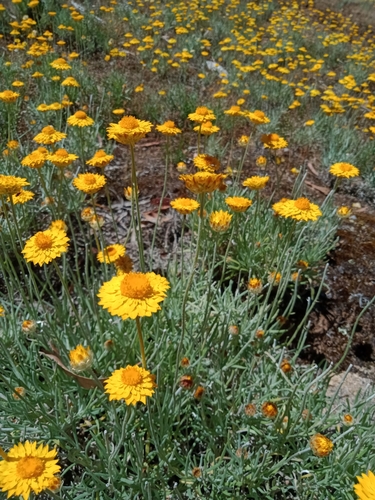
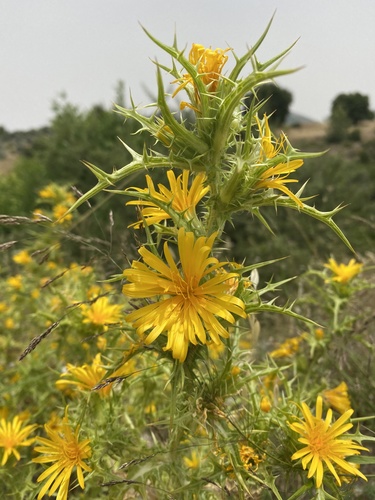
Scolymus hispanicus, commonly known as common golden thistle or Spanish oyster thistle, is a flowering plant belonging to the genus Scolymus in the Asteraceae family. It is native to southern and western Europe, with its range extending north to northwestern France. It is a herbaceous biennial or short-lived perennial that grows up to 80 centimeters tall, and produces spiny stems and leaves. Its flowerheads range from bright yellow to orange-yellow, and measure 2–3 centimeters in diameter.
This plant has been recognized for both medicinal and culinary uses since at least the era of Theophrastus in ancient Greece. While it has been occasionally cultivated, most consumed Scolymus hispanicus is currently harvested from wild populations. In parts of Spain, it is added to stews and eaten during the spring. It is also used in salads and soups. In the Spanish regions of Extremadura and Andalusia, it is served alongside scrambled eggs, where the plant is known locally as tagarnina. In sixteenth-century Salamanca, washed young plants including their roots were eaten either raw, or cooked in meat stews. In parts of southern Italy, the leaves are only collected during Holy Week, and are then used to bake a meat pie that is eaten on Easter.