About Sceloporus jarrovii Cope, 1875
Taxonomic Naming
Sceloporus jarrovii Cope, 1875, commonly referred to as S. jarrovii, grows to a snout-to-vent length of 10.5 cm (4.1 in).
Size
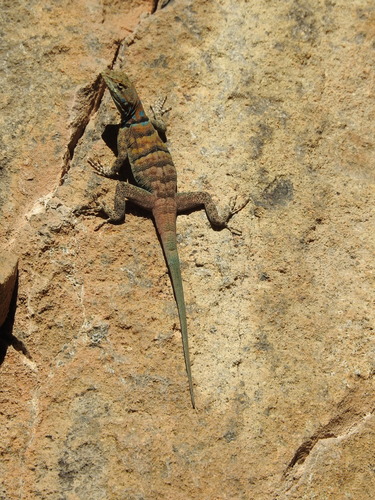
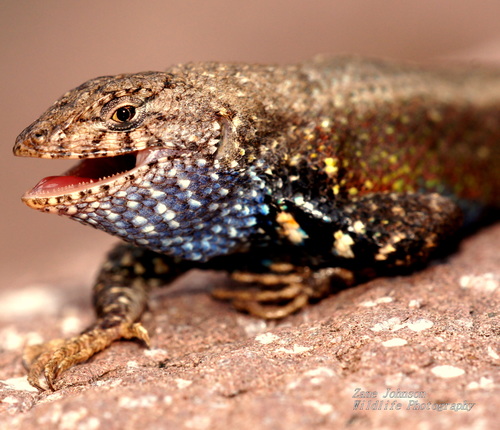
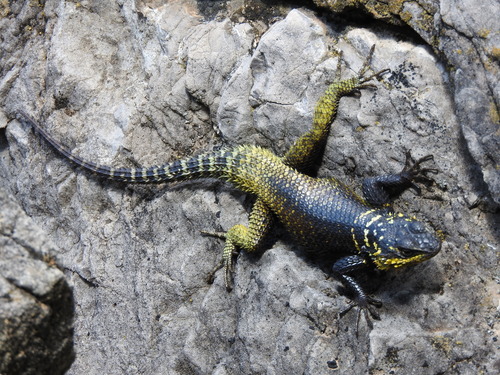
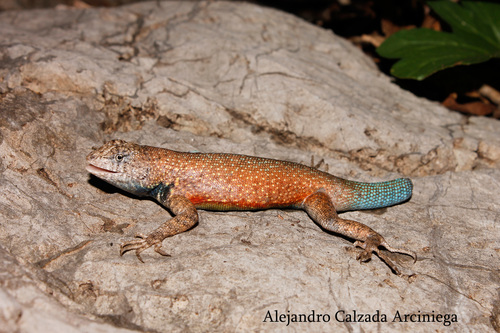
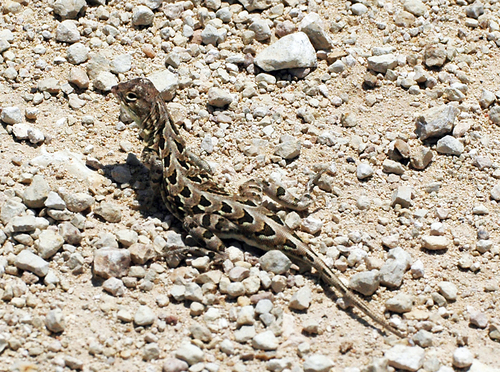
It has keeled scales, a crosshatch-patterned torso, and coloration that includes tints of pink, green, blue, and copper.
Scale and Base Coloration
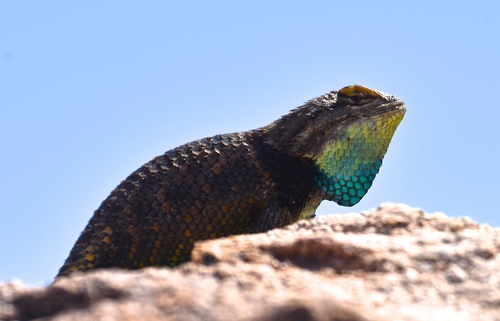
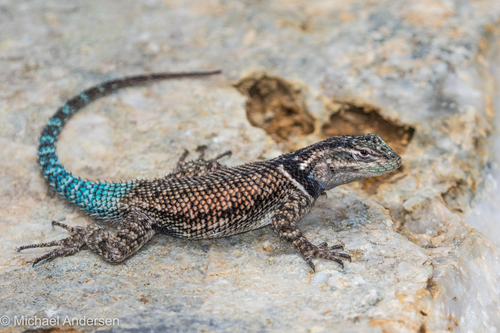
The top of its head is dark gray; males have a blue throat and blue belly.
Sexual Dimorphism in Color
This species can be distinguished from similar lizards by a complete black collar with a white inferior border.
Distinguishing Markings
The nominate subspecies S. j. jarrovii occurs in Arizona and New Mexico in the United States, and in the Mexican states of Chihuahua, Durango, Sonora, northern Tamaulipas, and western Zacatecas.
Nominate Subspecies Range
The subspecies S. j. lineolateralis is found only in Mexico, in the states of Durango and Zacatecas.
Second Subspecies Range
The preferred natural habitats of S. jarrovii are forest and rocky areas.
Preferred Habitats
Its habitat in the Mule Mountains of Arizona is shrinking due to climate change.
Habitat Threat
This shrinkage may lead to the species being designated and protected under the U.S. Endangered Species Act of 1973, a status that is pending the result of litigation.
Conservation Status
S. jarrovii is viviparous, meaning it gives birth to live young.