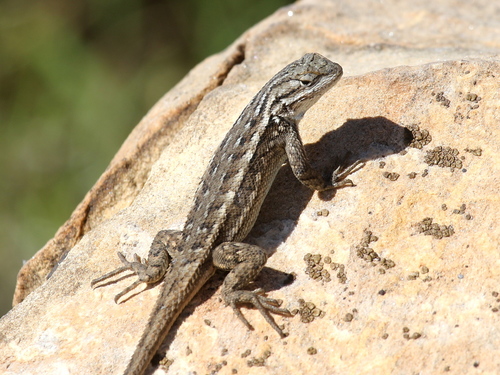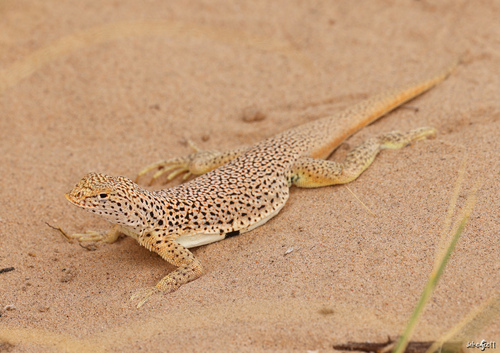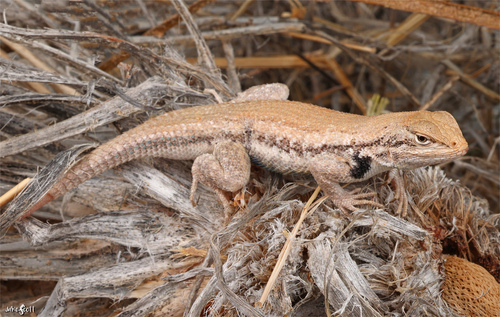
About Sceloporus arenicolus Degenhardt & Jones, 1972
Common Names
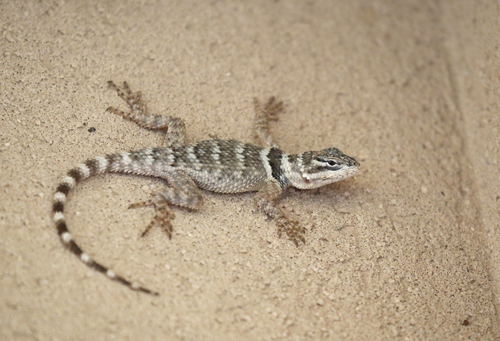
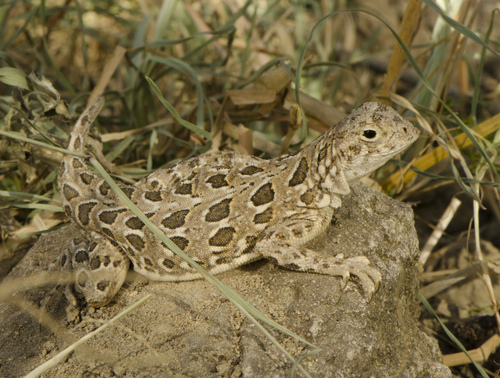
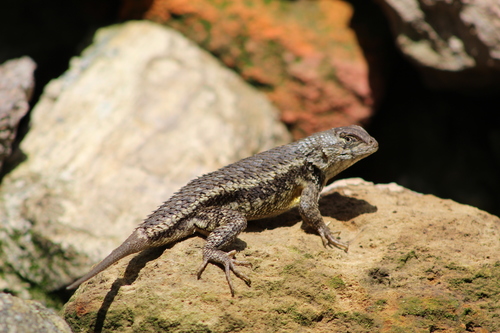
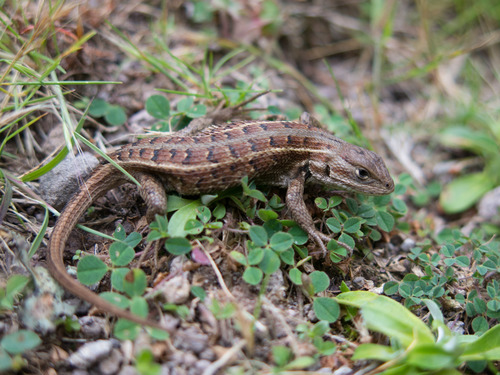
Sceloporus arenicolus, commonly called the dunes sagebrush lizard, is also known by the alternate common names sand dune lizard and dunes-sagebrush lizard.
Diet Classification
This species is an insectivorous spiny lizard.
Geographic Range
It occurs exclusively in shinnery oak sand dune systems located in southeast New Mexico and just five adjacent counties in Texas.
Habitat Restrictions
This lizard's habitat is restricted to semi-stabilized sand dunes with sloping, sandy topography.
Dune System Vegetation
These dune systems contain large networks of shinnery oak (Quercus havardii), short shrubs less than 2 meters tall, and sand sagebrush (Artemisia filifolia).
Primary Microhabitat
The lizard uses "blowouts" as its primary microhabitat.
Blowout Description
Blowouts are sandy, bowl-shaped gaps in the shinnery oak sand dune system that resemble small meteor craters.
Burrow Structure
Roots of shinnery oak shrubs form the structure for the dunes sagebrush lizard's burrows.
Burrow Use
The lizards retreat into these burrows from blowouts when the sand surface is too hot or too cold.