About Scarus fuscopurpureus (Klunzinger, 1871)
Taxonomic Classification
Scarus fuscopurpureus is a species of parrotfish in the family Scarus.
Size
Adult individuals of this species typically reach 34 to 41 cm in length.
Lateral Line Scale Count
For members of this species, the standard lateral line scale count ranges from 17 to 18 plus or minus 4 scales.
Fin Ray Count
This species has an estimated 10 dorsal rays, 9 anal rays, and 14 to 16 pectoral fin rays.
Gill Raker Characteristics
All species in the Scarus family have small gill rakers, though gill raker counts vary between species.
Identifying Scale Features
This species can be identified by its number of pre-dorsal scales and the number of scale rows on its cheek.
Color Variation Drivers
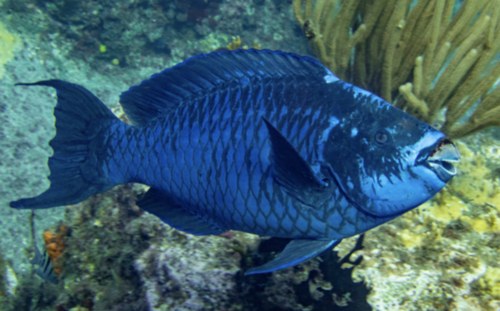
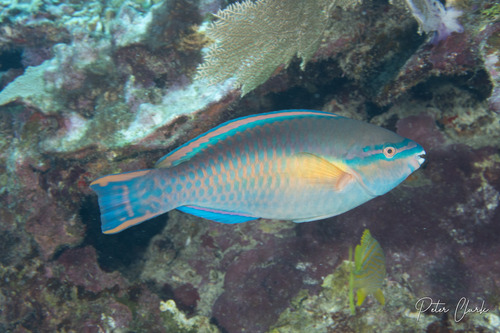
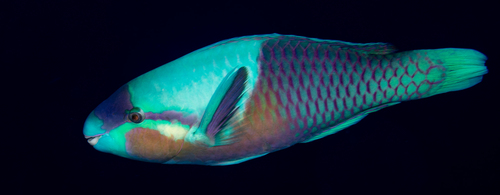
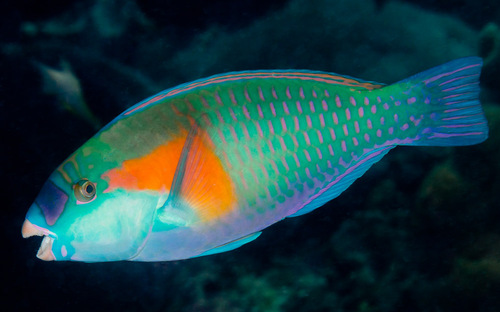
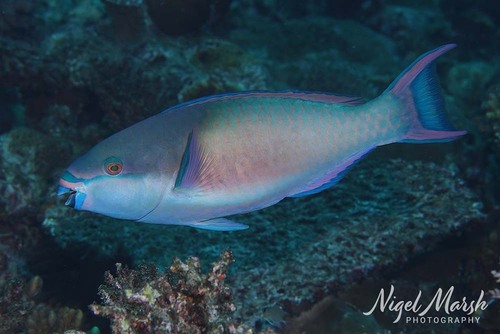
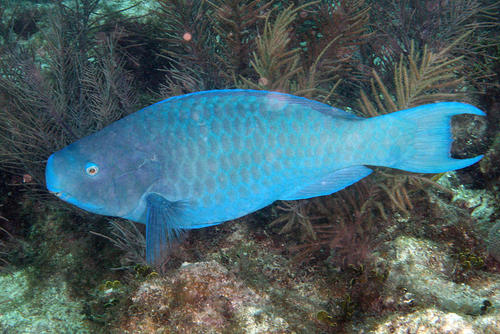
The body color of Scarus fuscopurpureus changes based on sex and growth stage.
General Body Coloration
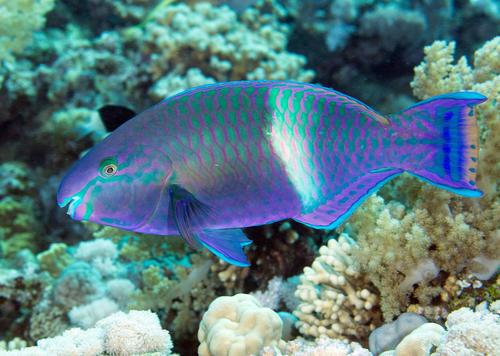
Overall body color ranges from brown to green or blue, with one whitish vertical band and scales with pale edges.
Fin Coloration
The dorsal, anal, and caudal fins are deep brown and purple.
Initial Phase Appearance
Fish in the initial growth stage have light and purple-brown bands, reddish scale edges, and a caudal fin that ranges from truncate to emarginate in shape.
Terminal Male Appearance
Terminal phase males may have a yellow band below the soft dorsal fin and a lunate caudal fin with a yellow edge.
Female Appearance
Females may have light grey lateral bars and darker overall body coloration.
Habitat Depth Range
This reef-associated species lives in shallow water between 2 and 20 meters deep, and it is most often found over sandy areas with coral heads and abundant vegetation.
Reef Proximity
These fish live close to coral reef ecosystems, approximately 2 to 3 meters above the waterbed.
Reproductive Strategy
Scarus fuscopurpureus is oviparous, and spawning occurs in mated pairs of one male and one female.
Social Grouping
This species is usually found in pairs or small groups.
Sexual Maturity and Sex Change
Across parrotfish species, sexual maturity is reached between 1 and 3 years of age, and some parrotfish species can change sex from female to male, including this species.
Life Stage Physical Variation
Like many other species in the family Scarus, the purple-brown parrotfish shows physical differences across different life stages.
Taxonomic Classification Challenges
Its sexual dichromatism and variable juvenile appearance have often led to unconfirmed species classifications, because it looks similar to other parrotfish in the family.
Feeding Morphology
Like other parrotfishes, Scarus fuscopurpureus uses its strong jaws and teeth to scrape algae off coral.
Coral Feeding Impact
Currently there is no confirmed information on whether this species’ feeding on coral negatively impacts the distribution, growth, or survival of coral colonies.
Diet Composition
Like other parrotfishes, this species feeds on algae and other aquatic flora, as well as zooplankton.
Parrotfishes are classified as herbivores.