About Scaphiopus holbrookii (Harlan, 1835)
Size
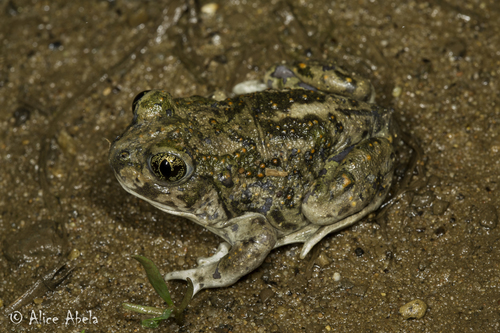
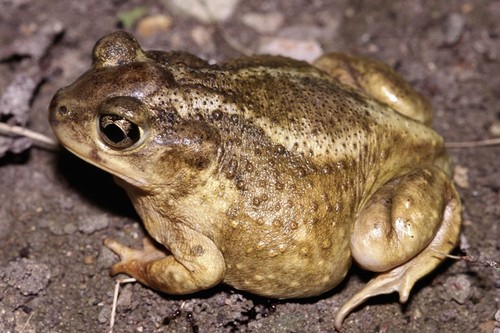
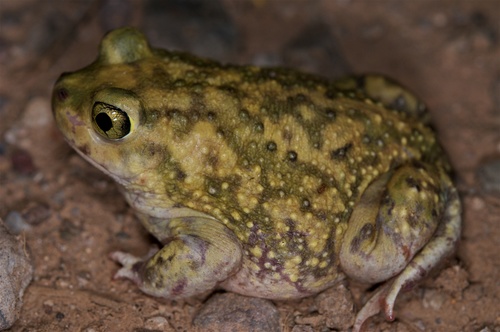
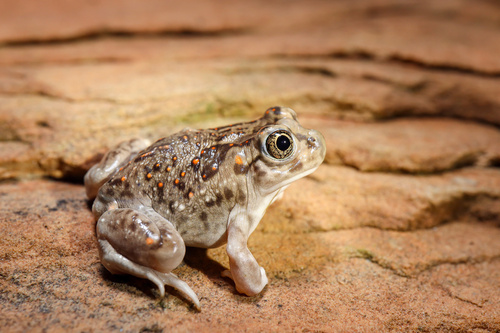
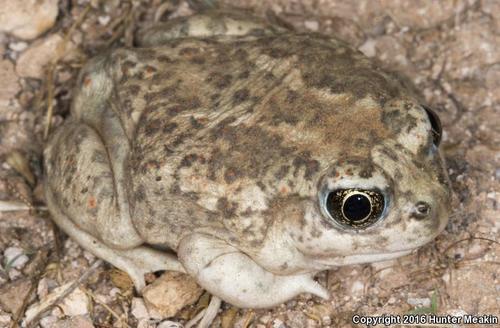
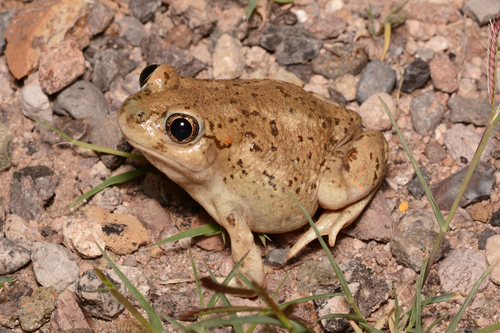
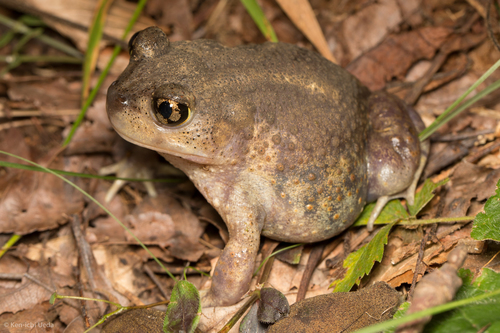
Adult eastern spadefoot (Scaphiopus holbrookii) average 44–57 mm (1+3⁄4–2+1⁄4 in) in length.
Coloration Patterns
They are brownish, with two yellowish stripes that start on the upper eyelids; these stripes may diverge or converge, creating a pattern that looks like a lyre or an hourglass. Some individuals may be very dark, with less distinct markings.
Skin Traits
Their skin is typically smoother and moister than that of other toads, and is sparsely covered with small warts across the whole body.
Burrowing Adaptations
This species is one of only four groups of burrowing terrestrial anurans. Each back foot has one burrowing spur, which is usually three times longer than the other toes.
Core Geographic Range
This species is mostly found in the southeastern United States, excluding mountainous areas. It also ranges north along the Atlantic coast into southern New England, where it is considered rare.
Inland Range Distribution
In inland states like Pennsylvania and New York, it occurs only as far west as the Appalachian Mountains and New York's Hudson River Valley. It is absent from the Appalachians, but is found west of the range in Tennessee, Kentucky, and the southern parts of Illinois, Indiana, and Missouri.
Regional Conservation Status
It is endangered in Connecticut, where only one viable population of the species remains in the state.
Preferred Soil Type
Eastern spadefoot prefers habitats with loose, commonly sandy, soil suitable for burrowing. One such habitat is longleaf pine forests with open understories maintained by intermittent natural burns.
Forest Habitat Preferences
The species is most abundant in forests with little leaf litter and sparse shrubs. Research on habitat selection has found that this species tends to stay around upland areas, and shows preference for locations close to deciduous shrub edges, low-growing pitch pine branches, and reindeer lichen.
Habitat Benefits
This habitat provides easy burrowing access, dense prey populations, and protection from predators.
Breeding Habitat Requirements
When not breeding, S. holbrookii occupies habitats including longleaf pine and wiregrass ecosystems, but it requires fish-free ephemeral ponds for breeding. Mating occurs via inguinal amplexus.
Breeding Timing and Egg Laying
Eastern spadefoot toads are explosive breeders that breed after sufficient rainfall; eggs are usually attached to submerged vegetation. Hatching and development rates are highly variable and influenced by ambient air and water temperatures.
Development Timeline
Eggs can hatch in as little as under 12 hours, or as slowly as over 7 days, and tadpoles develop into adult forms in 14–60 days. The eastern spadefoot toad can breed in almost any month of the year, but always breeds at night to reduce predation risk.
Tadpole Food Limitation
Because of the species' explosive breeding strategy, food often becomes limited for the large hatching tadpole populations.
Tadpole Diet
S. holbrookii tadpoles are omnivorous. When food is scarce, some larvae develop aggressive feeding habits and consume large animal prey, including other S. holbrookii tadpoles.
Cannibalistic Morph Traits
These cannibalistic morphs develop faster and grow much larger than non-cannibal tadpole morphs.