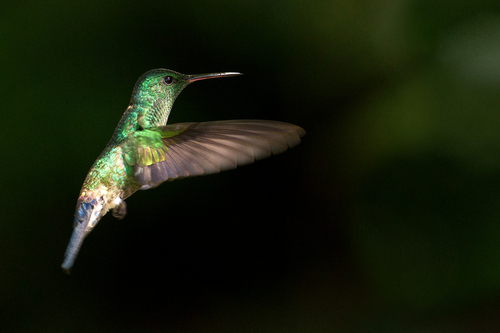
About Saucerottia hoffmanni (Cabanis & Heine, 1860)
Scientific Name and Size
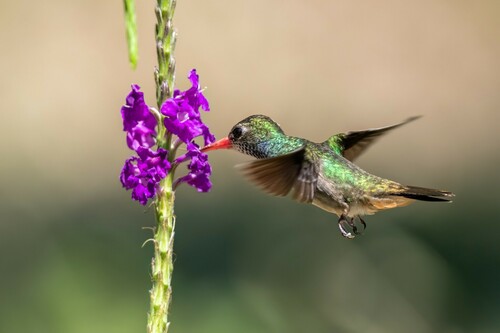
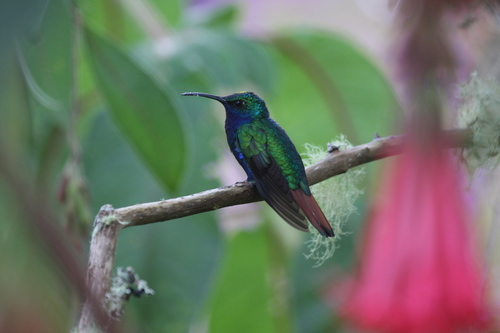
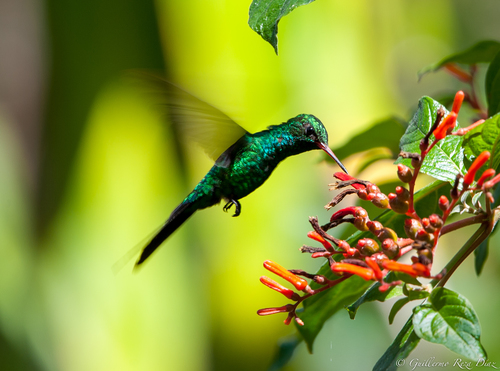
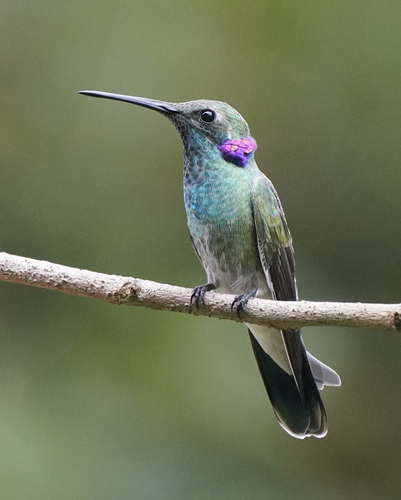
The blue-vented hummingbird, scientifically named Saucerottia hoffmanni (Cabanis & Heine, 1860), measures 8 to 11 cm (3.1 to 4.3 in) long and has an average weight of 4.45 g (0.16 oz). Both sexes share a straight bill, with a blackish upper mandible (maxilla) and a coral-red lower mandible (mandible) that has a dark tip.
Adult Male Upperparts
Adult males have golden-green upperparts, with a coppery to purplish rump and uppertail coverts.
Adult Male Underparts and Tail
Their underparts are dark glittering golden-green, and their undertail coverts are greenish to steel blue. Their tail is pale steel blue and slightly forked.
Adult Female Plumage Differences
Adult females are similar to males, but have duller green lower breast and belly. The throat feathers of adult females have white bars near their tips, the feathers of their vent area have grayish-buff edges, and their outer tail feathers have purplish tips.
Juvenile Plumage
Juveniles are darker than adults, with duller green underparts and a grayish-brown belly. Juveniles have a darkish gray throat, and their back and rump feathers have brownish edges.
Geographic Range
The blue-vented hummingbird ranges from southern Nicaragua to central Costa Rica.
Habitat Types
It lives in semi-open landscapes including scrublands, savanna, mature forest edges, secondary forest, and gardens. It generally prefers drier habitats, except during the dry season when it occurs in moister areas.
Elevation Range
In terms of elevation, it occurs from sea level up to a maximum of 1,800 m (5,900 ft).