About Salvia verbenaca L.
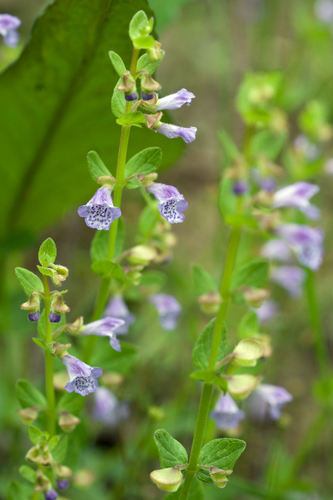
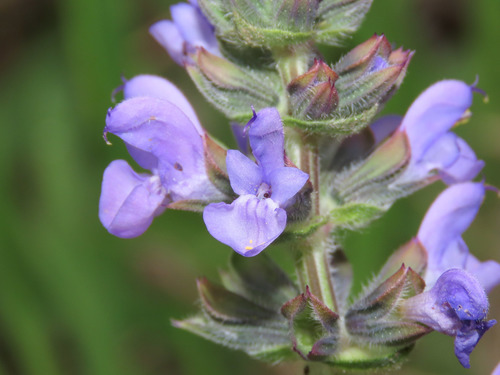
Salvia verbenaca L., commonly called wild clary or wild sage, is native to the British Isles, the Mediterranean region of Southern Europe, North Africa, the Near East, and the Caucasus. It has been introduced and has naturalized in many areas across the globe, including the Eastern United States, California, Mexico, Argentina, Uruguay, Southern Africa, Tasmania, New Zealand, and China. This species is a tall perennial herb, with hairy, erect sprawling stems and branches. It produces basal toothed leaves that range from 3 to 10 cm (1.2 to 3.9 in) in length. Its flowers are soft purple to violet and bloom in mid summer; the overall flowering period runs from June to September, with seeds ripening between July and October. The flowers are bisexual, and most are pollinated by bees. Some flowers are cleistogamous, meaning they self-pollinate. The plant is known to attract pollinators and wildlife. It grows best in full sun and prefers neutral and alkaline soils. This aromatic sage is used as a food flavoring, to make tea, and its flowers can be added to salads. In Shandong province, China, this species has previously been recorded under the synonym Salvia weihaiensis, where it grows along the seashore.