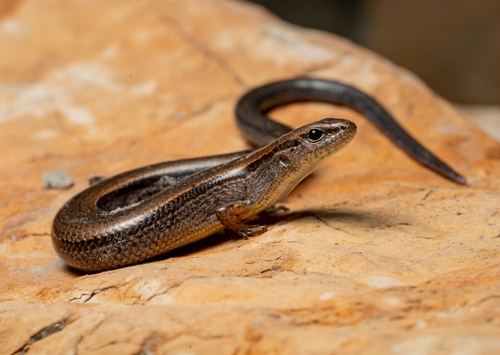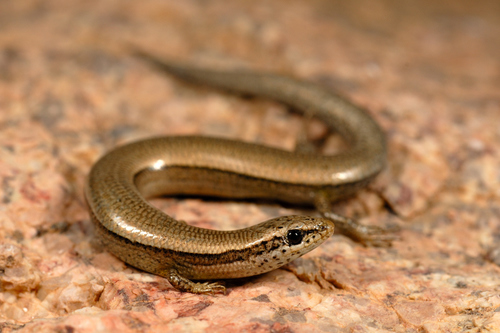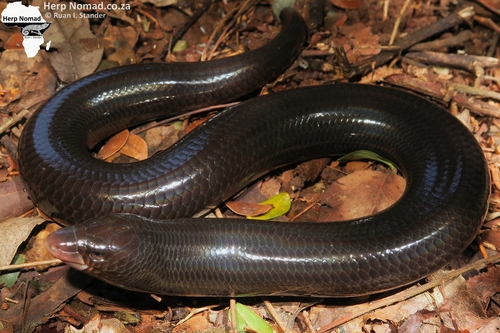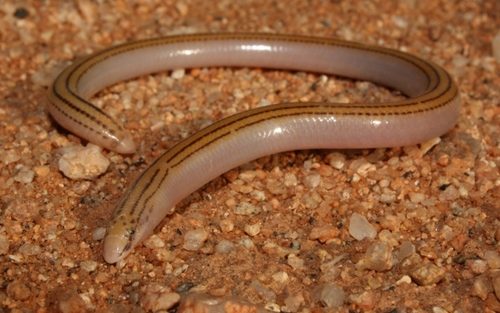
About Saiphos equalis (Gray, 1825)
Size
Saiphos equalis grows to a length of 18 cm (7.1 in) including the tail.
Coloration
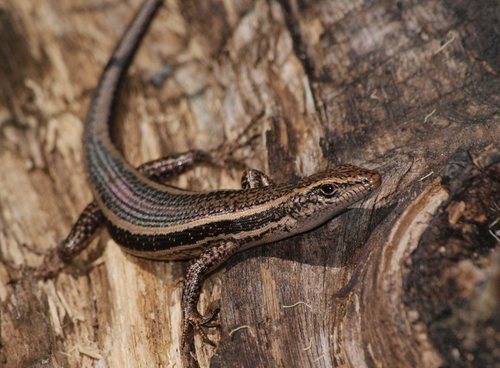
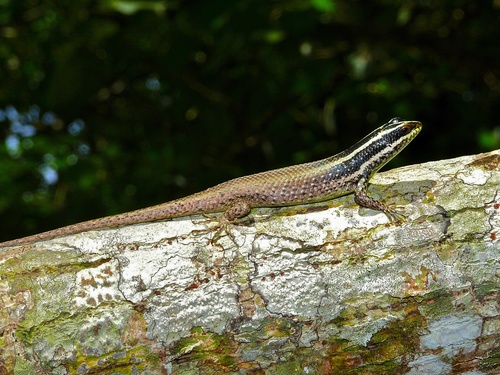
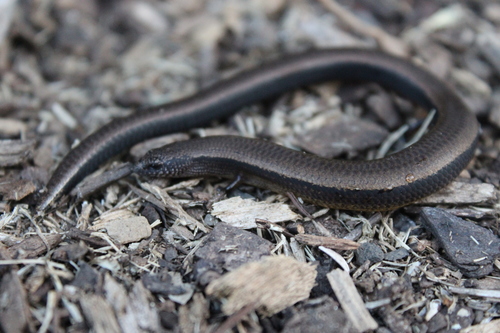
It has a brown back and an orange belly.
Diet
This nocturnal skink feeds on insects.
Distribution
It is common in New South Wales and Queensland in eastern Australia.
Reproductive Modes
This species displays three main reproductive modes across different populations: oviparity (egg-laying) with long 15-day incubation periods, viviparity (live birth) with no 0-day incubation period, and intermediate oviparity with short ~5-day incubation periods.
Reproductive Transition Hypothesis
No populations of this skink show the typical scincid oviparity with incubation periods longer than 30 days, a pattern that has been suggested to indicate the species is undergoing a transition to exclusively viviparity.
Geographic Reproductive Variation
Along Australian coastal lowlands, individuals of this species are oviparous (lay eggs), while mountain populations to the north are almost exclusively viviparous (give birth to live young).
2001 Population Study Method
In a 2001 study of coastal Saiphos equalis populations, researchers used mitochondrial nucleotide sequences (ND2 and cytochrome b) to examine relationships between different populations.
Phylogenetic Findings
Smith et al.'s analysis found that the long incubation period oviparous lineage is the sister group to all other short-period oviparous and viviparous populations.
Clade Correlations
These clades are consistent, and correspond to variation in reproductive mode as well as geographic location by latitude and altitude.
Elevation-related Reproduction
Lizards from high elevation sites (over 1,000 m / 3,300 ft) in north-eastern New South Wales are viviparous, while low-elevation populations across northern and southern New South Wales show short-period oviparity, an intermediate between viviparity and typical oviparity.
Viviparous Offspring Traits
Viviparous populations give birth to fully developed offspring inside transparent membranes.
Short-incubation Egg Traits
Short-incubation oviparous populations lay partly shelled eggs that contain mostly developed embryos, which continue to develop inside the egg before hatching.
Northern Coastal Population Traits
In the northernmost coastal region of New South Wales, the lizards have relatively long incubation periods (approximately 15 days) and thicker eggshells.
2019 Reproductive Observation
In April 2019, Saiphos equalis received media attention when University of Sydney researchers reported observing a single female producing both eggs and live young from one pregnancy, marking the first recorded observation of this ability in a vertebrate.