About Rhinella proboscidea (Spix, 1824)
Sexual Size & Skin Differences
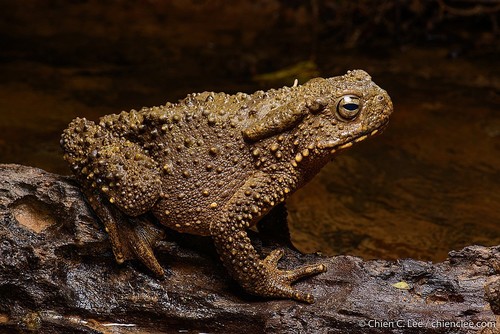
Males of Rhinella proboscidea measure 46–54 mm and have smooth skin, while females measure 46–55 mm and have granular skin.
Dorsal Coloration
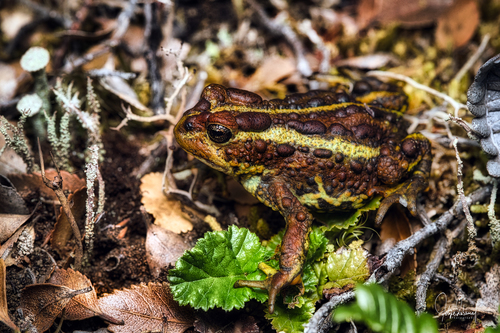
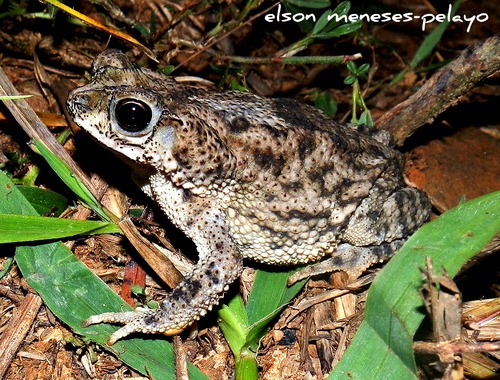
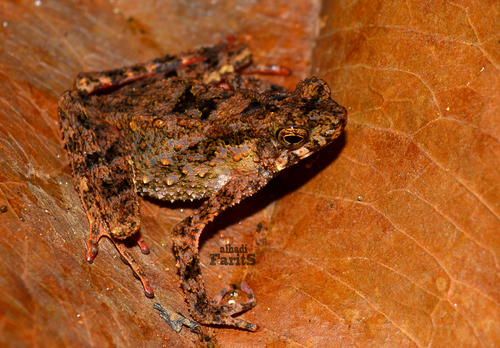
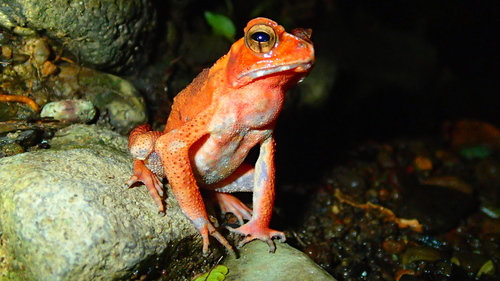
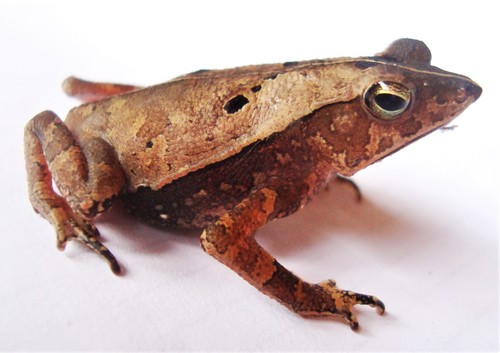
The dorsal surface of this toad is reddish or dark brown, and is typically marked with black and brown patches.
Head & Belly Morphology
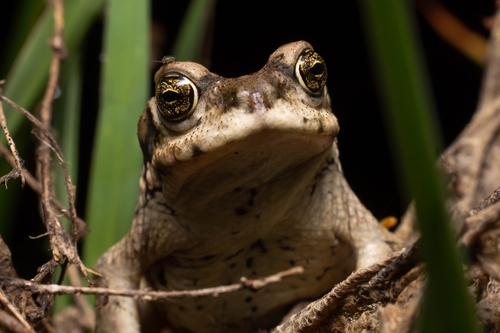
It has a triangular head with a pointed snout, and a brown to gray belly.
Normal Activity Pattern
This toad is mostly active during the day, and sleeps on small seedlings and shrubs at night.
Breeding Period Activity Shift
However, it shows nocturnal activity during its breeding period.
Tadpole Appearance
Its tadpoles are light brown and similar to the tadpoles of the species Rhinella margaritifera.
Skin Toxicity & Predation
The skin of Rhinella proboscidea is highly toxic, but predation by the snake Xenoxybelis argenteus has still been observed.
Breeding Habitat Type
This species is an explosive breeder that reproduces in shallow pools located off the edge of streams.
Breeding Aggregation Behavior
Toads gather at these locations for two or three days, where they collectively fertilize thousands of eggs.
Reproductive Period Timing
A typical reproductive period runs from March to May, but the timing can vary depending on rainfall.
Post-Rain Mating Calls
After heavy rain, choruses of up to 100 male Rhinella proboscidea calling for mates have been recorded.
Male Aggressive Breeding Tactics
Males breed aggressively: they approach any nearby toad and attempt to steal mates from other males that are already in amplexus.
Mating Struggle Female Mortality
These struggles sometimes result in the suffocation of the female.
Necrophilia Behavior Observation
Dead females may be subjected to necrophilia by males.
Necrophilia Oocyte Fertilization Process
Males use their front and hind limbs to squeeze the sides of the corpse's belly until oocytes are ejected, and then fertilize the ejected oocytes.
Necrophilia Study Documentation
This behavior was observed in five different males in one study.
Necrophilia Functional Hypothesis
Researchers have suggested that this necrophilia acts as a reproductive strategy that offsets the fitness cost of the female's death.
Necrophilia Species Uniqueness
This would make Rhinella proboscidea the only species known to practice reproductively functional (rather than accidental) necrophilia.
Geographic Distribution
Rhinella proboscidea is found in Brazil, Colombia, Ecuador, and Peru.
Natural Habitat Types
Its natural habitats are subtropical or tropical moist lowland forests and intermittent freshwater marshes.
Conservation Status & Threats
It is threatened by habitat loss, and is common in parts of the Amazon rainforest.