About Ranoidea novaehollandiae (Steindachner, 1867)
Common Name & Size
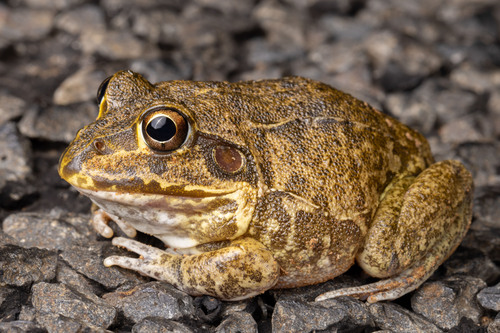
Ranoidea novaehollandiae, commonly called the New Holland frog, is a large frog species that reaches a maximum body size of 100 mm.
Dorsal Coloration
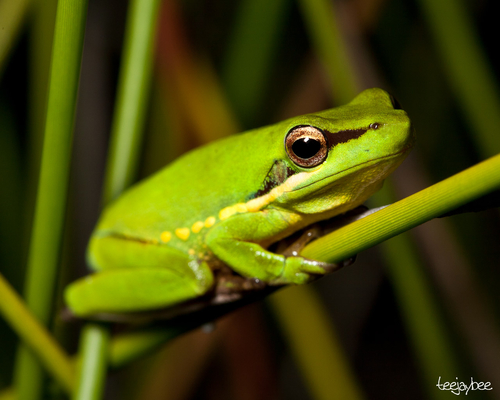
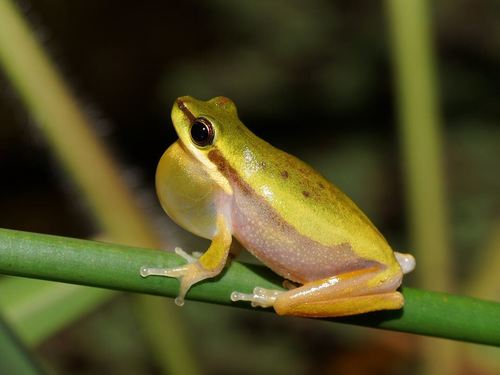
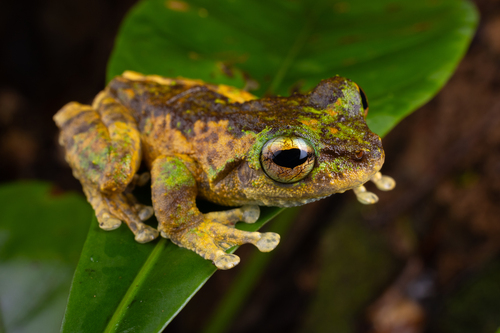
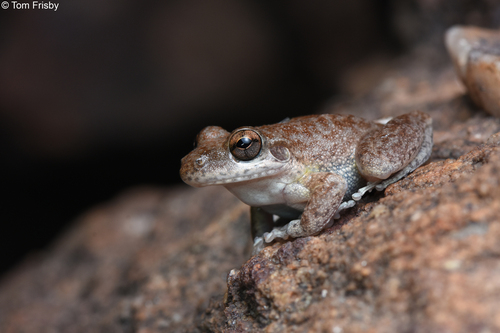
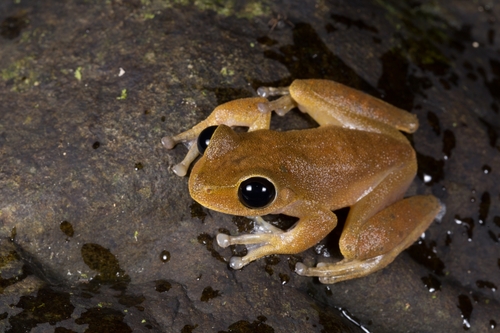
Its dorsal colouration is most often pale grey, brown, or yellowish, and it occasionally has darker irregular blotches.
Ventral Coloration
The belly is white, and the throat has a speckled pattern.
Head Markings
A distinct dark stripe extends from the snout, through the tympanum, and down to the shoulder, and a dark band typically runs from below the eye down to the mouth.
Limb & Toe Features
The thighs are blue, and the toes are slightly webbed.
Habitat Types
This species is found on black-soil plains and flood plains near rivers, and it also occupies dams, ditches, and claypans located in woodland and grassland habitats.
Burrowing Behavior
As a burrowing species, it survives dry conditions by spending long periods of time underground.
Post-Rain Activity
After heavy rain falls in spring, summer, or early autumn, the frogs become highly active.
Male Mating Call
Males produce a deep "waah" call from within or beside bodies of water.
Female Egg Laying
Females lay eggs in non-foamy clumps in shallow water, with each clump holding up to 1000 eggs; an individual female lays an average of 4906 eggs total.
Egg Development
Egg clumps float when first laid, and sink later.
Tadpole Traits
The tadpoles of this species are large, reaching 95–100 mm in length, with a rotund body shape and golden brown colour.
Metamorphosis Details
The tadpole stage lasts 4 to 6 weeks, and newly metamorphosed juveniles measure 35–40 mm.
Juvenile Appearance
Juvenile New Holland frogs resemble adult individuals, though they may be bright green in colour.