About Ranoidea australis (Gray, 1842)
Size
This species, Ranoidea australis, has individuals that grow up to 100 mm in total length.
Dorsal Coloration
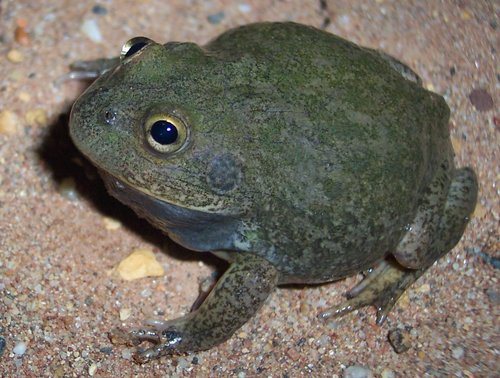
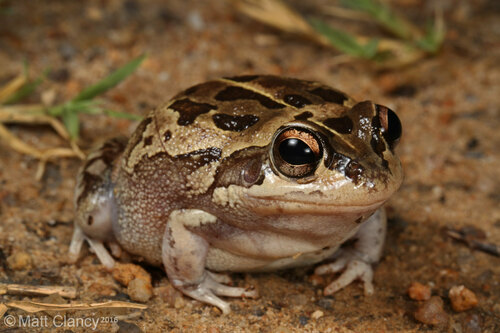
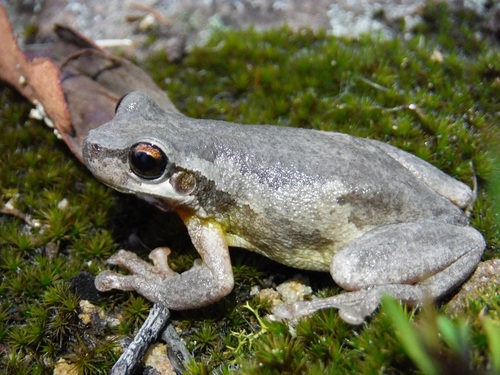
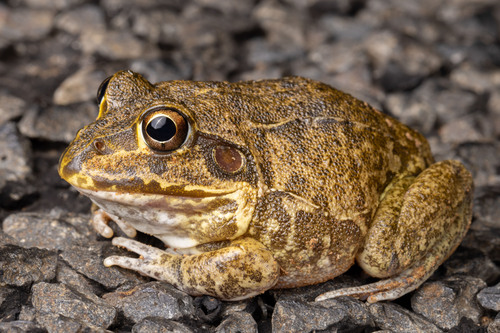
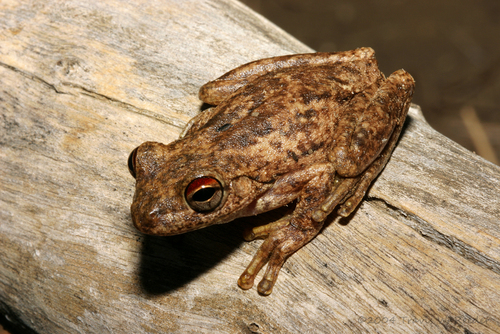
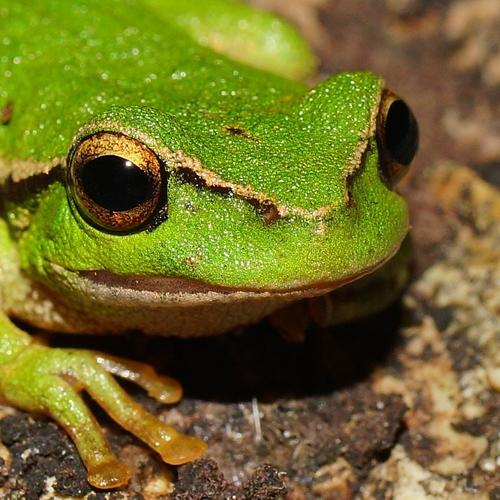
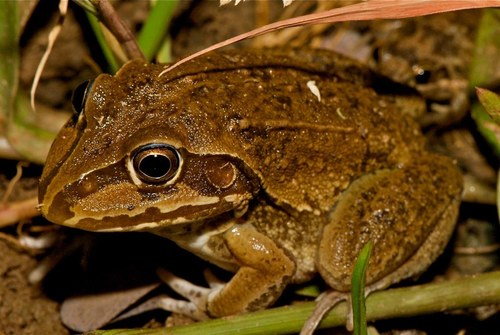
Their dorsal coloration and patterning are highly variable; adult dorsal surfaces range from grey, dull pink, and green to the more common brown shade, and may occasionally bear darker markings.
Dorsal Skin Features
The dorsal skin is covered in low warts, and features two longitudinal skin folds, with a second pair of these folds running along the flanks.
Ventral Skin Characteristics
The belly is white and has a finely granular texture.
Facial Markings
A dark brown streak extends from the tip of the snout, crosses the tympanum, and ends above the shoulder. A bar of the same dark brown color runs beneath the eye, and another matching bar runs the full length of the upper jaw.
Tympanum Features
The tympanum is distinct, and is partially covered by a skin fold.
Hidden Area Coloration
The back of the thighs ranges from flesh-colored to dark blue, while the groin is pale blue-green.
Toe Webbing
The rear toes have slight webbing, and the front toes have no webbing at all.
Habitat Range
Ranoidea australis inhabits floodplains, woodlands, and grasslands.
Wet Season Behavior
During the wet season, this species is commonly found basking during the day next to its breeding sites, which include temporary ponds, creeks, and flooded areas.
Male Call Characteristics
Males produce a short "unk" call that can be heard from late November to February.
Egg Clutch Size
Females lay eggs in clumps that can hold as many as 7000 eggs, though most clumps contain between 100 and 1000 eggs.
Egg Deposition Trait
The egg clumps sink shortly after being laid.