About Rana luteiventris Thompson, 1913
Adult Size
The Columbia spotted frog (Rana luteiventris Thompson, 1913) is a medium-sized frog that grows to a maximum length of 3.5 inches (90 mm).
Dorsal Coloration
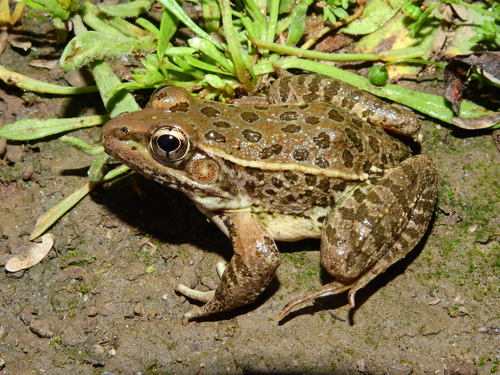
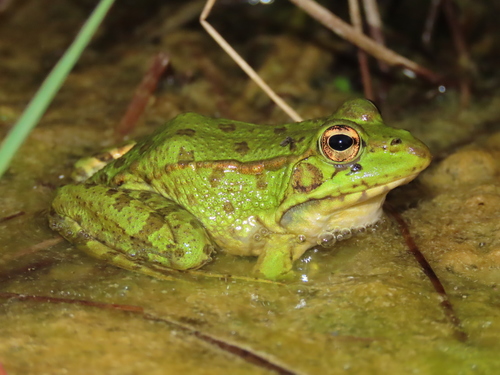
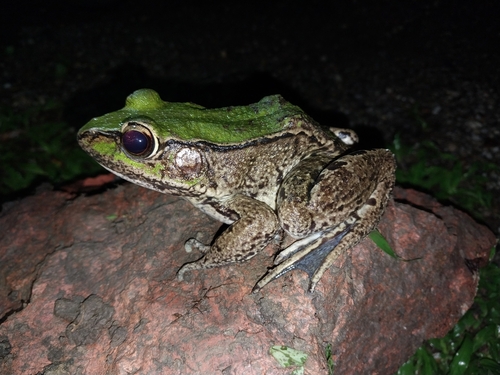
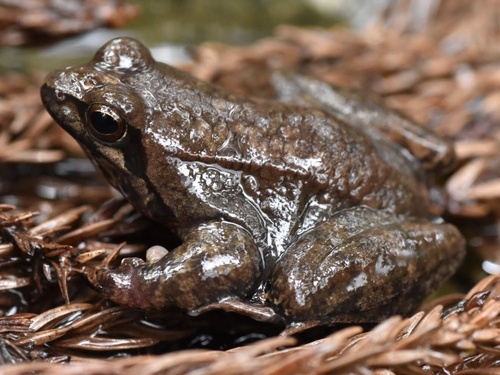
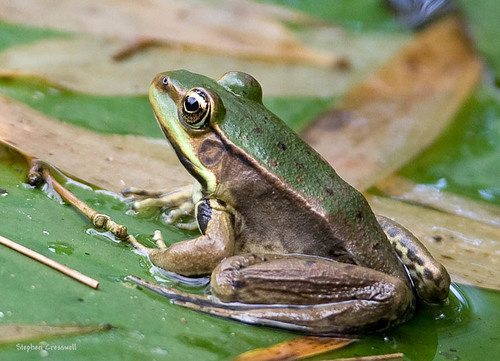
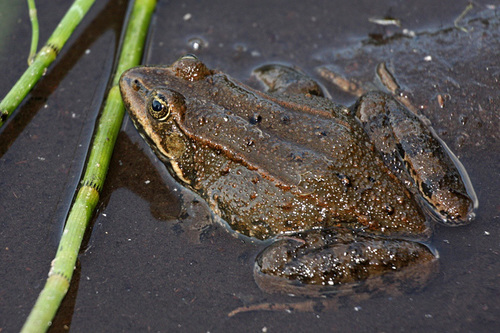
Its base color ranges from dark olive green to light brown, with irregular black spots across its back and legs, which gives the species its common name.
Skin Texture
Like other members of its genus, its skin texture can vary from rough to smooth, and it has small folds of skin running along its back.
Distinct Color Markings
It has distinct color features unique to the species: a light-colored stripe runs along its upper lip, and the ventral surfaces of adult individuals are usually either pink or yellow, with this ventral coloration not appearing in immature frogs.
Head Morphology
Key recognizable physical traits include a long narrow snout and upturned eyes.
Foot Webbing
This species is a highly aquatic amphibian, and the webbing on its feet extends all the way to the tip of its longest toe.
Hind Leg Length
Compared to similarly sized frogs such as the northern leopard frog, Columbia spotted frogs tend to have shorter hind legs.
Tadpole Coloration
Tadpoles of the species are brownish-green along their dorsal side, with intermittent gold spots across their bodies.
Tadpole Morphology and Size
They have upturned, inset eyes, and reach around 3.1 inches (80 mm) in length before maturing into adults.
Geographic Range
The Columbia spotted frog is widespread across western North America, ranging from Alaska and parts of British Columbia in the north to Washington, Idaho, and parts of Wyoming, Nevada, and Utah in the south.
General Habitat
It is a fairly aquatic species, and most individuals live close to permanent bodies of water, including lakes, ponds, slow-moving streams, and marshes.
Adult Habitat Requirements
Adults require specific habitat conditions within these general types: they mostly inhabit seasonally flooded sites with a constant water source that experiences a large seasonal increase in water volume and level.
Reproduction Overview
The Columbia spotted frog reproduces similarly to most other amphibians, with a few distinct traits.
Breeding Habitat Vegetation
Breeding occurs in areas with emergent vegetation, with reed canary grasses and cattails being two of the preferred vegetation types for reproduction.
Breeding Site Location
The species breeds in the same body of water that it inhabits year-round.
Male Breeding Calls
Males produce a breeding chorus to attract females, with calls ranging from a series of clicks to long glottal sounds.
Reproductive Timing and Oviposition
An unusual reproductive trait of this species is that males arrive at the breeding grounds before females become reproductively active, and each male establishes an oviposition site.