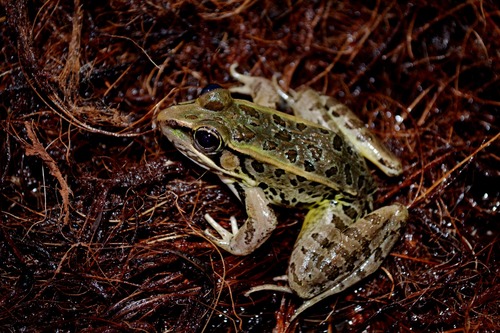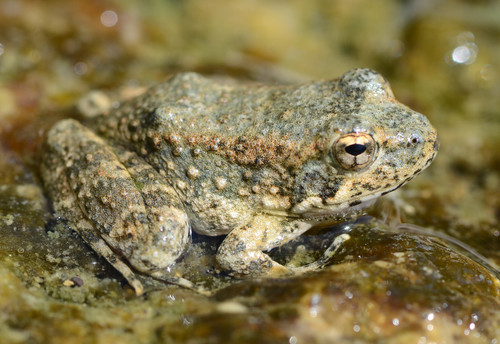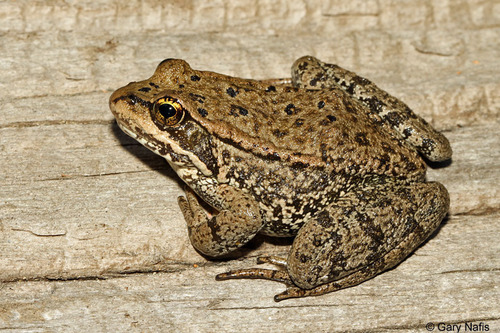
About Rana cascadae Slater, 1939
Taxonomy and Initial Distribution
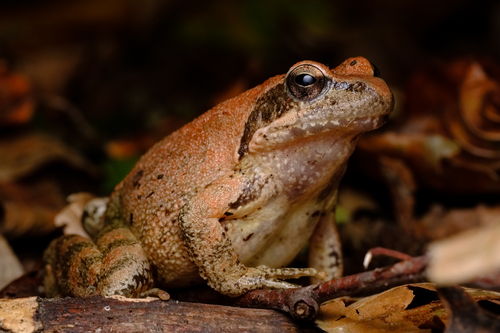
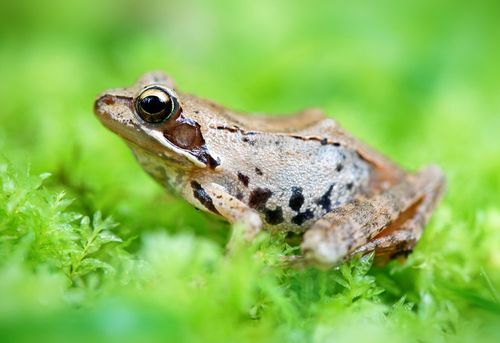
The Cascades frog (Rana cascadae) is a species of frog in the family Ranidae, found in the Pacific Northwest of North America, mainly in the Cascade Range and Olympic Mountains. This species was first discovered in the California portion of the Cascade Mountains, and can be found throughout the entire Cascade Mountain range from Washington, through Oregon, to California.
Historical Range
Historically, its range in Northern California extended from the Shasta-Trinity region to the Feather River. Individuals concentrate heavily around the volcanic regions of the Cascade peaks.
Habitat Types
This frog's natural habitats include temperate forests, temperate grassland, rivers, swamps, freshwater lakes, intermittent freshwater lakes, and freshwater marshes.
Elevation Range
Most populations are found at elevations between 665 and 2,450 m (2,182 and 8,038 ft), though the range may extend to lower elevations within Washington.
Adult Summer Behavior
Adult Cascades frogs generally stay close to water, basking on sunny shores and logs during dry summer conditions for thermoregulation to maintain a stable body temperature, but they can travel across upland areas during periods of high humidity.
Hibernation Behavior
In winter, they hibernate underwater in unfrozen spring-fed ponds or soft unfrozen lake bottom sediments.
Egg Laying Timing
Cascades frogs lay eggs between May 20 and July 10, with timing dependent on when snow melts to form open ponds for egg laying.
Mating Call Behavior
First, males produce a described "low grating croak" while calling from shallow meltwater pools, while females stay submerged.
Egg Mass Placement
Egg masses are laid in communal clusters, deposited in warm water along gradually sloping shorelines. They are often attached to submerged vegetation or debris to protect the eggs from severe wave action.
Female Breeding Frequency
Females can only breed once per year, and it remains unknown whether they skip breeding years.
Clutch Size and Survival
A single female lays between 300 and 800 eggs per clutch, but very few tadpoles survive past their first year.
Egg Threats
Placing egg clusters in shallow water soon after the first thaw leaves them susceptible to freezing and to pathogen transmission between clusters.
Egg Hatching Period
Eggs hatch within eight to 20 days.
Tadpole Development Period
The tadpole larval period lasts 80 to 95 days.
Maturation Age
Most Cascades frogs reach full adult size after three years, at which point they become sexually mature and able to begin mating.
Breeding Site Fidelity
Adult frogs appear to return to and use the same breeding sites for multiple years.