About Quinchamalium chilense Molina
Growth Form
Quinchamalium chilense is a herbaceous, hemiparasitic perennial plant that grows from a rhizome.
Rhizome Derivatives
Smaller rootlets with haustoria grow from this rhizome, and a number of rarely-branching stems grow from it each year.
Stem Morphology
These stems can be decumbent (creeping along the ground) or grow to over 2 metres in height.
Flower Basic Traits
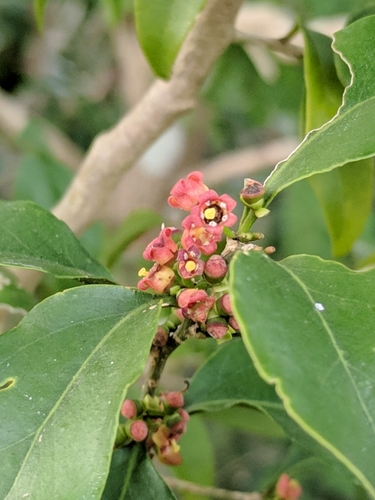
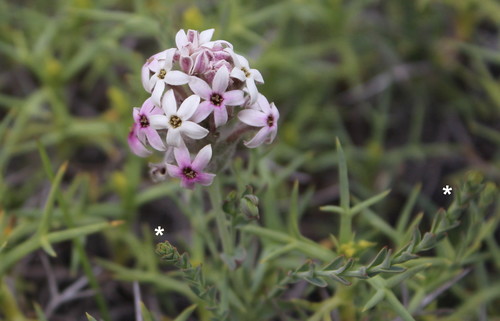
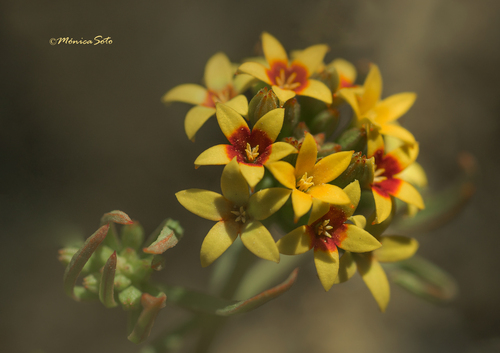
Flowers form in clusters at the tips of stems, they are pentamerous and typically orangey-yellow.
Taxonomic Synonymy
This species is extremely variable in height, flower size, and flower colour; so much variation existed that 21 separate species were once recognized, but all of these were reduced to synonymy with Q. chilense in 2015.
Heterostyly Trait
It is heterostylous, meaning some individuals produce 'thrum flowers' which have short styles.
Thrum Flower Correlates
The presence of thrum flowers is somewhat correlated with higher elevation and colder temperatures.
Leaf Shape Variation
Leaf shape also varies between individuals, and plants with narrower leaves are correlated with higher temperatures.
Size Correlate
Overall plant size appears correlated with annual precipitation.
Pre-Pollination Parasitism
This species has unusual embryos that act as parasites on the mother plant even before pollination occurs.
Synergid Cell Development
When the embryo develops inside the ovule, the two synergid cells elongate into tubes that penetrate through the micropyle and grow roughly one third of the way up the style.
Haustoria Function
There, they form haustoria, which are organs used to draw nutrients from a host.
Embryo Caecum Structure
The embryo also forms a lateral pouch-like caecum near its chalazal end, which extends into the basal region of the funiculus.
Developmental Pattern Homology
This rare developmental pattern is also known to occur in pampas grasses of the genus Cortaderia and some species of the genus Olax.
Flower Type Dimorphism
As noted earlier, individuals of this species can bear thrum flowers or pin flowers, which differ in style length and form, and many individuals have both flower types.
Self-Fertility Trait
In most heterostylous plants, this trait is linked to self-incompatibility, but in Q. chilense both flower forms are bisexual and self-fertile.
Flower Form Productivity Differences
Even so, smaller pin flowers tend to produce more pollen and have a higher seed set.
Pollination Research Gap
It is thought that this variation in flower size is likely tied to some kind of pollinator relationship, but the exact details of this are still unknown.
Patagonian Steppe Dominance
In Patagonian steppe habitat along the upper course of the Biobío River in Chile's Araucanía Region, where scattered Araucaria araucana trees grow, Quinchamalium chilense is a dominant plant species alongside Festuca scabriuscula, Poa obvalata, and Adesmia emarginata.
Habitat Characteristics
This habitat is a cold region located at 1,500m altitude, with a one to two month dry season, occasional heavy rains, and temperatures that can drop below freezing.
Flower Visitor Record
The fly Mitrodetus dentitarsis has been recorded visiting the flowers of this species in Chile, along with visiting the flowers of other plants.
Folk Medicine Use
In southern Chile, this plant is used in folk medicine.