About Ptilidium ciliare (L.) Hampe
Growth Form
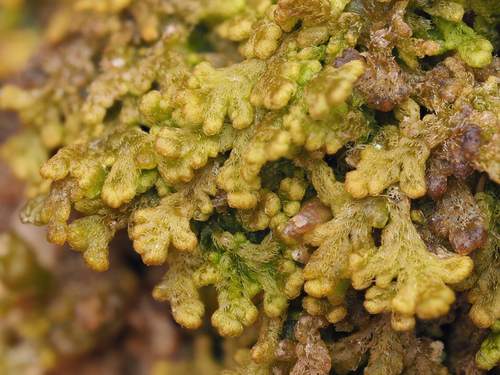
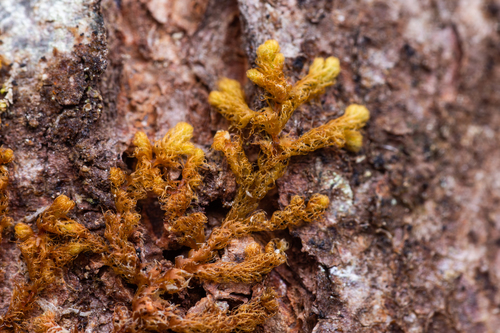
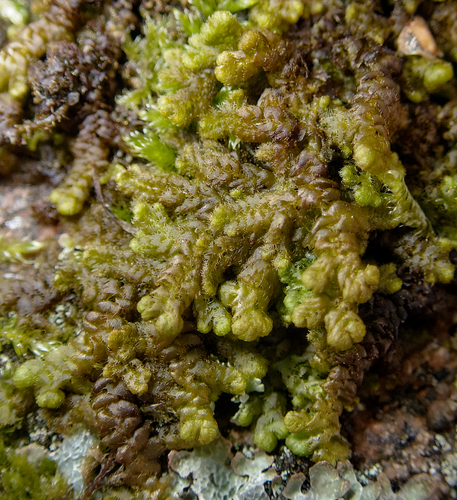
Ptilidium ciliare grows in loose, reddish-brown to yellow-green tufts, with individual shoots reaching up to 3 mm wide.
Stem Structure
Its stems are pinnate or bipinnate, and short stubby branching clusters of dense overlapping leaves cover the stems.
Leaf Size
Individual leaves grow up to 2.8 mm wide and 2.3 mm long.
Leaf Surface Features
Leaf surfaces are finely serrated or ciliated, with margins extended into fringe-like rows of thin teeth. These teeth hide the bilobed structure of the leaves, making the division hard to see.
Reproduction
Sexual reproductive structures are very rarely observed on this species.
Habitat Range
Ptilidium ciliare is commonly found in lowland to upland habitats, including acidic grassland, rocky slopes, cliff ledges, screes, wall tops, dwarf shrub heaths, bogs, sand dunes, and heathy woodlands. It usually grows mixed in with a variety of other bryophyte species.
Substrate Preference
It prefers to grow on well-drained, acidic substrates. It rarely grows on fallen logs and branches.