About Pteropus rufus E.Geoffroy, 1803
Taxonomy and Common Name
Pteropus rufus E.Geoffroy, 1803, commonly called the Madagascan flying fox, is the largest bat found in Madagascar.
Size Measurements
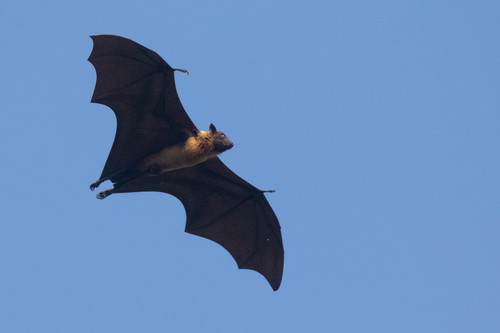
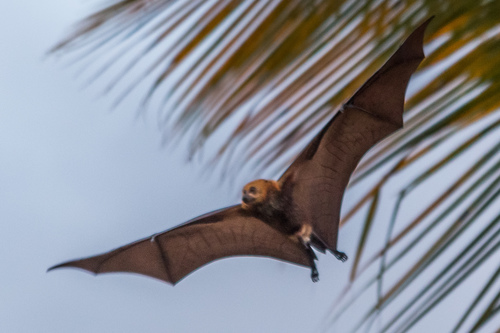
Individuals have a body length of 23.5–27 cm (9.3–10.6 in), a wingspan of 100–125 cm (39.5–49 in), and a body weight of 500–750 g (1.10–1.65 lb).
Body and Wing Coloration
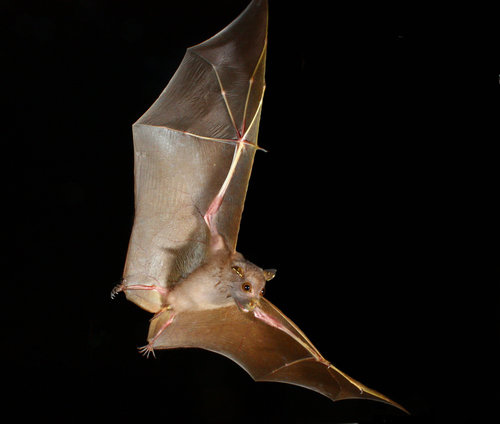
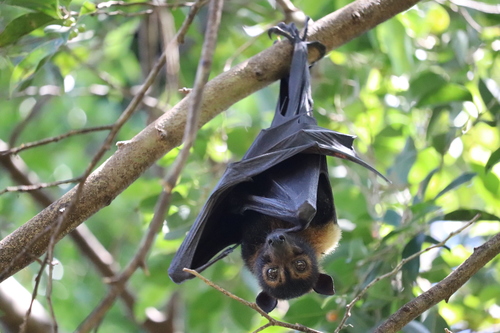
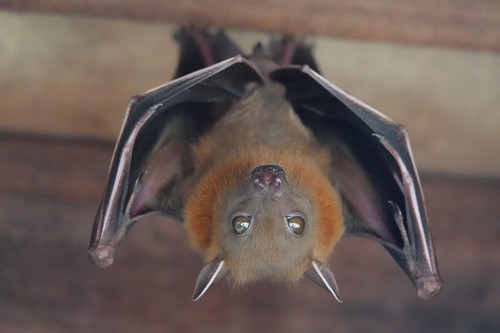
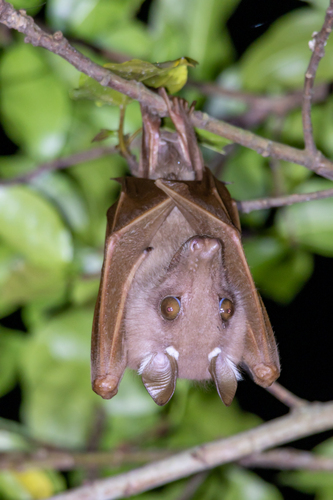
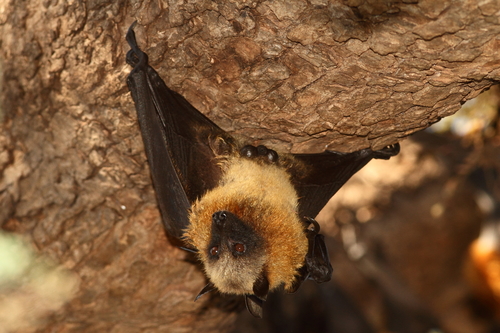
The species is primarily brown, with golden to slightly dark brown coloring across the chest and shoulder areas. Its wings range from grey to black.
Sexual Dimorphism
Males and females have similar overall appearance, though males are noted to have slightly larger heads than females.
Geographic Distribution on Madagascar
The Madagascan flying fox is one of the most common bat species on Madagascar, occurring across most of the island.
Elevation Range
It is absent from the central highlands, and its range extends from sea level up to 1,200 meters in elevation.
Roost Colony Size
During the day, the Madagascan flying fox roosts in large trees in colonies that can reach up to 1,000 individuals, though 400 individuals is a more typical colony size.
Roost Disturbance Response
These bats are noisy and easily disturbed; if roused, the entire colony may relocate to a new roost site.
Roost Habitat Characteristics
Most roosts are located on isolated trees in degraded areas.
Primary Diet Component
The species' diet mainly consists of fruit juice, which it squeezes from fruit inside its mouth.
Seed Dispersal Role
During this process, many fruit seeds are swallowed and dispersed to new areas as they pass through the bat's digestive tract.
Additional Food Sources
It also eats other tree products, including leaves, flowers, and nectar.
Pollination Observation
It has been observed visiting the flowers of the kapok tree Ceiba pentandra, and is believed to pollinate this tree.