About Pseudopanax ferox Kirk
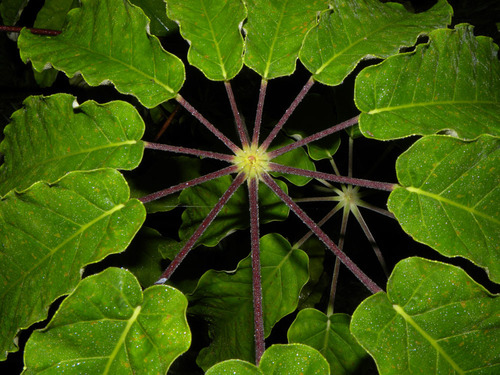
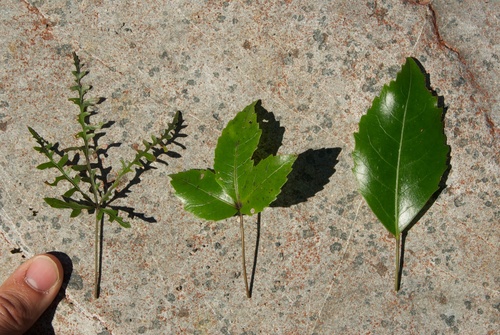
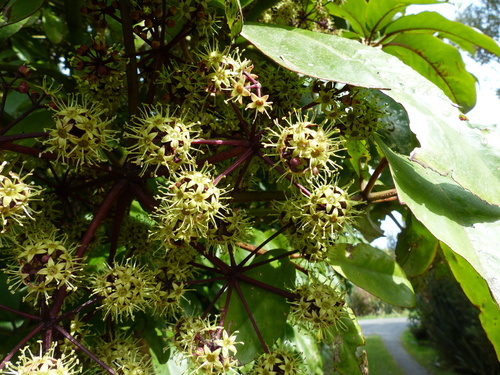
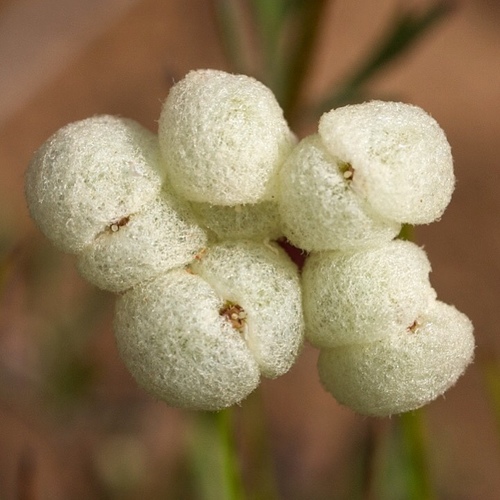
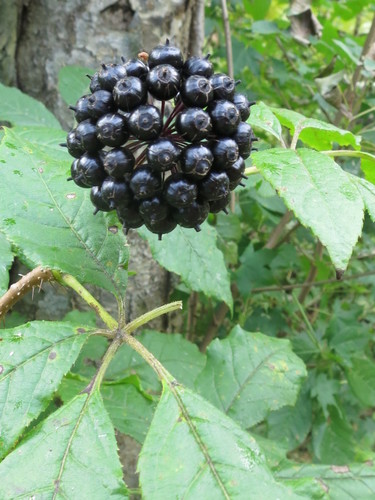
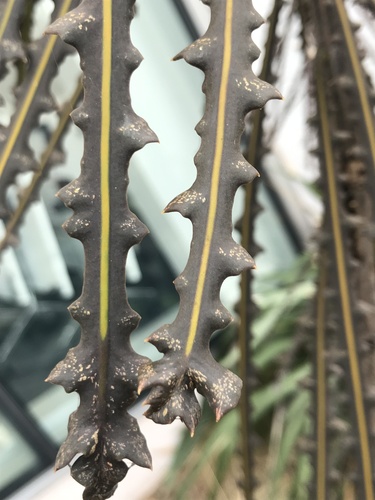
Pseudopanax ferox, commonly called toothed lancewood, is a small heteroblastic plant, similar to Pseudopanax crassifolius. Heteroblasty means its leaf patterns and growth habits change across different growth stages. Mature toothed lancewood can reach 6 metres in height, with a trunk up to 25 centimetres in diameter. Only when the plant reaches adulthood does its structure change: it shifts from having one central stem with downward growing leaves to a more typical tree form, with spreading branches that form a round head. This species has a patchy distribution across the North Island of New Zealand, and is more widespread in the South Island, where it occurs mainly east of the Main Divide, ranging from the Marlborough Sounds to Southland. Existing native populations are scarce, made up of small, isolated groups, a status that mainly results from historical habitat loss. Pseudopanax ferox grows well in coastal to subalpine areas situated 10–800 m (30–2,620 ft) above sea level. It favors specific sites including sand dunes, grey scrub, alluvial gravels and cliffs, and typically prefers drier habitats and growing conditions than Pseudopanax crassifolius. The juvenile phase of Pseudopanax ferox lasts 15–20 years. During this phase, the plant develops a slender, unbranched trunk that can grow up to several metres tall. The species reaches maturity around 20–30 years of age, at which point branching begins, and leaves change into the shorter, broader forms of the adult plant, allowing the tree to produce flowers and fruit. Fruits develop slowly over roughly one year, maturing from autumn through winter into spring. Fruits are primarily dispersed by native New Zealand birds including tūī and kererū, which eat the fruits and digest the inhibitory fruit flesh to remove it. In controlled growing conditions, seeds from this species have relatively low germination rates: cleaned seeds grown at standard temperatures achieve germination rates of around 18–20%, and rates can be even lower when residual fruit flesh remains on seeds. Toothed lancewood was once rare in cultivation, but it is now a popular gardening plant in New Zealand. It gained broad popularity after being featured in the gold-medal winning New Zealand exhibit at the 2004 Chelsea Flower Show in the United Kingdom. Its distinctive leaves and unusual juvenile growth form make it well suited for planting in narrow spaces, and it is often used to complement modern building architecture. Because it grows slowly and remains relatively small for a tree even when fully mature, it is one of the few tree species that is naturally well suited for planting in small gardens.