About Pseudopanax crassifolius (Sol. ex A.Cunn.) K.Koch
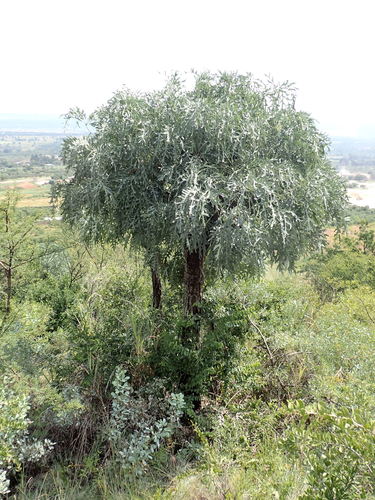
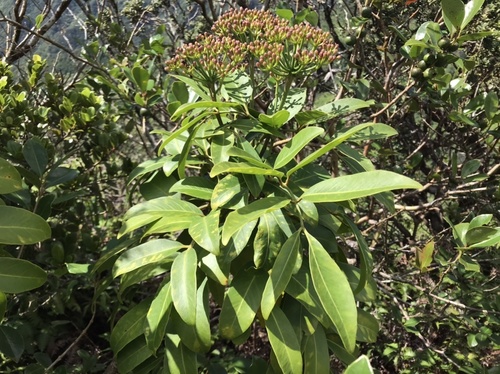
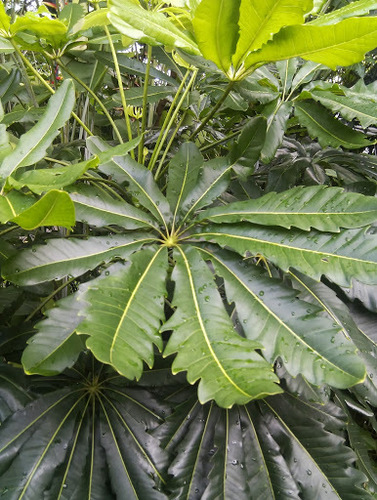
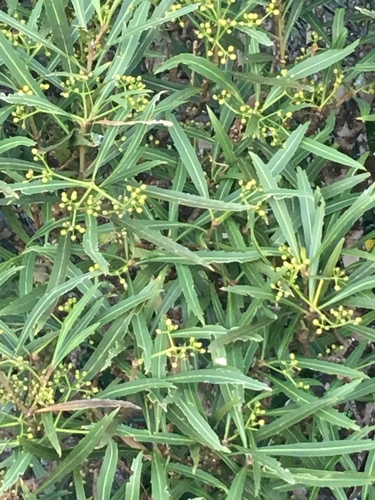
Pseudopanax crassifolius is a heteroblastic plant, which means it develops different leaf forms and growth habits at different growth stages. These stages, which are mostly tied to plant height, are seedling, juvenile, transitional, and adult. Juvenile trees are single-stemmed, with long, narrow downward-pointing leaves, and are typically shorter than 3–5 m (9.8–16.4 ft). As an adult, this species can grow up to 15 m tall. It forms a round-headed tree because it is multi-branched, giving it a more typical tree appearance than its earlier growth forms.
Pseudopanax crassifolius is endemic to New Zealand. It is abundant and widespread across the North Island, South Island, and Stewart Island. This species grows from sea level up to approximately 750 m (2,460 ft) in lowland to montane forests and shrublands. It does not have a strong preference for wet habitats, as it typically grows in uplands or non-wetland areas. It is most often found along forest margins or gaps, in regenerating forests, and grows as either a subcanopy or canopy tree. It is a common subcanopy or canopy species in kāmahi—silver fern forest (part of Beech-broadleaved-podocarp forest Alliances), hard beech–kāmahi forest (part of Beech forest Alliances), silver beech-red beech-kāmahi forest (part of Beech-broadleaved forest Alliances), Silver fern-mahoe forest, tōwai–tawa forest, and kāmahi-podocarp forest (part of Broadleaved-podocarp forest Alliances including kauri).
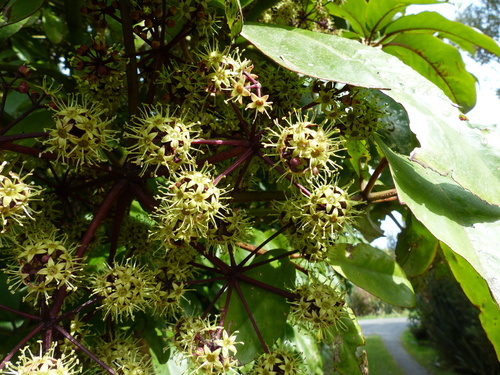
Pseudopanax crassifolius is evergreen. The juvenile growth form persists for 15 to 20 years before the plant transitions to its adult form. The tree almost exclusively produces flowers and fruits once it reaches adulthood. Its bisexual flowers bloom from January to April and are pollinated by insects. Fruits are first produced between January and April, ripen over the winter, and remain on the tree until August. Birds eat these fruits and disperse the seeds inside. When a seed passes through a bird’s digestive tract, the fleshy mesocarp coat is stripped away, which improves germination. Germination typically occurs five weeks after dispersal, but germination can be delayed if the fleshy mesocarp remains intact on the seed.
Early European settlers had several traditional uses for this plant. The midribs of juvenile leaves were once used as bootlaces, and to secure horse bridles and harnesses. Its dense, light brown wood was used for fence posts or piles, and was even used for timber in Otago. However, the wood is not known to be very durable. The flexible trunk of young plants was also sometimes used as a whip.
Māori also had traditional uses for Pseudopanax crassifolius. Māori used the stems of juvenile trees to spear kererū. Māori from the South Island specifically used the leaves of this species to make paint brushes for rock paintings. Because young trunks are flexible, they could be twisted to make a tokotoko, or ceremonial walking stick.