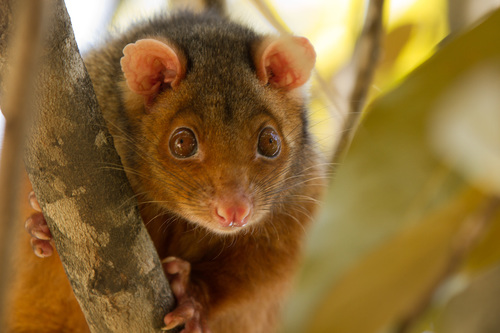
About Pseudocheirus peregrinus (Boddaert, 1785)
Adult Weight and Body Length
Adult common ringtail possums (Pseudocheirus peregrinus) weigh between 550 and 1,100 g (19 and 39 oz), with a body length of 30–35 cm (12–14 in) not including the tail, which is roughly the same length as the body.
Fur Coloration
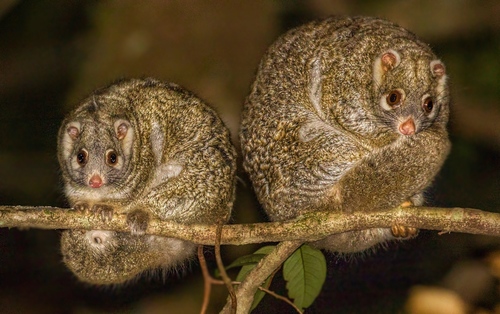
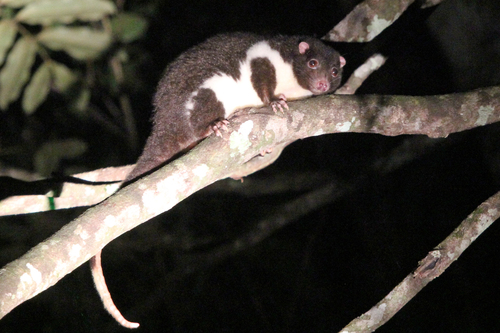
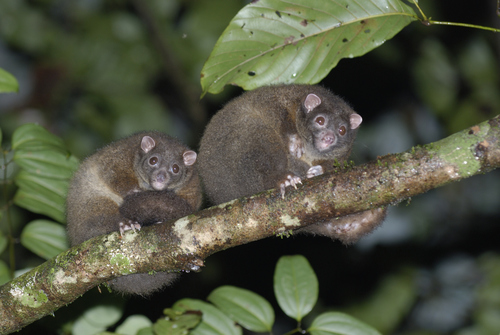
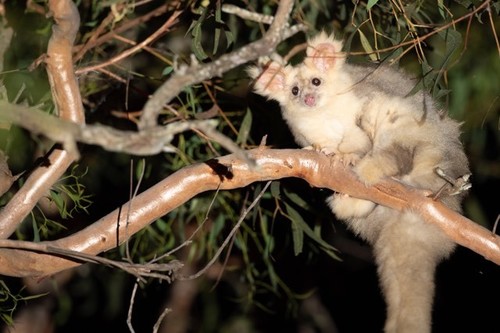
Their fur is grey or black, with white patches behind the eyes and usually a cream-coloured belly.
Tail Characteristics
They have a long prehensile tail that typically has a distinctive white tip making up over 25% of the tail's total length.
Feet and Dental Features
Their back feet are syndactyl, an adaptation that helps them climb, and their molars have sharp, pointed cusps.
Geographic Range
The common ringtail possum is distributed along the east coast of Australia, Tasmania, and part of southwestern Australia.
Habitat Climate Preferences
It generally inhabits temperate and tropical environments, and is rare in drier regions.
Preferred Forest Habitat
It prefers dense brush forests, particularly eucalyptus forests.
Ecological Niche Comparison
The common ringtail possum and its relatives fill a range of ecological niches similar to those occupied by lemurs, monkeys, squirrels, and bushbabies in comparable forests on other continents.
Population Comparison to Brushtail Possum
It is less prolific and less widespread than the common brushtail possum.
Marsupial Reproductive Trait
As a marsupial, the common ringtail possum carries and raises its developing young in a pouch.
Mating and Birth Period
Mating season occurs anywhere between April and December depending on the region, with most young born between May and July.
Oestrous Cycle Traits
The species has an oestrous cycle of 28 days, and is both polyoestrous and polyovular.
Replacement Litter Production
If a female loses her litter prematurely, she can return to oestrous and produce a replacement litter in October if conditions are suitable.
Litter Size
The average litter size is two, though triplets occur very rarely.
Young Growth Rate Cause
Common ringtail possum young grow relatively slowly, because the mother's milk is dilute with low lipid content.
Lactation Milk Composition Change
Like other marsupials, the composition of common ringtail possum milk changes throughout lactation.
Second Lactation Phase Diet
During the second lactation phase, after the young first emerge from the pouch, they begin eating more solid foods.
Mid-Lactation Milk Nutrient Levels
At this stage, carbohydrate concentration in the milk falls, while protein and lipid concentrations reach their highest levels.
Lactation Period Benefits
The long lactation period gives young more time to learn skills in the communal nest, and to practice climbing and foraging in trees.
Young Sensory Development Timeline
Young common ringtail possums first gain the ability to vocalise and open their eyes between 90 and 106 days after birth.
Pouch Exit and Lactation End
They leave their mother's pouch at 120–130 days old, but lactation usually continues until 180–220 days after birth, and sometimes ends as early as 145 days.
Sexual Maturity Timeline
Both sexes reach sexual maturity during the first mating season after their birth.