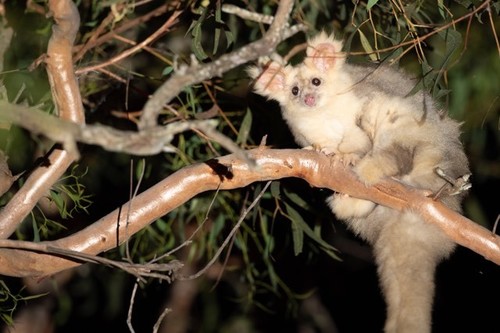
About Petauroides volans (Kerr, 1792)
Genus Size Rank
This species is the largest member of the genus Petauroides, and one of the world's largest gliding mammals, reaching the size of a house cat.
Body and Tail Dimensions
Its body measures 35–46 cm (14–18 in) in length, and its furry tail can grow up to 60 cm (24 in) long, but is not prehensile.
Gliding Membrane
A gliding membrane stretches from the forearm to the tibia.
Head Features
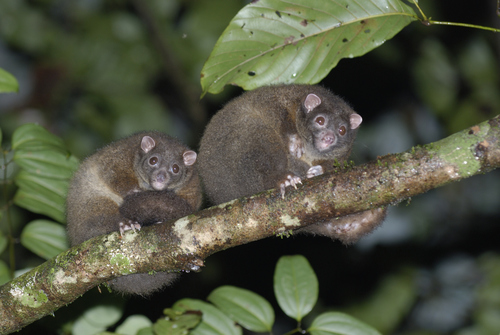
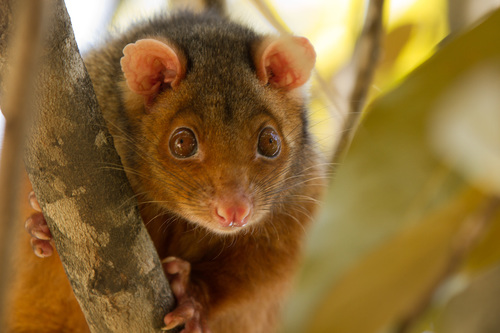
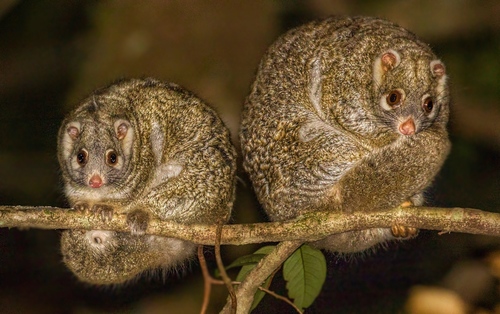
It has large, furry ears and a short snout.
Adult Weight
Adult greater gliders of this species weigh between 900 and 1,700 g (32–60 oz), with females growing larger than males.
Fur Coloration
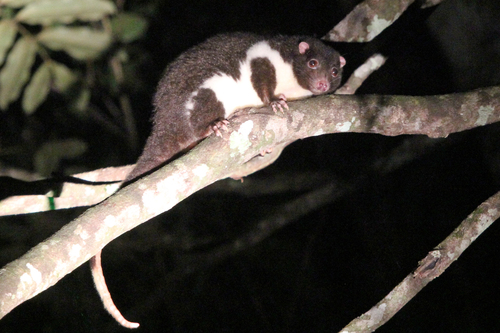
Its thick fur is white or cream on the underside, and varies from dark grey, dusky brown through to light mottled grey and cream on the upper body; this thick fur makes the animal look larger than it actually is.
Fur Color Polymorphism
Like other greater gliders, this species has well-known characteristic fur color polymorphism: it includes a dark morph that is almost black with a white underside, and a light morph that is grey and white with a white underside.
Historical Range Assumption
Before recent taxonomic splits, this species was thought to occur across the full length of eastern Australia.
Revised Range Overview
Recent taxonomic revisions and species splits have shown it actually occupies a much smaller range.
Previously Claimed Range
While Jackson and Groves recorded its range as extending from Bundaberg, Queensland south to Victoria, genetic analysis published by McGregor et al. found this species does not occur near the previously claimed northern edge of its range, and the populations in that area actually belong to the species P. armillatus.
Current Confirmed Range
As of 2020, P. volans is currently understood to range from Victoria north to New South Wales.
Unresolved Range Border
The exact northern border between the range of P. volans and P. armillatus remains unknown due to insufficient sampling in New South Wales.