About Pseudacris fouquettei Lemmon, Lemmon, Collins & Cannatella, 2008
Naming and Etymology
Commonly known as the Cajun chorus frog, this species has the scientific name Pseudacris fouquettei, first described by Lemmon, Lemmon, Collins & Cannatella in 2008. The specific epithet fouquettei honors Martin J. Fouquette Jr., an Arizona State professor who researched Pseudacris in the 1960s and 1970s.
Dorsal Markings
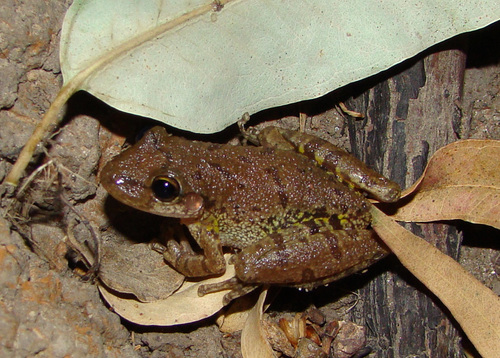
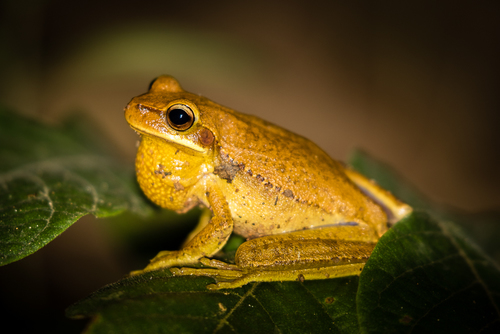
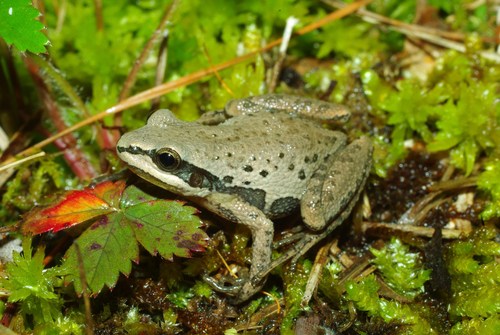
Cajun chorus frogs are typically tan or brown, with narrow dark stripes along their backs that are often broken into a series of dashes or spots. A gray stripe runs from the snout down each side of the body all the way to the groin, and there is a dark, often triangular-shaped spot between the eyes.
Ventral Coloration
The belly is white or pale.
Sexual Size Dimorphism
This species shows sexual dimorphism, with females larger than males. Adult males reach a maximum length of 30 mm (1.1 in), while adult females measure a minimum of 27 mm (1 in).
Breeding Season Trait
During breeding season, males have dark-colored throats.
Species Distinction Traits
The Cajun chorus frog is morphologically similar to other species in the genus Pseudacris, and can only be distinguished from close relatives by its genetics, geographic range, and male advertisement call.
Geographic Distribution
It is distributed across the southern United States, where it occurs in Louisiana, Arkansas, Oklahoma, Mississippi, and Texas.