About Protea laevis R.Br.
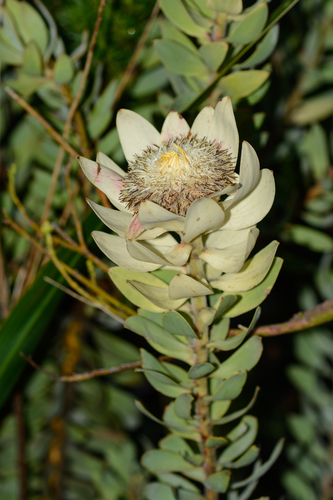
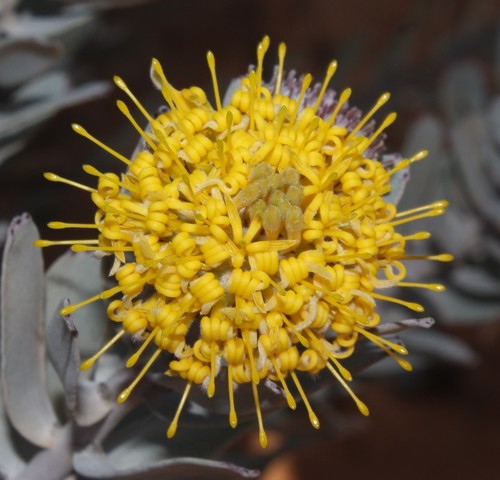
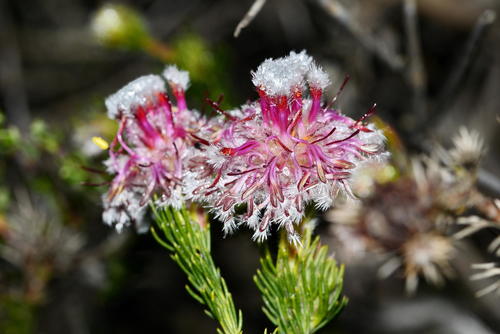
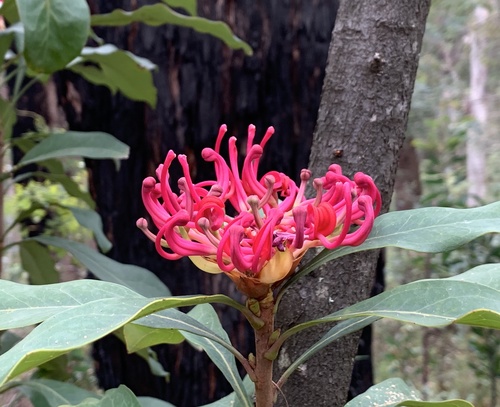
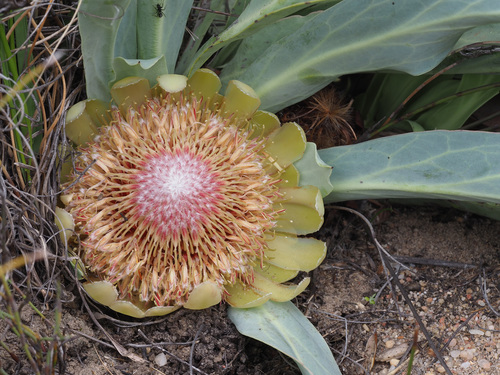
Protea laevis R.Br. grows as a prostrate shrub, with its main stem growing underground. The shrub can reach up to 80 centimetres (31 in) in diameter. Its above-ground branches are glabrous, prostrate, and sometimes ascending, growing to over 3 inches (7.6 cm) in length. This species has both narrow-leaved and broad-leaved forms. It blooms in late Southern Hemisphere spring, from September to February, with peak blooming occurring between September and November. The plant is monoecious, meaning each individual flower contains both male and female reproductive structures. Seeds are stored inside a capsule located within the woody, dried inflorescence, which remains attached to the shrub even after it dies, a trait called persistence. Seeds are generally released one to two years after flowering and dispersed by wind. This plant is endemic to the Western Cape province of South Africa. Its range extends from the Cederberg to the Hex River Mountains and Waboomsberg, a peak within the Koue Bokkeveld Mountains. It can also be found growing below the Langeberg in the Cederberg Mountains, and on Hansiesberg in the Skurweberg Range of the Koue Bokkeveld Mountains. Pollination of this species is carried out by rats, mice, and birds. It grows in dry, rocky mountain ledges at altitudes between 1000 and 1800 metres. Adult plants are killed by wildfires, but their seeds can survive these events to regenerate after the fire.