About Prostanthera lasianthos Labill.
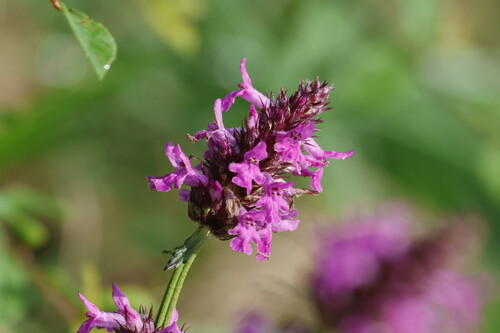
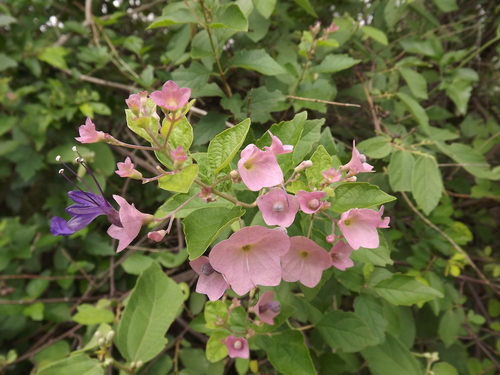
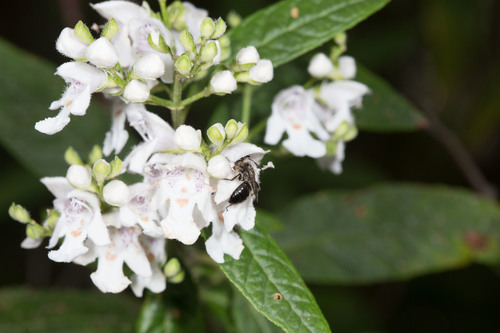
Prostanthera lasianthos Labill. is the largest species in the mint bush genus Prostanthera. Its growth habit is highly variable: it grows as a 10-metre (30 ft) tall tree in sheltered forest, and as a 2-metre (7 ft) tall shrub in exposed montane areas. Its dark green lanceolate to ovate leaves are arranged oppositely (in pairs along stems) and attach via 0.6–1 cm long petioles. The leaves measure 4 to 12 cm long, sometimes reaching 15 cm, and around 1.0–3.2 cm wide, tapering to an acute tip, with a paler underside. Flowers appear between November and March, arranged in a terminal botryoid, branched botryoid or panicle. Shrubs with mauve flowers are often found at higher altitudes. Only the brown dried bracts at the base of flowers remain after fruiting. During dry periods, this species may wilt, and its leaves roll inward to form loose tubes, then rapidly revive to an erect, open shape after rain. The flowers have a honey-like fragrance. Each flower has a 4–5 mm long calyx with a 2–3 mm long calyx tube. The corolla is white to pale mauve, 10–15 mm long, and marked with purple spots in its throat. P. lasianthos is distributed across eastern Australia from Queensland to Tasmania. It grows in a wide range of habitats, from riparian (river bank) areas in wet forest to dry subalpine zones. In the Central Coast and Central Tablelands regions of New South Wales, it grows in rainforest alongside species such as yellow sassafras (Doryphora sassafras) and coachwood (Ceratopetalum apetalum), in wet sclerophyll forest with cedar wattle (Acacia elata) and brown barrel (Eucalyptus fastigata), and in dry sclerophyll forest with forest red gum (Eucalyptus tereticornis) and river oak (Casuarina cunninghamiana). The structure of P. lasianthos flowers, with their white to mauve corolla, shallow wide floral tube, and large abaxial lobe, is thought to be adapted to attract insect pollinators. However, pollinators of mint bushes as a group are still poorly understood, and birds have been recorded visiting the flowers of this species. This is a fast-growing plant that adapts well to diverse garden conditions, growing successfully in light or heavy soil, and in full sun, partial shade, or even heavy shade. Prostanthera lasianthos is moderately frost-hardy and can tolerate some snowfall. It can be pruned into different shapes, and pruning can rejuvenate old plants; unpruned plants may become top-heavy. In the Canberra region, flowering occurs in November, earlier than it does in Victoria. Suckering has been observed in cultivation. It can be propagated from seed, or from cuttings taken from firm young growth. Seed stored for longer than three months at room temperature often does not germinate. Known cultivars include 'Kallista Pink', a tall, heavily-flowering form with pink flowers; 'Mint Ice', a form with variegated foliage; both of these originate from the Dandenong Ranges in Victoria. A third tall cultivar, 'Liffey Falls', has lilac flowers.