About Betonica officinalis L.
Growth Habit and Size
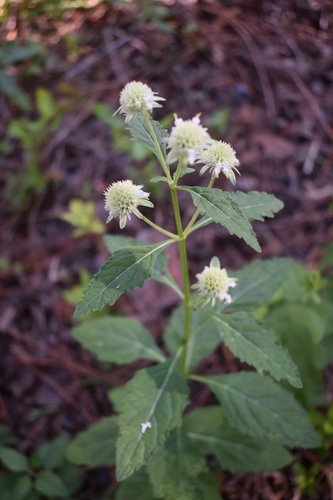
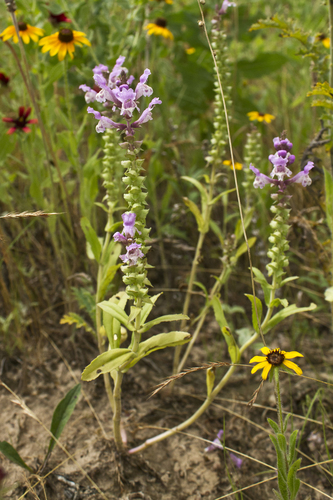
Betonica officinalis L. is a rhizotomous, patch-forming herbaceous perennial that grows in grasslands, reaching 30–60 cm (12–24 in) tall.
Leaf Characteristics
It bears stalked, narrowly oval leaves with heart-shaped bases, a somewhat wrinkled texture, and toothed margins on upright stems.
Calyx Features
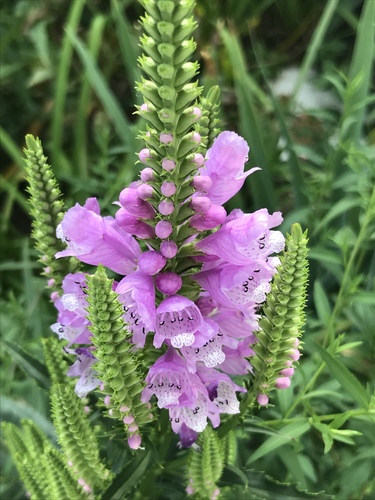
Its calyx measures 5–7 mm long, has 5 teeth, and is edged with bristles.
Corolla and Reproductive Parts
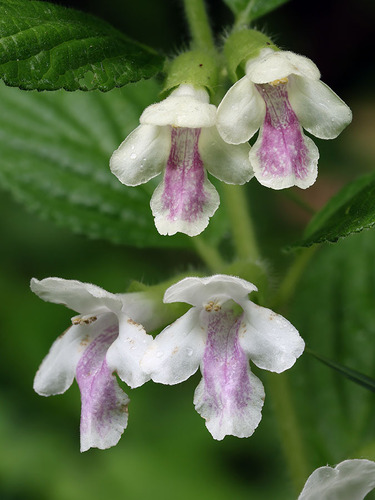
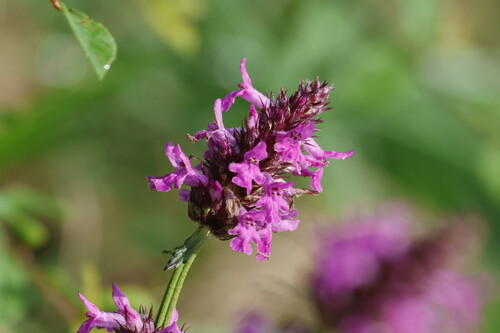
The corolla is 1–1.5 cm long, with a flat upper lip that is almost straight when viewed from the side, and anthers that protrude straight outward.
Flowering Period
It flowers in mid summer, from July to September.
Broad Native Range
This species grows in dry grassland, meadows and open woods across most of Europe, western Asia and North Africa.
Distribution in the British Isles
In the British Isles, it is common in England and Wales, scarce in southern Scotland, and rare in Ireland and northern Scotland.
Aerial Part Phytochemistry
The aerial parts of the plant contain the phenylethanoid glycosides betonyosides A-F, acetoside, acetoside isomer, campneosides II, forsythoside B, and leucosceptoside B.
Root Phytochemistry
The roots contain the diterpene glycosides betonicosides A-D and the diterpene betonicolide.
Pliny the Elder's Accounts
In his Natural History, Pliny the Elder described betony as "a plant more highly esteemed than any other", and recorded a common belief that simply possessing betony would protect a house from harm. Pliny also wrote that the plant was discovered by the Vettones of Spain, which explains the old Gaulish name for the plant, Vettonica.
De herba Vettonica liber Content
De herba Vettonica liber, a book originally attributed to Antonius Musa but now thought to have been written in the 4th century, lists almost 50 uses for the plant. These uses include easing pain and fever after childbirth, preventing drunkenness, treating bites from snakes and mad dogs, curing various types of pain, and warding off horrors. Pseudo-Musa also claims the herb was discovered by either Aesculapius, the Greek god of medicine, or the centaur Chiron.
John Gerard's Herball Entry
Information about betony and its uses is compiled in Chapter 232 of John Gerard's 1597 work Herball, or, Generall historie of plantes. Properties attributed to the plant include helping people with "the falling sickness", cramps, ague, jaundice, and sciatica, clearing the lungs, chest, liver, and gallbladder, killing intestinal worms, and breaking kidney stones, among many other effects.
Nicholas Culpeper's Documentation
In his 1652 work The English physitian, Nicholas Culpeper named the plant Wood-Betony to distinguish it from Water-Betony, while noting it was also called Common Betony. He observed that "Bettony that grows in the shadow is far better than that which grows in the Sun, because it delights in the shadow". He cited Antonius Musa as a source, and his summary of betony's uses is extensive, reflecting the influence of Pseudo-Musa and the same herbal tradition that informed Gerard's entry.
Culpeper's Astrological Classification
Culpeper classified betony under the planet Jupiter and the astrological sign Aries.
Welsh Traditional Use
A Welsh prescription attributed to the Physicians of Myddfai ascribes dream-controlling properties to betony, advising people to hang its leaves around the neck or drink the juice before sleeping.
Etymology of Epithet
The specific epithet officinalis indicates the plant's traditional use for medicinal or culinary purposes, as it was commonly grown by monks and apothecaries for medicinal use.
Historical Remedy Ingredient
Betony was an ingredient in Pistoia powder, an old historical remedy for arthritis and gout.
Druidic Traditional Use
It is among the herbs that Druids may have used to make wine and holy water.
French Republican Calendar Dedication
12 Prairial in the French Republican calendar is dedicated to betony.
Popular Culture Reference
In the Cadfael television series season 1, episode 1 One Corpse Too Many, betony is mentioned when the character Cadfael soaks a bandage with betony to help a wounded person's wound heal.
Traditional Austrian Medicine Use
In traditional Austrian medicine, betony has been used internally as tea or externally as compresses or baths to treat disorders of the respiratory tract, gastrointestinal tract, nervous system, skin, and gynecological problems.
Modern Herbalist Uses
Modern herbalists prescribe betony to treat anxiety, gallstones, heartburn, high blood pressure, migraine and neuralgia, to prevent excessive sweating, and as an ointment for cuts and sores.