About Prosopis alba Griseb.
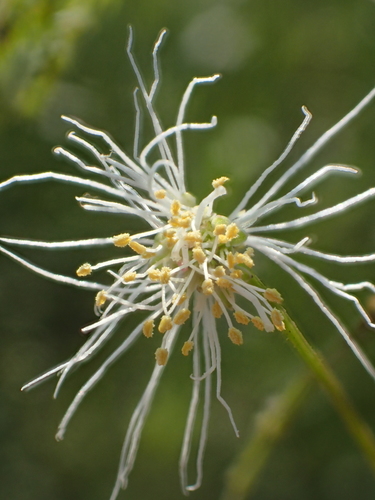
Neltuma alba, formerly classified as Prosopis alba Griseb., is a South American tree species. Its native range includes central Argentina, the Gran Chaco ecoregion, part of the Argentine Mesopotamia, as well as Bolivia, Chile, Paraguay, and Peru. In Spanish, it is commonly called algarrobo blanco, which translates to "white carob tree" or "white algarrobo". Spanish settlers chose this name because the species resembles the European carob tree, Ceratonia siliqua. Additional common names for the tree, originating from Guaraní, include ibopé and igopé. This is a medium-sized tree, growing between 5 and 15 m (16 and 49 ft) tall, with a trunk diameter reaching up to 1 m (3.3 ft). Very few such large specimens still exist today. It has a short trunk and a globular treetop that can sometimes reach 10 m (33 ft) in diameter. Its bark is thin, brown-gray with streaks, and has tanning properties. This tree is used for ornamental and utilitarian roadside planting, and as windbreaks. Its timber has a relative density of 0.76, making it rather dense and difficult to work with. It is used to make doors, floors, furniture, paving blocks, shoe lasts, and wine casks, where it acts as a replacement for European oak. The wood adapts well to drying, so it is valuable for projects that require stable dimensions that do not change with humidity. It is also durable when used outdoors. The species produces small, greenish-white or yellowish bisexual flowers. Pollination is carried out by both wind and insects, and the species is allogamous (outcrossing), because female reproductive organs become active before male organs do. Its fruits are modified seedpods that grow up to 20 cm (7.9 in) long, containing brown seeds approximately 7 mm (0.28 in) long. The pods hold a sweet, floury paste called patay, which is very high in energy. This paste can be used as fodder for animals, or ground into flour for human consumption. In the 1940s, people made a mildly intoxicating beverage called aloja by fermenting this paste, and the fermented product was sometimes distilled to produce ethanol. Sugar makes up between 50% and 75% of the fruit's total weight. This tree is known to tolerate drought, salt, and sand; it is extremely efficient in its water use, produces the largest fruit yields during drought years, and has been successfully introduced to arid areas. It cannot tolerate even mild frost, however. Neltuma alba and other algarrobo species originally placed in genus Prosopis, such as algarrobo negro (P. nigra), are often confused or not clearly distinguished in botanical literature. This confusion occurs in part because species in this genus hybridize easily.