About Pristimantis altamazonicus (Barbour & Dunn, 1921)
Size
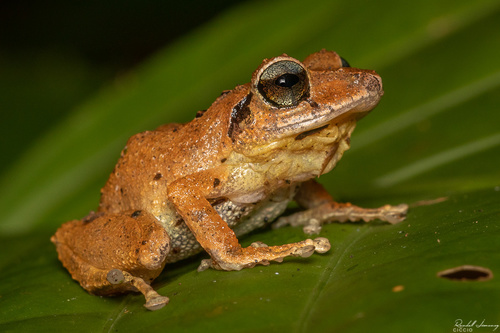
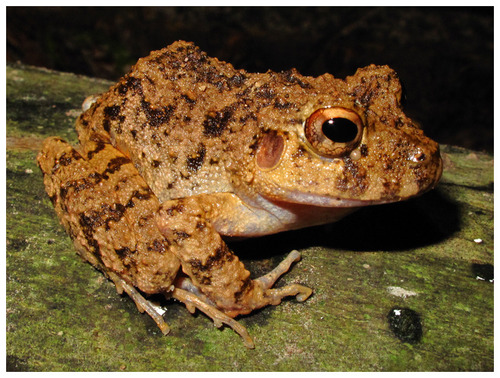
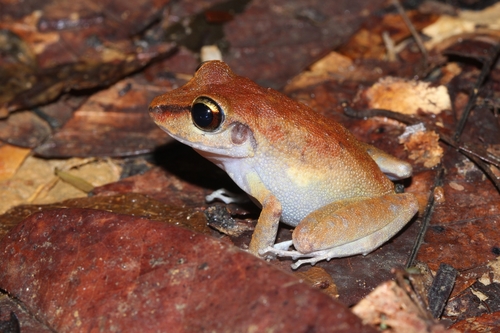
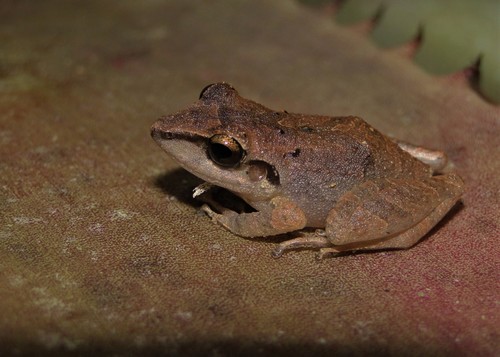
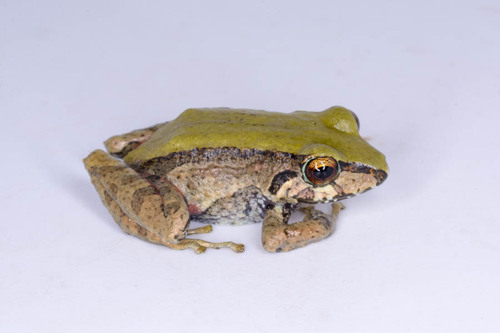
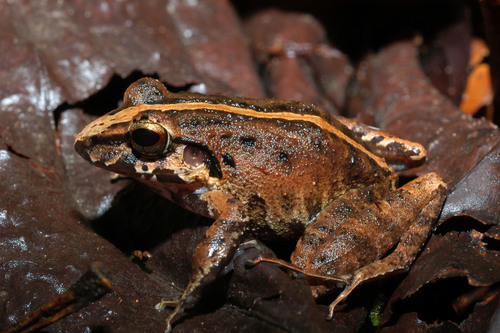
Description: In snout–vent length, adult males of Pristimantis altamazonicus measure 17–20 mm (0.67–0.79 in), while adult females measure 28–30 mm (1.1–1.2 in).
Snout Shape
The snout is moderately short and sub-acuminate.
Dorsal Skin
The dorsal skin is smooth, but adult males have small, scattered tubercles.
Digit Morphology
Neither fingers nor toes are webbed, but both have lateral fringes.
Coloration & Markings
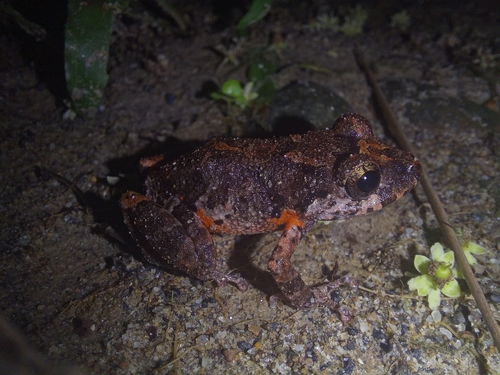
The dorsum and flanks are brown with reddish and black stains. A distinct W-shaped mark is present in the scapular region. Longitudinal cream stripes and dark blotches may also occur.
Habitat Type
Habitat and conservation: Pristimantis altamazonicus lives in closed-canopy primary tropical forests, and is occasionally found in flooded or secondary forests.
Activity & Microhabitat
While individuals may be found in leaf litter during the day, they are more typically found perched on low vegetation in the forest at night, where they call.
Altitudinal Range
This species occurs at an altitudinal range of 74–1,462 m (243–4,797 ft) above sea level.
Conservation Threats
Although habitat loss can be a threat to local populations, the species Pristimantis altamazonicus as a whole does not face major threats.