About Pomatoschistus minutus (Pallas, 1770)
Dorsal Fin Gap
This species, commonly known as the sand goby, has a wider gap between its two dorsal fins than the related common goby (Pomatoschistus microps).
Dorsal Fin Spines & Rays
Its anterior dorsal fin contains six soft spines, while its posterior dorsal fin has 8 to 11 soft rays.
Pelvic & Anal Fin Structure
The pelvic fins are fused with the anal fins.
Lateral Line Scales
There are 58 to 72 scales along the lateral line, and these scales are noticeably smaller than the scales of the common goby.
Caudal Fin Shape
The caudal fin has a rounded shape.
Fin Patches
Males have a prominent dark spot on the anterior dorsal fin, and both sexes have a black patch on the caudal peduncle.
Body Coloration
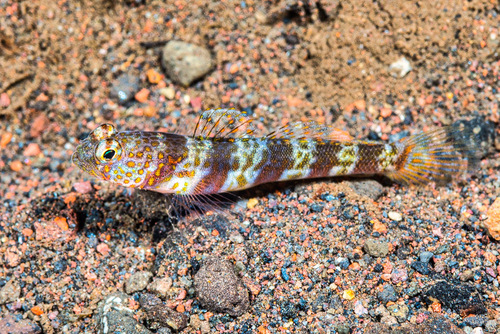
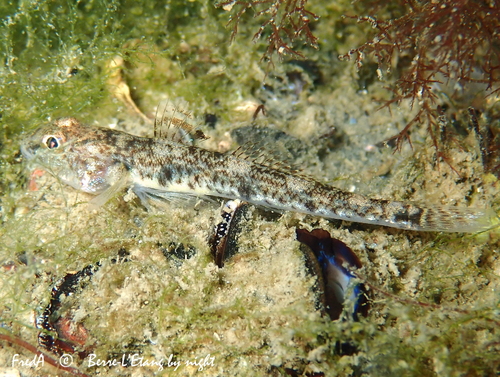
The sand goby's overall body color is sandy brown, with indistinct dark blotches and reticulated patterning across its dorsal surface, and dark striations on its pale fins.
Breeding Color Change
During the breeding season, male sand gobies darken in color, and their fins become more intensely colored.
Adult Size
The species reaches an average adult length of 4 to 5 cm, which equals 1.6 to 2.0 inches.