About Pomatorhinus erythrogenys Vigors, 1832
Scientific Name and Common Name
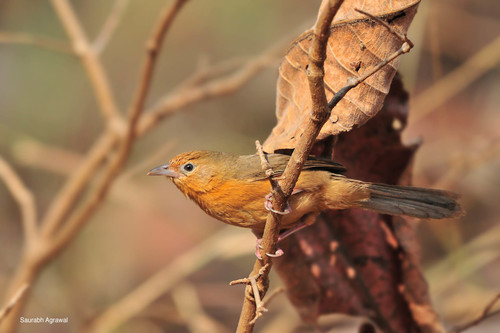
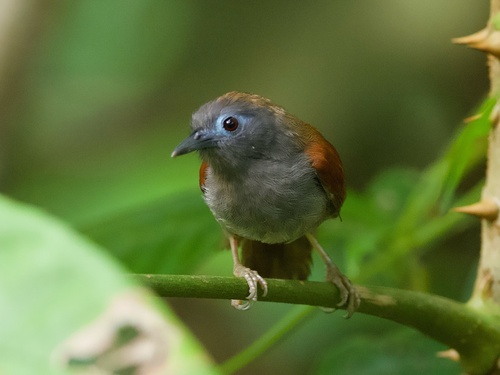
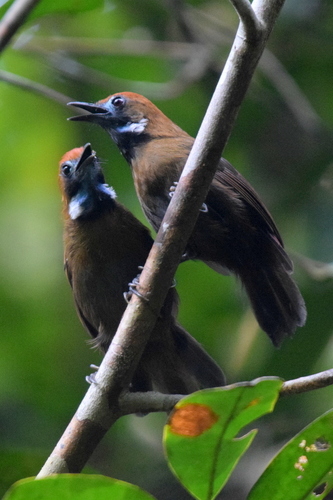
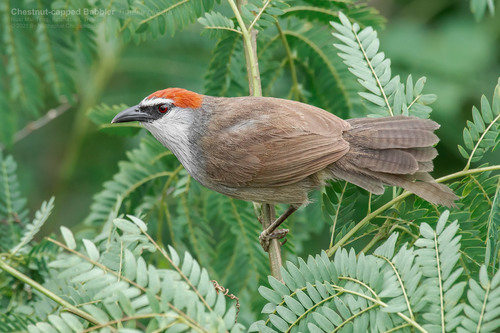
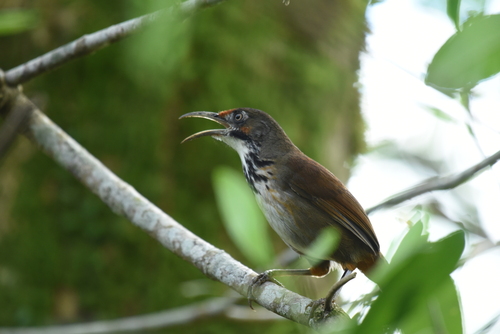
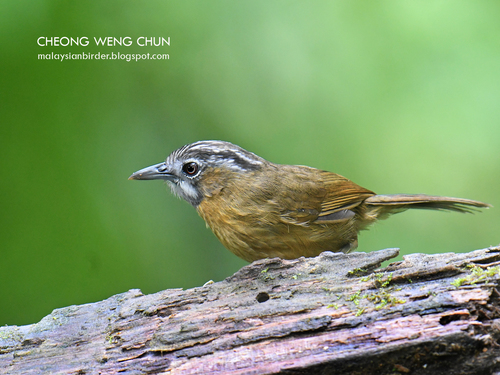
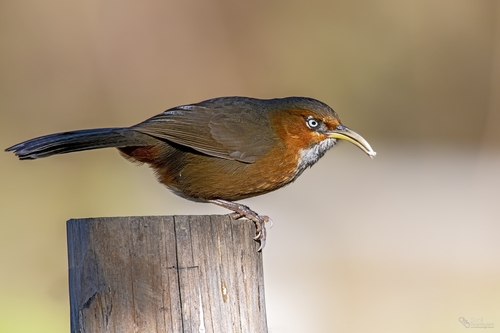
Pomatorhinus erythrogenys Vigors, 1832, commonly called the rusty-cheeked scimitar babbler, has an olive-brown upper body, with rusty colouring on the sides of its face, head, thighs, and flanks.
Plumage
Its belly is mostly white, and males and females look identical.
Beak Morphology
It has a long, decurved beak shaped like a scimitar.
Distribution Range
This species is distributed from the Himalayas to Myanmar.
Habitat and Elevation
It lives in subtropical or tropical moist lowland forest, as well as subtropical or tropical moist montane forest habitats, at elevations up to 2,600 m (8,500 ft).
Foraging Behavior and Social Structure
In ecology, the bird feeds mostly on the forest floor and in low canopy, and forms small groups.
Diet Composition
Its diet includes insects, grubs and seeds.
Vocalization Types
Its calls include a mellow, fluty whistle, a two-noted "CUE..PE...CUE..pe" call that the bird's mate replies to with a single note, guttural alarm calls, and a liquid contact note.
Vocalization Trait
This species is generally quite noisy.