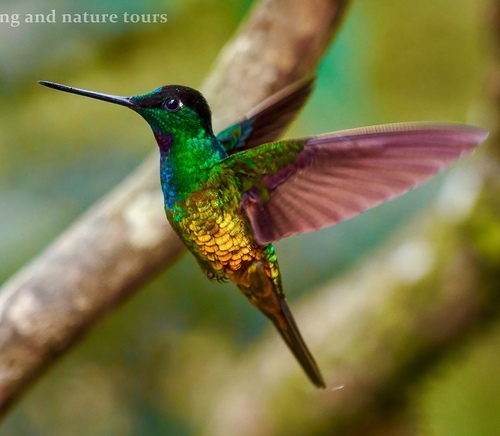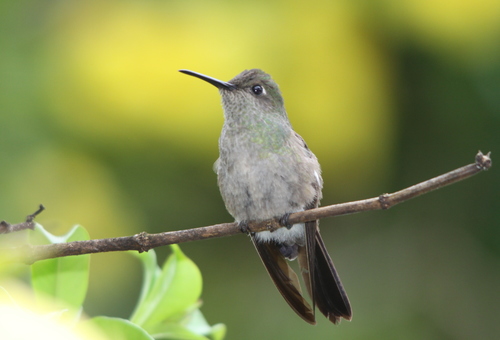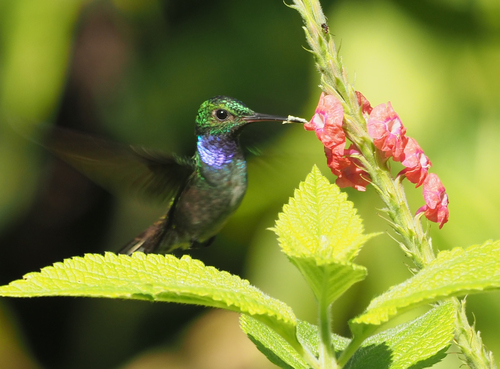
About Polyerata amabilis (Gould, 1853)
Taxonomic Nomenclature
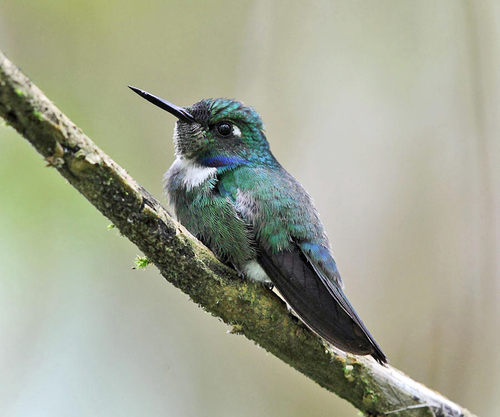
The blue-chested hummingbird, with the scientific name Polyerata amabilis, is a hummingbird species that belongs to the Trochilidae family.
Geographic Distribution
Its known distribution covers Colombia, Costa Rica, Ecuador, Nicaragua, and Panama.
Habitat Types
Its natural habitats are subtropical or tropical moist lowland forest, as well as heavily degraded former forest.
Foraging Strategies
This hummingbird forages via trap-lining, and also defends feeding territories—especially in habitats with low nectar availability.
Diet Composition
It feeds on nectar, and also consumes small insects that it gleans from foliage.
Foraging Territory Location
Its foraging territories are often located on forest borders, in areas with scattered flowers.
Breeding Behavior
During the breeding season, males form leks to attract females.
Historical Taxonomic Placement
This species was previously classified in the genus Amazilia.
2014 Phylogenetic Finding
A 2014 molecular phylogenetic study found that Amazilia was polyphyletic.
Revised Generic Placement
In revised classification that aimed to create monophyletic genera, the blue-chested hummingbird was moved to the resurrected genus Polyerata.