About Pluvialis squatarola (Linnaeus, 1758)
Common and Scientific Name
The grey plover, scientifically named Pluvialis squatarola, measures 27 to 30 centimeters (11 to 12 inches) in body length, with a wingspan ranging from 71 to 83 centimeters (28 to 33 inches).
Weight
Its typical weight is 190 to 280 grams (6.7 to 9.9 ounces), which can reach up to 345 grams (12.2 ounces) when the bird prepares for migration.
Breeding Plumage Pattern
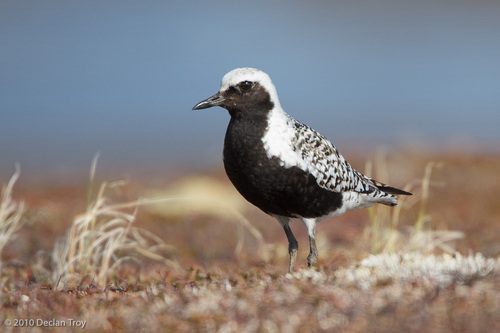
During spring and summer, from late April or May through August, adult grey plovers have a spotted black and white pattern across their back and wings.
Breeding Plumage Coloration
Their face and neck are black with a white border, they have a black breast and belly, a white rump, and a white tail marked with black barring.
Bill and Leg Color
Both the bill and legs are black.
Winter Plumage Timing
Adults moult into winter plumage between mid August and early September, and keep this plumage until April.
Adult Winter Plumage
Winter plumage is fairly plain grey on the upper body, with a grey-speckled breast and white belly.
Juvenile Plumage
Juvenile and first-winter plumages, worn by young birds from fledging until roughly one year of age, resemble adult winter plumage, but have blacker back feathers with creamy white edges.
In-Flight Distinguishing Feature
In all plumages, the inner flanks and axillary feathers at the base of the underwing are black; this feature easily distinguishes the grey plover from the other three species in the Pluvialis genus when it is in flight.
Ground Distinguishing Feature
On the ground, it can also be separated from other Pluvialis species by its larger, heavier bill, which measures 24 to 34 millimeters (0.94 to 1.34 inches) long.
Foraging Habitat and Method
Grey plovers forage for food on beaches and tidal flats, usually relying on sight to find prey.
Diet Composition
Their diet consists of small molluscs, polychaete worms, crustaceans, and insects.
Feeding Social Behavior
They are less social than other Pluvialis species, and do not gather in dense feeding flocks. Instead, they feed widely dispersed across beaches, with individual birds spaced well apart.
Roosting Social Behavior
They will still form dense flocks when roosting during high tide.