About Plestiodon callicephalus (Bocourt, 1879)
Common Name and Taxonomy
Plestiodon callicephalus, commonly called the mountain skink, is a medium-sized skink species.
Snout-to-Vent Length
It reaches a maximum snout-to-vent length of around 7.5 cm (3.0 in).
Body Coloration and Markings
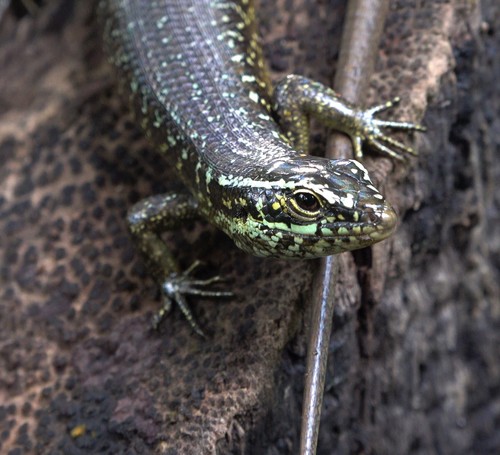
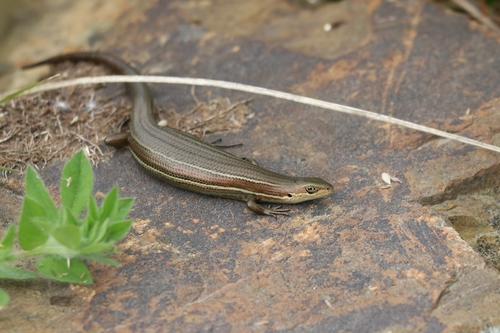
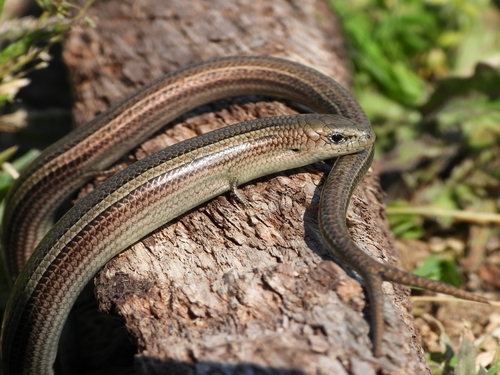
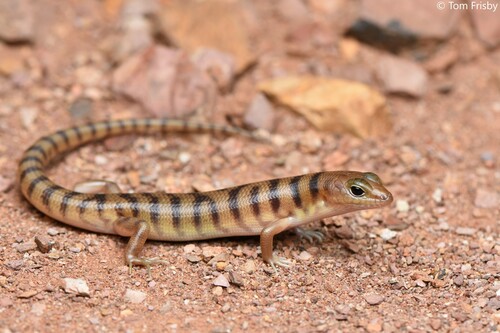
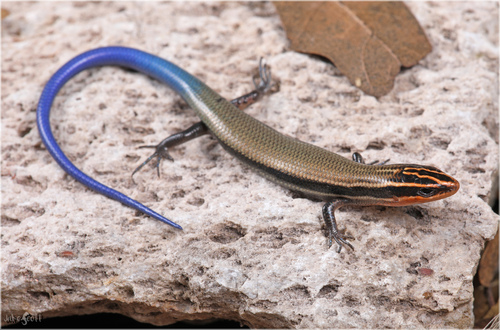
Its body ranges in color from olive to brown, with black stripes running along its sides.
Head Marking and Etymology
The head has a distinctive, roughly Y-shaped light line marking; this feature gives the species its scientific name, as callicephalus is Greek for "beautiful head".
Juvenile Tail Color
Like many other species in the Plestiodon genus, juvenile mountain skinks have a bright blue tail.
Adult Tail Color
Unlike most other species in this genus, adult mountain skinks keep this blue tail color, though the color fades slightly as they age.
Overall Geographic Range
The mountain skink's geographic range extends from southeastern Arizona and extreme southwestern New Mexico in the United States, south to Nayarit and Jalisco in Mexico.
US Distribution Status
In the United States, this species has a very localized distribution.
New Mexico Distribution
In New Mexico, mountain skinks only occur in the southern Peloncillo Mountains of Hidalgo County, and are only known from Geronimo Trail and Guadalupe Canyon, where they are uncommon within their limited habitat.
Arizona Distribution
In Arizona, this species occurs in Coronado National Forest.
Elevation Range
Mountain skinks can be found in a wide variety of habitats, ranging from sea level up to nearly 2,000 m (about 6,560 ft).
Preferred Substrate and Habitat Features
They prefer areas with abundant, well-rotted leaf litter, which provides cover and suitable places to lay eggs.