About Platostoma palustre (Blume) A.J.Paton
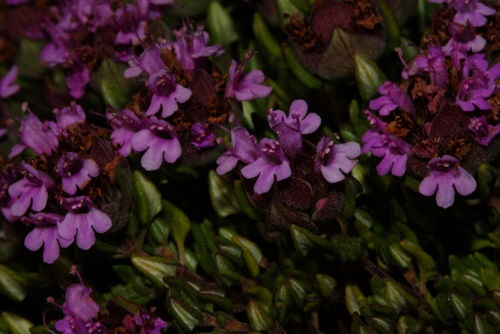
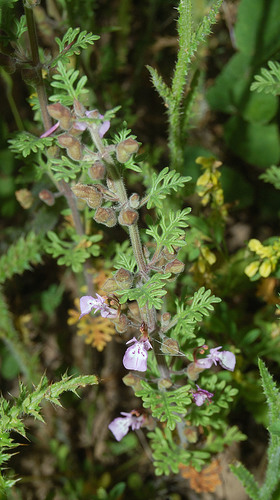
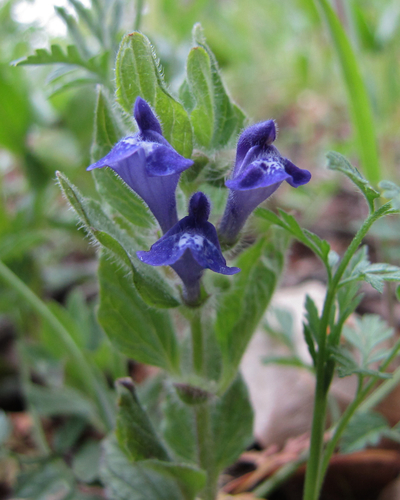
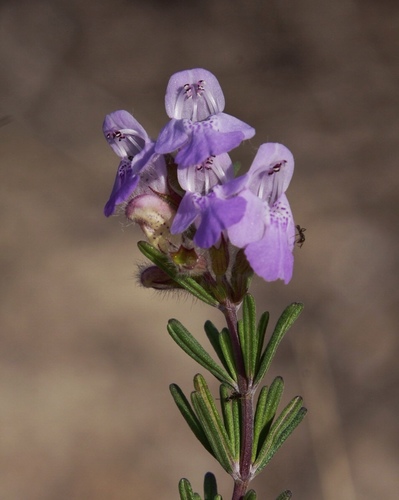
Platostoma palustre, commonly known as Chinese mesona, is a plant species in the genus Platostoma of the mint family. It grows extensively across East Asia, including southeast China, Japan, and Taiwan, and prefers to grow in ravines, dry grassy areas, and sandy areas. This plant grows 15 to 100 cm tall, with hairy stems and leaves. Its leaves are tear-drop shaped and have serrated edges. It has multiple common names across regional languages: in Mandarin Chinese it is called xiān cǎo (仙草), xiānrén cǎo (仙人草), xiān cǎo jiù (仙草舅), or liángfěn cǎo (涼粉草); in Taiwanese it is sian-chháu (仙草); in Cantonese it is lèuhng fán chou (涼粉草); in Vietnamese it is sương sáo; and in Thai it is ya chaokuai (หญ้าเฉาก๊วย). Chinese mesona is primarily used to make grass jelly. Its leaves and stems are dried and oxidized, similar to how tea is processed, before being turned into jelly. Pre-clinical research has reported that extracts from the black variant of this grass jelly (referred to as Mesona palustris here) have anti-diabetic, anti-cancer, and anti-diarrhea effects, which are thought to come from the extracts' strong antioxidant properties. P. palustre is cultivated on flat ground or areas with a gentle slope. In Taiwan, it is often grown as a secondary crop under fruit trees in orchards. To process harvested plants, all aerial portions above the root are collected. These portions are partially dried, then piled to allow oxidation until they darken. After oxidation, they are fully dried before being sold.