About Plantago atrata Hoppe
Nomenclature and Taxonomy
Plantago atrata, commonly known as Black Plantain, is a perennial herbaceous plant that belongs to the Plantaginaceae family.
Native Range and Habitat
Native to Europe, it thrives in damp meadows, marshes, and along riverbanks.
Basal Leaf Structure
The plant features a rosette of basal leaves that are lance-shaped with prominent veins, growing up to 20 cm in length.
Leaf Appearance and Petioles
These dark green, glossy leaves boast long petioles.
Flowering Period
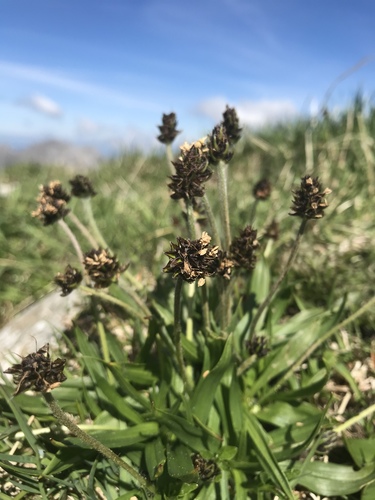
From June to August, the Black Plantain produces tall spikes adorned with small flowers.
Flower Characteristics
These flowers, which are dark brown or blackish-purple, have four petals arranged cylindrically around the spike.
Traditional Medicinal Use Background
Historically, the Black Plantain has been prized for its medicinal properties.
Medicinal Applications
Its anti-inflammatory qualities make it useful for treating wounds, insect bites, skin irritations, and respiratory problems such as coughs and bronchitis.
Edible Use Background
Beyond its medicinal applications, Black Plantain is also consumed as food in some cultures.
Culinary Preparation
It can be eaten raw or cooked in salads and soups, thanks to its high nutritional value.
Nutritional Composition
This includes an array of vitamins (A, C, K, E, B1, B2, B3, B6), folic acid, and minerals like potassium, magnesium, zinc, copper, manganese, and selenium.
Overall Value Summary
Overall, Black Plantain is notable for both its medicinal properties and nutritional benefits, making it a valuable component of traditional medicine practices worldwide.