About Plagianthus regius (Poit.) Hochr.
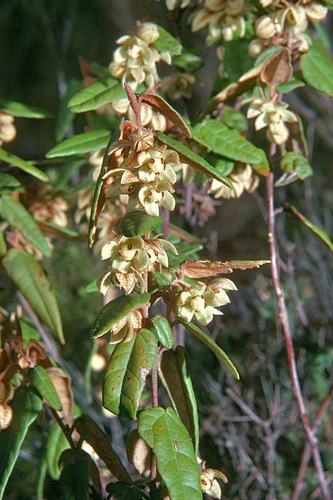
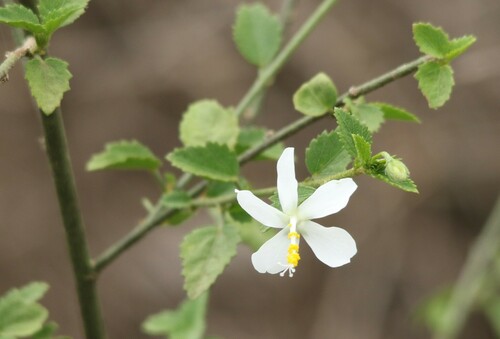
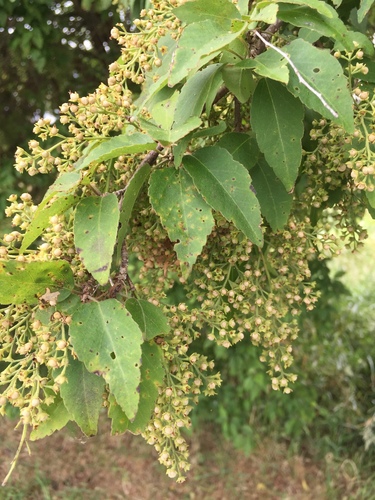
Plagianthus regius (Poit.) Hochr., commonly called ribbonwood or lowland ribbonwood, is a tree species endemic to New Zealand. It is known to Māori as mānatu, and is also referred to as manaui mānatu. Juvenile specimens have bushy, interlacing branches and small leaves. Mature trees typically have larger leaves, though the lower portions of older trees often still display divaricating growth. In spring, this tree produces a profusion of small white or green flowers arranged in dense clusters; this feature helps distinguish it from the similar lacebark genus. A distinctive characteristic of this species is that it is usually deciduous, an uncommon trait among New Zealand trees; populations in northern New Zealand may instead be semi-deciduous. It is the largest of New Zealand's deciduous trees, growing up to 17 metres tall, and can be found growing across the North Island, South Island, and Stewart Island. A Chatham Islands endemic subspecies, Plagianthus regius subsp. chathamicus, is very similar to the main species but does not exhibit divaricating growth. Māori traditionally used the tree's bark to make textiles, including fishing nets.