About Pithecia pithecia (Linnaeus, 1766)
Taxonomy and Common Name
Pithecia pithecia, commonly called the white-faced saki, is a species of New World saki monkey.
Geographical Distribution
This small-bodied Neotropical primate lives in Brazil, French Guiana, Guyana, Suriname, and Venezuela.
Diet
This species feeds mainly on fruits, nuts, seeds, and insects.
Locomotion
While it is an arboreal species and a specialist at brachiation, it also travels on the ground when foraging.
Life Expectancy
In its natural habitat, the typical life expectancy of this species is around 14 years, though captive individuals have been recorded living up to 36 years.
Activity and Sleeping Habits
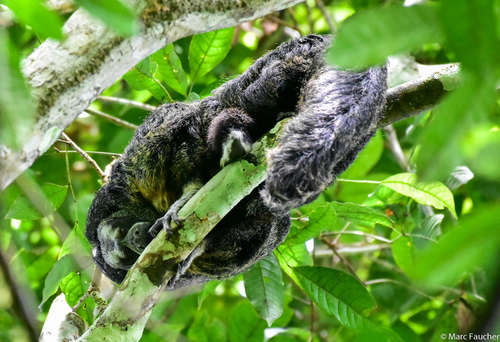
White-faced sakis are diurnal, and sleep at high elevations of 15–20 m (49–66 ft) in leafy trees, which shelter them from bad weather and flying predators.
Subspecies Reclassification
A subspecies formerly recognized as P. p. chrysocephala was elevated to full species status as P. chrysocephala in 2014.
Breeding Frequency
White-faced saki pairs only breed once per year, and do not breed seasonally.
Breeding Timing Observations
The estimated typical breeding season falls in August and September, but breeding has also been observed in March, April, and June.
Mating Behavior
Mating is typically not private, and sometimes occurs while other group members watch.
Litter Size
No matter the timing or context of reproduction, female white-faced sakis only give birth to one offspring at a time.
Peak Birth Period
Peak birth months usually fall between February and June.
Female Reproductive Cycle (Captive)
In captivity, female white-faced sakis have ovarian cycles of approximately 17 days, and a gestation period of 20–21 weeks.
Post-Birth Infertility
After birth, the mother experiences an average of 23 weeks of lactationally-induced infertility.
Parental Proximity Post-Birth
After an infant is born, the father spends a large amount of time near the infant and mother, likely to protect both from predators.
Parental Care Roles
During this period, the mother grooms and cares for the offspring until it becomes independent, while males provide no paternal care at all.
Juvenile Dispersal Pattern
Once independent, offspring usually remain in and contribute to the group they were born into.
Reproductive Suppression of Subadult Females
Mature females that still live with their parents do not reproduce.
Mating System Types
White-faced sakis practice both monogamy and polygamy, and are defensive about keeping other groups away from their females.
Mating System Functions
The white-faced saki mating system has two goals: exclude outsider groups from accessing their females, and reduce within-group competition over females.
Sexual Dimorphism: Coloration Basis
White-faced sakis show noticeable sexual dimorphism in coloration.
Female Physical Appearance
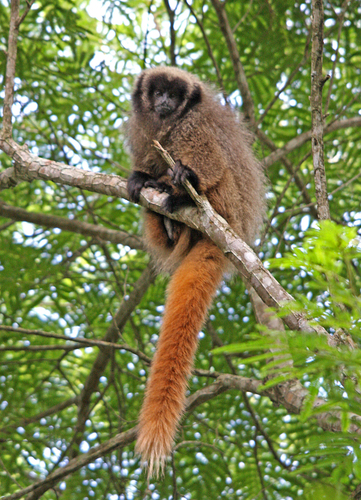
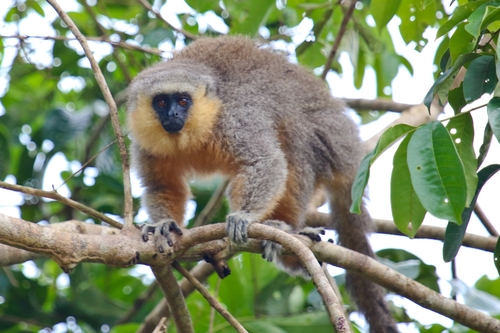
Females have shorter hair than males, with brownish-grey fur and white or pale brown stripes around the corners of the nose and mouth.
Male Physical Appearance
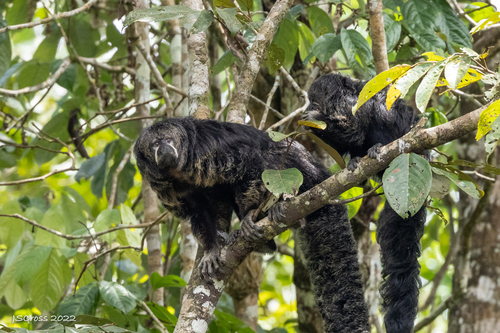
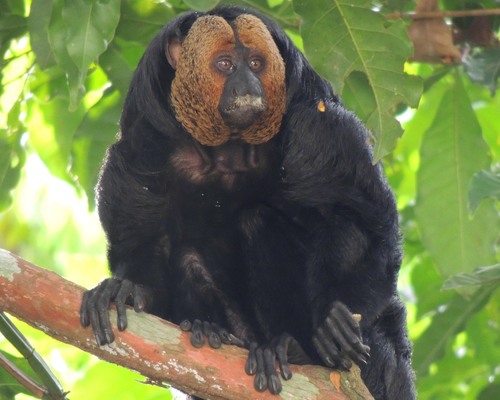
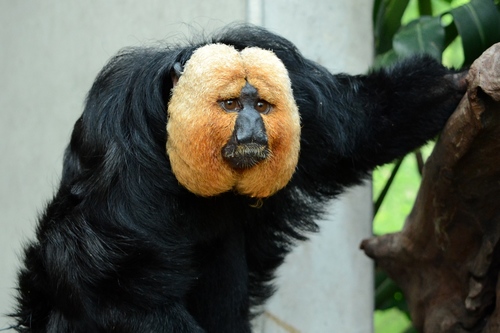
Males have darker, blacker fur, with a reddish-white forehead, face, and throat; their faces are much whiter than females' faces.
Sexual Size Dimorphism
There is little to no size difference between male and female white-faced sakis.
Body Weight by Sex
Both genders have relatively small bodies: males usually weigh around 1.73 kg (3.8 lb), and females usually weigh around 1.52 kg (3.4 lb).
Social Hierarchy Structure
Within the species' social hierarchy and group social bonds, males are clearly dominant, and the oldest male is typically the most dominant individual in a group.
Juvenile Male Appearance
Young male sakis are often mistaken for females because they sometimes have grizzled dorsal hair and orangish bellies.
Sexual Maturation Trajectory
Sexual differences begin to appear at approximately 2 months of age, and gradually become more distinct over the course of several years.